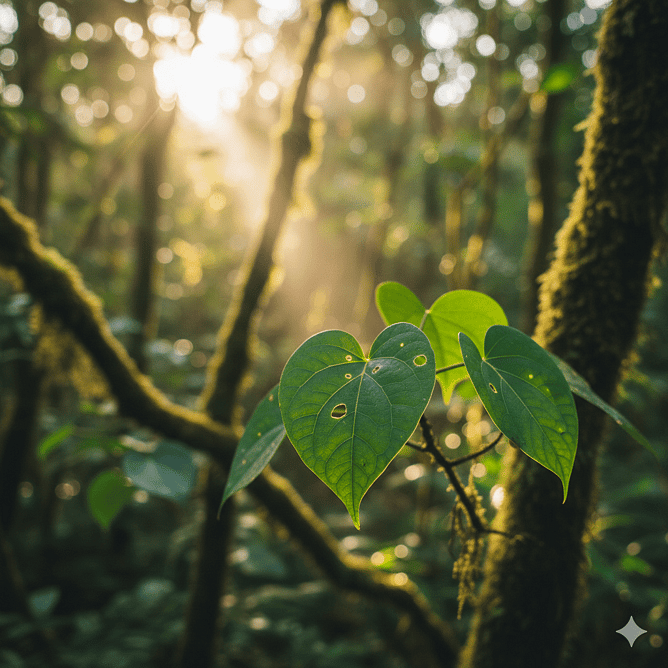
The Kawakawa Story
Educational Disclaimer: This article is for informational purposes only and does not constitute medical advice. The content is not intended to diagnose, treat, cure, or prevent any disease. Always consult a qualified healthcare professional before making changes to your health routine.
New Zealand's unique isolation has created one of the world's most distinctive ecosystems, home to plants found nowhere else on Earth. Among these is Kawakawa (Piper excelsum), a native plant that Māori have valued for centuries and that modern science is now studying for its potential wellness benefits.
A Plant with Deep Roots
Kawakawa is endemic to New Zealand, meaning it evolved here and exists naturally nowhere else. The plant is easily recognized by its heart-shaped leaves, often with distinctive holes created by the Kawakawa moth—a sign that has traditionally been associated with the plant's potency.
For Māori, the indigenous people of Aotearoa New Zealand, Kawakawa has been a taonga (treasure) for generations. Traditional uses included supporting digestive wellness, promoting skin health, and supporting overall vitality. The leaves were brewed into tea, used in traditional steam baths, and applied topically.
From Traditional Use to Modern Research
What makes Kawakawa particularly interesting from a longevity perspective is the growing body of research into its bioactive compounds. Scientists have identified several components that may contribute to its wellness-supporting properties:
Myristicin: This compound, also found in nutmeg and parsley, has been studied for its antioxidant properties. Research suggests it may help protect cells from oxidative stress.
Kawain: One of several related compounds in Kawakawa, kawain has been researched for its potential to support balanced responses in the body.
Sesquiterpenes: These plant compounds are being studied for their potential antioxidant and wellness-supporting properties.
The Immune-Supporting Angle
Recent research has focused on Kawakawa's potential to support immune wellness. Studies suggest that compounds in Kawakawa may help modulate certain immune signaling molecules called cytokines. This modulation isn't about suppressing or overstimulating the immune system—it's about supporting balance.
In the context of longevity, this balanced immune support is significant. As we age, maintaining appropriate immune responses becomes increasingly important for overall wellness and vitality.
Gut Wellness Connection
Another area of research interest is Kawakawa's potential to support gut health. Traditional use for digestive wellness is now being explored through modern research:
Studies suggest certain Kawakawa compounds may support the gut lining
The plant's antioxidant properties may help protect gut cells
Traditional use supports the idea that it promotes digestive comfort
Given that gut health is foundational to immune function and overall wellness—with 70% of immune cells residing in and around the digestive tract—this gut-supporting potential adds another dimension to Kawakawa's longevity relevance.
Antioxidant Properties
One of the most well-researched aspects of Kawakawa is its antioxidant activity. Multiple studies have demonstrated that Kawakawa extracts possess significant antioxidant properties, helping to neutralize free radicals and support cellular protection.
In the context of healthy aging, antioxidant support is crucial. Oxidative stress accumulates over time and can affect cellular function. Supporting your body's antioxidant defenses through diet and targeted compounds like Kawakawa may help maintain cellular health.
Synergy with Other Compounds
What's particularly interesting about Kawakawa in modern longevity formulations is its potential to work synergistically with other wellness-supporting compounds:
When combined with immune-supporting proteins like lactoferrin, gut-nourishing colostrum components, and cellular-protecting antioxidants like carnosic acid, Kawakawa adds a unique dimension of immune modulation and gut support.
This synergistic approach reflects both traditional wisdom—which rarely used single herbs in isolation—and modern scientific understanding of how multiple compounds can work together to support wellness.
Sustainable New Zealand Innovation
Beyond its wellness potential, Kawakawa represents a commitment to sustainable, locally-sourced innovation. New Zealand's clean environment, stringent quality standards, and investment in indigenous plant research make it an ideal location for developing science-backed natural products.
Using native plants like Kawakawa also:
Supports local ecosystems and biodiversity
Honors traditional knowledge while applying modern research
Reduces the environmental impact of sourcing ingredients globally
Contributes to New Zealand's position as a leader in natural health innovation
The Research Continues
Scientific interest in Kawakawa is growing. Researchers are exploring:
Specific mechanisms behind its immune-modulating properties
Optimal extraction methods to preserve bioactive compounds
Potential applications in supporting various aspects of wellness
How it works synergistically with other natural compounds
This research is still in relatively early stages, but the combination of centuries of traditional use and emerging scientific evidence makes Kawakawa a compelling addition to modern longevity formulations.
A Bridge Between Tradition and Innovation
What makes Kawakawa particularly special in the longevity space is how it represents a bridge between traditional wisdom and cutting-edge science. Māori have valued this plant for generations, passing down knowledge of its uses and benefits. Modern research is now providing scientific context for these traditional applications.
This approach—respecting traditional knowledge while applying rigorous scientific methodology—represents the future of natural wellness products. It's not about choosing between tradition and science, but about allowing each to inform and strengthen the other.
Practical Considerations
For those interested in Kawakawa's potential benefits, several factors are important:
Quality Matters: Look for standardized extracts from reputable sources. The concentration of bioactive compounds can vary significantly between products.
Dosage: Research-backed formulations use specific dosages designed for optimal effect. Traditional use often involved consuming the plant in tea form regularly over time.
Complementary Approach: Kawakawa is best viewed as part of a comprehensive wellness strategy, not a standalone solution. It works synergistically with other wellness practices and compounds.
The Bigger Picture
Kawakawa's emergence in longevity science reflects a broader trend: the recognition that nature has already developed sophisticated compounds that support wellness, refined through millions of years of evolution. Our task isn't to reinvent the wheel but to understand, respect, and apply what nature has already created.
For New Zealand, Kawakawa represents an opportunity to share the unique wellness potential of Aotearoa's native plants with the world. For individuals interested in longevity, it offers a research-backed, traditionally-used botanical that supports immune balance, gut wellness, and cellular health—three pillars of healthy aging.
As research continues and our understanding deepens, Kawakawa stands as an example of how we can combine traditional wisdom, modern science, and sustainable practices to support human wellness and vitality.
Educational Disclaimer: This article is for informational purposes only and does not constitute medical advice. The content is not intended to diagnose, treat, cure, or prevent any disease. Always consult a qualified healthcare professional before making changes to your health routine.