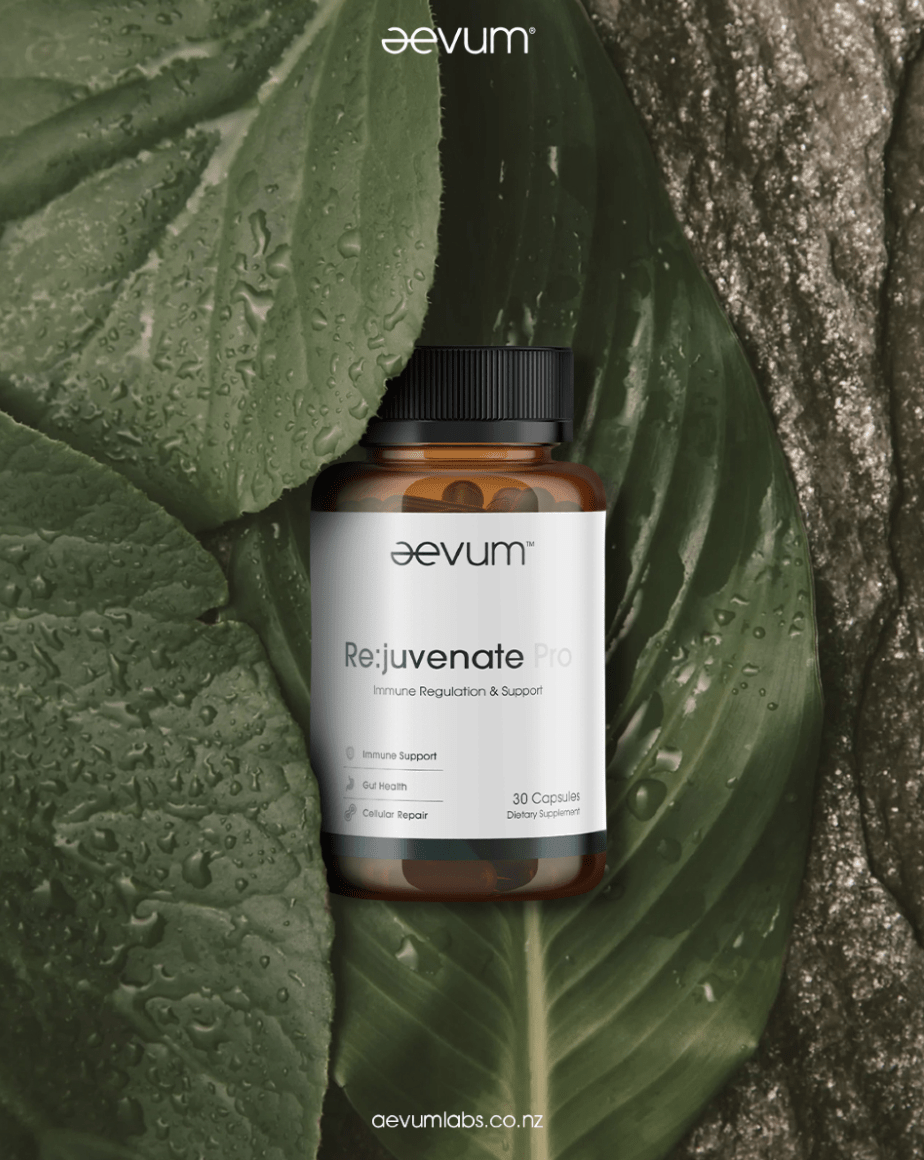
How Re:juvenate Pro Addresses Immune Aging Through Multi-Pathway Modulation
By Lisa Tamati / Co-Founder Aevum Labs / Host, Pushing the Limits Podcast
The Problem with Treating Hallmarks One at a Time
Every practitioner working in longevity medicine has had the same experience. A patient arrives with a protocol that’s already twelve supplements deep. Something for mitochondrial support. Something for methylation. A senolytic. An NAD+ precursor. A gut repair stack. An anti-inflammatory. An antioxidant. Each intervention has good science behind it. And yet the patient’s biological age markers haven’t shifted as much as the theory promised.
The reason, I believe, is that we’ve been working laterally across the hallmarks of aging rather than vertically beneath them. We’re treating the branches instead of the trunk. And the trunk — the upstream system that governs genomic stability, cellular senescence, inflammation, autophagy, stem cell function, and intercellular signalling simultaneously — is the immune system.
This is not a novel hypothesis. It’s the central conclusion of one of the most ambitious immunology studies in history.
What iAge Reveals About the Real Driver of Aging
In 2023, Dr David Furman and colleagues at Stanford University and the Buck Institute published findings from the 1000 Immunomes Project — a longitudinal population study tracking immune system function across more than a thousand individuals over 15 years. It remains the largest study of human immunology and aging ever conducted.
Their most consequential finding was the development of a metric they call iAge — inflammatory age. By measuring a panel of inflammatory proteins, chemokines, and cytokines in blood samples collected across a decade and a half, they demonstrated that an individual’s iAge predicts multi-system disease risk, cardiovascular events, frailty, and all-cause mortality more accurately than chronological age.
The implication for clinical practice is profound. If immune aging is the most reliable upstream predictor of systemic decline, then interventions that modulate immune function should produce downstream improvements across multiple hallmarks simultaneously — without requiring a separate supplement for each one.
Among the markers identified in the 1000 Immunomes panel, several stand out for practitioners: CXCL9 (a chemokine associated with chronic T-cell recruitment and immune-driven vascular aging), TNF-α and IL-6 (pro-inflammatory cytokines that increase with age), and IL-10 (an anti-inflammatory cytokine that declines). These became our primary mechanistic targets when developing Re:juvenate Pro.
The Mechanics of Immune Decline
Immunosenescence is typically discussed as a feature of advanced age, but its origins are much earlier. To understand why, it helps to trace the three major structural vulnerabilities that accumulate over a lifetime.
Thymic Involution: Losing the Training Ground
The thymus gland is where naïve T cells undergo education — learning to distinguish self from non-self, pathogen from healthy tissue. This distinction is fundamental to adaptive immunity. Without it, the immune system either underreacts to genuine threats or overreacts to the body’s own tissues (autoimmunity).
Thymic involution — the replacement of functional thymic tissue with fatty infiltrate — begins at puberty and progresses steadily. By the fifth decade, thymic output of naïve T cells is a fraction of its peak. By the seventh decade, it is negligible. The clinical consequence is an adaptive immune system that becomes increasingly reliant on its existing T cell repertoire, progressively less capable of mounting accurate responses to novel threats, and increasingly prone to inappropriate self-directed activation.
Historically, the only interventions for thymic decline were bioregulator peptides or Thymosin Alpha-1, both of which have become extremely difficult to source. This creates a significant clinical gap that few supplements address.
Barrier Erosion: When the Gates Fall
The body’s interface with the external environment is not a single barrier but a network of mucosal surfaces — gut, respiratory tract, oral cavity, blood-brain barrier, ocular system, reproductive tract, skin. Each surface maintains its own immune ecology: tight junctions that control permeability, mucosal immunoglobulins (particularly secretory IgA) that trap pathogens before they penetrate, and a commensal microbiome that competes with pathogenic organisms for resources and space.
As we age — and in response to medications, infections, toxins, and dietary insults — these barriers degrade. Tight junctions loosen. Secretory IgA declines. The microbiome shifts toward dysbiosis. The consequence is increased translocation of pathogens and endotoxins across mucosal surfaces into the systemic circulation, triggering immune activation, cytokine production, and chronic inflammation. This is the mechanistic reality behind “leaky gut” — not a fringe concept but a measurable pathology (zonulin, lactulose-mannitol ratio) with systemic inflammatory consequences.
Approximately 70–80% of the body’s immune tissue resides in the gut-associated lymphoid tissue (GALT). Restoring barrier integrity is therefore not a supplementary concern — it is an immune intervention.
Cytokine Dysregulation: The Inflammaging Cascade
In a healthy immune response, pro-inflammatory cytokines (TNF-α, IL-6, IL-1β) activate upon threat detection, coordinate the response, and are then resolved by anti-inflammatory mediators (primarily IL-10 and TGF-β). The resolution phase is as important as the activation phase — without it, inflammation becomes chronic.
With age, this cycle becomes unbalanced. Pro-inflammatory cytokine baseline levels rise. Anti-inflammatory cytokine production — particularly IL-10 — declines. NF-κB, the master transcription factor that drives pro-inflammatory gene expression, becomes constitutively active rather than responsive. The result is a chronic, low-grade inflammatory state that Dr Claudio Franceschi termed inflammaging — a persistent inflammatory burden that damages tissues, accelerates cellular senescence, impairs repair mechanisms, and creates a permissive environment for cancer, neurodegeneration, and cardiovascular disease.
Post-viral states amplify this. COVID-19, in particular, has been shown to deplete IL-10 and leave the immune system locked in an activated state — the inflammatory side stays turned on while the resolution side fails to engage. This is the immunological signature of long COVID, and it mirrors the broader pattern of inflammaging in an accelerated timeframe.
Re:juvenate Pro: Addressing Each Layer of Immune Architecture
Rather than presenting each ingredient in isolation, it’s more instructive to understand the formulation through the functional layers it addresses. Re:juvenate Pro was designed architecturally — each ingredient occupies a specific position in the immune defence hierarchy, and the combination produces coverage that no single ingredient could achieve.
Layer One: Frontline Barrier Defence
Immune Defense Protein (IDP) is a complex of more than 50 bioactive whey proteins extracted from New Zealand pasture-fed milk. The dominant protein is lactoferrin (~40% of the fraction), supported by lactoperoxidase (~18%) and a suite of minor proteins that confer synergistic activity. This synergy is not theoretical — it was discovered empirically by Dr Rod Claycomb and his team at Quantec over 15 years of research, when they found that progressively purifying lactoferrin paradoxically reduced its antimicrobial potency. The bioactivity resides in the team, not the individual player.
IDP’s defining clinical feature is selective antimicrobial activity (patented). It demonstrates potent minimum inhibitory concentrations against pathogenic organisms (Staphylococcus aureus, Escherichia coli) while leaving commensal species (Lactobacillus, Bifidobacterium, Streptococcus salivarius, Staphylococcus epidermidis) unharmed. For patients with SIBO, dysbiosis, or recurrent infections where broad-spectrum antimicrobial protocols cause collateral microbiome damage, this selectivity is a genuine differentiator.
IDP proteins are large molecules that do not cross the intact intestinal barrier. Their action is entirely at the mucosal surface — they repair tight junctions (a mechanism currently in publication), neutralise pathogens, support secretory IgA, and modulate the local immune environment through TLR4 engagement and IL-10 promotion. This surface-level action is pharmacologically important: it means IDP functions as a true barrier defence agent without systemic side effects.
Recent clinical data: a double-blinded, placebo-controlled study demonstrated that four weeks of IDP supplementation prior to influenza vaccination produced influenza-specific IgG titres 2–4 times higher than vaccination alone. This has obvious implications for elderly patients with impaired vaccine responses — one of the hallmark consequences of immunosenescence.
Layer Two: Systemic Immune Activation and Regeneration
Immunel is a concentrated colostrum extract containing a distinct fraction from IDP. Where IDP provides the large barrier-defence proteins, Immunel delivers the smaller bioactive molecules — growth factors (IGF-1, TGF-β2), proline-rich peptides (PRP), sialic acid, and nucleotides — that are absorbed systemically and exert effects throughout the body.
The clinical data on Immunel spans more than a decade of research. In study, Immunel doubled CD69 expression on natural killer cells compared to whey colostrum controls. CD69 is an activation marker — when it’s expressed, NK cells are primed to identify and destroy virally infected cells and tumour cells. For patients with known NK cell deficiency or those in cancer adjunct protocols, this is a directly measurable effect.
In a pneumonia model, Immunel achieved 70% clearance of Streptococcus pneumoniae within 24 hours. In an influenza model, viral load was reduced by 64% following oral treatment. These are not modest effects — they are clinically meaningful magnitudes.
A double-blinded, placebo-controlled crossover human study demonstrated measurable immune activation within one to two hours of consumption. This rapid-onset profile differentiates Immunel from interventions that require weeks of loading before clinical effects emerge. It is directly applicable in acute settings — pre-surgical immune priming, early-stage infection, or high-exposure environments.
Immunel also upregulates GCSF (granulocyte colony-stimulating factor), which promotes the release of stem cells from their niches in bone marrow and adipose tissue. As endogenous stem cell release declines with age, any compound that supports this process has regenerative significance.
Thymic support via proline-rich peptides (PRP) is clinically important because PRP is an immunomodulating peptide naturally found in the thymus gland. It cannot be purchased as a standalone supplement. With Thymosin Alpha-1 and thymic bioregulators increasingly difficult to source, Immunel provides a natural alternative pathway for supporting the thymic function that immunosenescence progressively eliminates.
Finally, Immunel provides selective lipoxygenase inhibition — anti-inflammatory activity through a distinct mechanism from COX inhibition. This reduces inflammatory overshoot during immune activation without the gastrointestinal risks associated with cyclooxygenase-pathway drugs.
Layer Three: Inflammatory Chemokine Reduction and Antioxidant Upregulation
Carnosic acid (from rosemary extract, standardised to 20%) was selected specifically for its activity against CXCL9 — a chemokine the 1000 Immunomes Project identified as among the most predictive markers of immune aging and cardiovascular immune dysfunction.
CXCL9 recruits T cells to inflammatory sites. During acute infection, this recruitment is necessary and protective. But chronic CXCL9 elevation sustains a perpetual recruitment signal — drawing T cells into tissues where their inflammatory activity causes collateral damage rather than resolving a genuine threat. This is a mechanistic driver of vascular aging, chronic tissue inflammation, and immune exhaustion. Lowering CXCL9 interrupts this cycle.
Natural CXCL9 inhibitors are scarce. Carnosic acid emerged from extensive literature review as one of the few botanical compounds with demonstrated activity, primarily through modulation of the NF-κB signalling pathway. By reducing NF-κB-driven CXCL9 transcription, carnosic acid addresses a target that most existing immune supplements do not even acknowledge — because the research identifying CXCL9’s significance is still being disseminated into clinical practice.
Carnosic acid’s second major mechanism is NRF2 pathway activation. NRF2 is the master transcription factor governing the body’s endogenous antioxidant defence system. When activated, NRF2 upregulates the expression of superoxide dismutase (SOD), catalase, and glutathione peroxidase — the enzymatic antioxidants that process free radicals catalytically rather than stoichiometrically. Each enzyme molecule neutralises thousands of free radicals before degradation, making NRF2-driven antioxidant production qualitatively superior to direct antioxidant supplementation (vitamin C, vitamin E, NAC), which operate on a one-molecule-per-radical basis. This distinction has significant clinical implications for patients with chronic oxidative stress, neuroinflammation, metabolic syndrome, or cardiovascular disease.
Additional benefits include modulation of pro-inflammatory cytokines (TNF-α, IL-6, IL-1β) and upregulation of IL-10, neuroprotective activity (reduced neuroinflammation, inhibition of neuronal apoptosis), and COX-2 inhibition. New Zealand-sourced rosemary contains higher carnosic acid concentrations than other geographical sources, attributed to increased UV exposure from Southern Hemisphere atmospheric conditions.
Layer Four: Anti-Inflammatory Resolution and Mucosal Healing
Kawakawa (Piper excelsum) is a New Zealand native plant from the pepper family — distinct from kava kava (Piper methysticum), which is critical to clarify for international practitioners. It is classified as a taonga (treasure) in Māori traditional medicine and has been used for centuries as a primary gut herb, a recovery tonic, and a pain-relieving agent.
Its recent phytochemical characterisation has revealed a complex profile of bioactives: myristicin, diayangambin, elemicin, and multiple polyphenolic compounds. The pharmacological data increasingly validates its traditional applications through identified mechanisms.
IL-10 upregulation addresses one of the most clinically important gaps in immunosenescence management. IL-10 is the primary anti-inflammatory cytokine responsible for resolving immune activation after a threat has been contained. When IL-10 is depleted — through aging, chronic viral burden, or post-COVID immune disruption — the immune system’s inflammatory response does not switch off. The result is sustained tissue damage, autoimmune activation, and the self-reinforcing inflammaging cycle. Raising IL-10 pharmacologically is challenging; kawakawa provides a botanical pathway.
COX-2 modulation (not blockade) reduces prostaglandin E2 production while preserving the prostaglandins involved in mucosal protection and tissue repair. This modulatory quality distinguishes kawakawa from pharmaceutical NSAIDs, which block COX-2 indiscriminately and consequently damage the gut mucosa they are supposed to protect. For patients already dealing with compromised gut integrity, this distinction is clinically critical.
NF-κB inhibition through a phytochemical pathway complementary to carnosic acid’s mechanism provides dual-pathway coverage of this master inflammatory transcription factor. Redundancy at this node increases the reliability and magnitude of NF-κB suppression.
NRF2 activation through kawakawa’s polyphenolic compounds provides a second activation pathway for endogenous antioxidant upregulation, complementing carnosic acid’s NRF2 effects through different molecular triggers.
Localised gut effects — antispasmodic, anti-inflammatory, and analgesic — complement IDP’s barrier repair work. Where IDP seals tight junctions and removes pathogens from the mucosal surface, kawakawa calms the tissue inflammation and spasm that characterise damaged gut environments. The combination creates conditions conducive to genuine mucosal healing rather than simply symptom suppression.
The kawakawa in Re:juvenate Pro is exclusively New Zealand-sourced and harvested following traditional Māori practice at full moon, when plant water levels and phytochemical concentrations appear to peak. Emerging botanical research is beginning to investigate the mechanisms behind this long-observed pattern.
Clinical Populations and Protocol Integration
The multi-pathway architecture of Re:juvenate Pro makes it applicable across a broad range of clinical presentations. Here is how the key populations map to the formula’s mechanisms:
Autoimmune conditions engage kawakawa’s IL-10 upregulation and COX-2 modulation, carnosic acid’s NF-κB suppression, and Immunel’s immune rebalancing. The formula is immunomodulatory, not simply immunostimulatory — it simultaneously enhances surveillance while dampening overactivation, which is exactly what autoimmune management requires.
Gut barrier dysfunction (leaky gut, SIBO, dysbiosis, food sensitivities) engages IDP’s selective antimicrobial action, tight junction repair, and mucosal IgA support, alongside kawakawa’s localised anti-inflammatory and antispasmodic effects. IDP’s ability to eliminate pathogens while sparing beneficial bacteria makes it suitable where broad-spectrum protocols cause collateral damage.
Immunosenescence and aging populations engage all four ingredients across the full spectrum: thymic support through PRP (Immunel), NK cell activation (Immunel), CXCL9 reduction (carnosic acid), barrier repair (IDP), stem cell mobilisation (Immunel), and inflammatory resolution (kawakawa). This is the population the formula was originally designed for.
Cancer adjunct and surveillance support engages Immunel’s NK cell activation (CD69 doubling), carnosic acid’s anti-inflammatory and NRF2 effects, and kawakawa’s immune modulation. Enhanced NK function combined with reduced chronic inflammation addresses both the surveillance and the permissive-environment sides of cancer risk.
Post-viral syndromes and long COVID engage kawakawa’s IL-10 restoration, IDP’s barrier repair, and Immunel’s immune rebalancing. These patients are characterised by persistent inflammation with depleted resolution capacity — the formula’s dual action of dampening pro-inflammatory signalling while raising anti-inflammatory mediators directly addresses this pattern.
Recurrent infections and slow recovery engage IDP’s antiviral and antimicrobial properties and Immunel’s rapid NK cell and macrophage activation. The speed of Immunel’s onset (measurable within one to two hours) makes it relevant for both prevention and early intervention.
Impaired vaccine responses in elderly patients engage IDP’s demonstrated ability to enhance influenza-specific IgG titres 2–4 times above vaccination alone.
Paediatric immune deficiency (low IgA, recurrent respiratory infections, immune-related skin conditions) engages IDP’s barrier support and selective antimicrobial action alongside Immunel’s immune modulation, at weight-adjusted doses.
Fragile, elderly, and polypharmacy patients benefit from the formula’s high safety profile and protocol simplification. Where complex supplement stacks create compliance issues and pill burden, Re:juvenate Pro consolidates gut repair, immune modulation, antioxidant support, and anti-inflammatory management into a single formulation.
Re:juvenate Pro should be positioned as the foundational layer in any immune, gut, or longevity protocol. It is the first intervention to introduce and the last to discontinue.
Safety, Contraindications, and Clinical Decision Points
The safety profile of Re:juvenate Pro is one of its strongest clinical attributes. IDP and Immunel are derived from dairy bioactives with long histories of human consumption. IDP has been commercially available for over 12 years with zero reported adverse events. The extraction process removes casein, lactose, and the inactive whey proteins (beta-lactoglobulin, alpha-lactalbumin) that drive the majority of dairy allergies and intolerances.
The cautions that apply relate to the botanical ingredients (carnosic acid and kawakawa) in specific clinical contexts.
Anticoagulant Therapy
Rosemary extract has mild antiplatelet activity. At Re:juvenate Pro doses, the effect is clinically minimal in isolation but should be monitored in patients already on warfarin or DOACs. Keep to a maximum of two capsules per day, monitor INR, and discontinue seven days before elective surgery.
Pregnancy and Conception
Not recommended. Insufficient safety data exists for carnosic acid and kawakawa during pregnancy. The conservative recommendation is to avoid use during pregnancy and while attempting to conceive.
Renal Impairment
Carnosic acid and kawakawa undergo renal processing and may add a small metabolic burden in patients with existing renal compromise. Keep the dose to one to two capsules per day and monitor renal markers as part of routine care.
Antihypertensive and Hypoglycaemic Medications
Re:juvenate Pro may improve blood pressure and glycaemic markers, potentially reducing pharmaceutical requirements. This is not a contraindication but a positive clinical signal that requires monitoring. Adjust medications as indicated.
Hepatic Compromise
Carnosic acid is hepatoprotective. For patients with elevated liver enzymes or known hepatic compromise, the product is likely beneficial rather than burdensome. No dose adjustment is required.
Dairy Allergy and Lactose Intolerance
IDP contains zero lactose and only trace amounts of allergenic whey proteins. Immunel contains trace lactose. No adverse events have been reported in over 12 years across both ingredients. Generally well tolerated — practitioners may wish to introduce at one capsule and observe before moving to full dose. Mike Eyres, a registered naturopath and medical herbalist who is dairy intolerant himself, tolerates Re:juvenate Pro without issues and recommends it to clinic patients with gut conditions without hesitation.
Dosing Protocols
Therapeutic loading and active clinical support: 3 capsules per day, delivering 150mg IDP, 150mg Immunel, 210mg rosemary extract, and 300mg kawakawa. Appropriate for autoimmune management, post-viral recovery, cancer adjunct protocols, acute immune support, and initial gut repair phases.
Maintenance and longevity support: 2 capsules per day, delivering 100mg IDP, 100mg Immunel, 140mg rosemary extract, and 200mg kawakawa. Appropriate for ongoing immune modulation, longevity protocols, and patients who have completed an initial therapeutic loading phase.
Reduced dose for cautious populations: 1–2 capsules per day. For patients on anticoagulant therapy, those with renal impairment, or fragile elderly patients where conservative dosing is prudent.
Paediatric: Dose adjusted by body weight. Particularly appropriate for children with IgA deficiency, recurrent upper respiratory infections, or immune-related skin conditions.
Measuring Clinical Outcomes
Practitioners should consider establishing baseline measurements and tracking at regular intervals to objectify Re:juvenate Pro’s clinical impact.
Lymphocyte count provides a direct measure of immune cell availability. In our clinical observation, lymphocyte count recovery has been observed within days of initiating Re:juvenate Pro in profoundly immunocompromised patients — a speed of response consistent with Immunel’s acute activation data.
Natural killer cell panels (number and function, including CD69 expression) measure the specific immune compartment that Immunel has been demonstrated to activate. Relevant for cancer surveillance monitoring and post-viral immune recovery assessment.
Secretory IgA on comprehensive microbiome testing measures mucosal immune competence — the frontline barrier defence that IDP is designed to support. Low sIgA is common in patients with recurrent infections, gut permeability, and chronic mucosal inflammation.
Zonulin measures intestinal permeability. As IDP’s tight junction repair mechanism takes effect, zonulin levels should trend downward over weeks to months.
Inflammatory cytokines (IL-6, TNF-α, hs-CRP) provide general measures of systemic inflammation. Multiple ingredients in the formula target these markers through different mechanisms, so improvement should be observable with sustained use.
iAge, if accessible, is the composite immune aging metric from the 1000 Immunomes Project, incorporating CXCL9 and other inflammatory proteins. It represents the most comprehensive available measure of immune biological age and the most direct validation of Re:juvenate Pro’s upstream approach.
How This Differs from Colostrum, Lactoferrin, and Standard Immune Supplements
Versus whole colostrum: Standard colostrum is a whole food containing fats, lactose, casein, inactive proteins, and bioactive components in variable, uncontrolled, and unstandardised concentrations. Quality depends on source, collection timing, processing temperature, and geography. Re:juvenate Pro uses extracted, concentrated, and batch-verified bioactive fractions — delivering consistent, therapeutically relevant doses of the active compounds without the nutritional bulk.
Versus standalone lactoferrin: As Quantec’s 15-year research programme demonstrated, lactoferrin’s efficacy is dependent on its synergistic co-proteins. Purified lactoferrin lost antimicrobial potency progressively as it was separated from the supporting fraction. Many published lactoferrin studies may have inadvertently been measuring the activity of impure preparations that contained these synergistic proteins. IDP preserves the complete bioactive complex in its natural ratio.
Versus standard immune supplements (vitamin C, zinc, elderberry, echinacea): These interventions primarily support the innate immune response through direct antioxidant, antimicrobial, or immune-stimulating mechanisms. They do not address thymic function, barrier repair, cytokine rebalancing, CXCL9 modulation, NRF2-driven endogenous antioxidant upregulation, or stem cell mobilisation. Re:juvenate Pro operates across multiple immune compartments and mechanisms simultaneously.
Ongoing and Planned Research
The evidence base for Re:juvenate Pro’s ingredients is substantial and continues to expand. A natural infection study in an early childcare education setting is examining whether IDP supplementation reduces the severity and frequency of infections in a high-pathogen environment — extending the influenza vaccination clinical data into real-world infectious exposure.
Discussions are underway regarding a clinical study using the iAge metric to directly quantify Re:juvenate Pro’s impact on immune biological age — potentially the most direct validation of the upstream intervention hypothesis.
Gut permeability studies (pre- and post-supplementation zonulin measurement) are under consideration to provide objective clinical evidence of IDP’s tight junction repair mechanism. Topical IDP applications for wound healing and dermatological conditions are being explored as a separate product development pathway.
Clinical Summary
Re:juvenate Pro represents a paradigm shift from treating individual hallmarks of aging to addressing the upstream system that governs them all. Its four-layer architecture — mucosal barrier defence, systemic immune activation, inflammatory chemokine reduction, and anti-inflammatory resolution — provides mechanistic coverage that would otherwise require multiple separate interventions.
The formulation is safe enough for fragile elderly patients and children, yet comprehensive enough for complex autoimmune, post-viral, and oncology-adjacent cases. It simplifies supplement protocols by consolidating gut repair, immune modulation, antioxidant upregulation, and anti-inflammatory management into a single daily capsule regimen.
In our clinical practice, it is the first supplement introduced in every protocol and the last one we would consider removing. We believe the evidence supports this positioning, and the ongoing research programme will continue to strengthen the clinical case.
You can get rejuvenate pro here in our shop
For wholesale and clinic enquiries
Lisa Tamati | Co-Founder, Aevum Labs
aevumlabs.co.nz | lisa@aevumlabs.co.nz
References available on request. This article is intended for healthcare practitioners and informed consumers. Re:juvenate Pro is a dietary supplement and is not intended to diagnose, treat, cure, or prevent any disease.