What you need to know
A glioblastoma diagnosis is one of the hardest sentences a person can hear. The standard outlook is measured in months, and for decades almost nothing has shifted that number. So when researchers and clinicians start talking about a completely different way of understanding the disease — one that has produced people living years, not months — it is worth paying close attention.
Over the years on Pushing the Limits I have sat down with many of the people leading this work. This is my attempt to pull the threads together in one place, because the questions I get most often come from families staring down a brain tumour diagnosis and asking the same thing: is there anything else we can be doing alongside conventional treatment.
The honest answer is yes, there is a great deal worth understanding. What follows is a plain-language tour of the metabolic brain cancer approach, as the leading voices in the field have explained it to me on the show. None of it replaces your oncology team. All of it is about working with your body's biology rather than against it.
The idea that changes everything
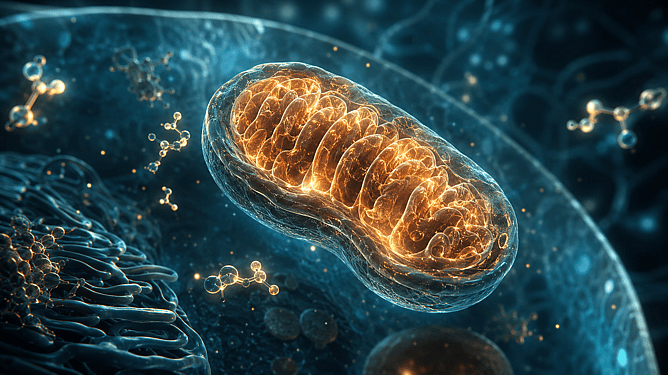
Conventional oncology treats cancer as a genetic disease, driven by mutations in the DNA. The metabolic model treats it as a disease of the cell's energy system — the mitochondria.
Professor Thomas Seyfried of Boston College, who has spent his career on this, explains it more clearly than anyone. When a cell's mitochondria stop working properly, the cell can no longer burn fuel cleanly. To survive, it falls back on a primitive process of fermentation, devouring enormous amounts of glucose and a second fuel called glutamine. This is the Warburg effect, named for the scientist who first observed it a century ago.
Here is the part that matters. That dependency is also the weakness. A healthy cell can switch to running on ketones, the clean fuel your body makes from fat when glucose is low. A cancer cell, with its broken mitochondria, largely cannot. So the strategy becomes: lower the fuels the cancer depends on, raise the fuel it cannot use, and then apply targeted, low-toxicity pressure on the weakened cells. Seyfried calls this the press-pulse strategy — sustained metabolic pressure with timed pulses of treatment.
You can hear the full conversation here: Cancer as a Metabolic Disease with Dr Thomas Seyfried — https://www.google.com/url?q=https://www.youtube.com/watch?v%3Dukm5e7onZXU&source=gmail&ust=1782885272760000&sa=E
The main levers
Across all of these interviews, the same set of tools comes up again and again.
The ketogenic diet, tracked properly. Very low carbohydrate, moderate protein, high healthy fat, to bring blood glucose down and lift ketones. The key is measuring it with the Glucose Ketone Index, a single number from a finger-prick reading that tells you whether you are genuinely in the therapeutic range rather than just guessing.
Fasting. Fasting drops glucose and insulin faster than diet alone and switches on the body's cellular clean-up process, autophagy. This is where Dr Matthew Phillips, a neurologist right here in New Zealand at Waikato Hospital, is doing some of the most interesting work in the world. He is running a clinical trial combining intensive fasting with a ketogenic diet alongside standard treatment in glioblastoma patients, and his early trial participants have lived far longer than the typical prognosis. Fasting, Ketogenic Diets and Mitochondria with Dr Matthew Phillips — https://www.google.com/url?q=https://www.youtube.com/watch?v%3DtfWOXRuNsvg&source=gmail&ust=1782885272760000&sa=E
Targeting glutamine. Glucose is only half the story in brain tumours. Glutamine is the other fuel, and it is the harder one to address, mostly sitting at the research and specialist end. But understanding it explains why diet alone sometimes stalls and why the full strategy matters.
Repurposed drugs. This is the work of Dr Charles Meakin and the Care Oncology protocol — a set of cheap, well-tolerated, already-approved medications used off-label to block the cancer's metabolic pathways. The core four are metformin, doxycycline, atorvastatin and mebendazole. Meakin points to a patient registry of 100 glioblastoma patients showing a two-to-three times improvement over standard care. Care Oncology Metabolic Cancer Treatment with Dr Charles Meakin — https://www.google.com/url?q=https://www.youtube.com/watch?v%3DJG5XubXI4jQ&source=gmail&ust=1782885272760000&sa=E
Dr Jeffrey Dach, author of the Cracking Cancer Toolkit, expands this further, adding agents like fenbendazole, ivermectin and DCA, and explaining the principle that combining these drugs produces a stronger effect than any one of them alone. Mebendazole in particular has been studied as an alternative to standard chemotherapy in paediatric brain tumours.
Hyperbaric oxygen. Used as a synergist rather than a stand-alone treatment, flooding the tissue with oxygen counters the low-oxygen environment cancer prefers and amplifies the effect of the ketogenic diet. For cancer the pressures used are higher than the gentler settings used for brain injury recovery.
High-dose intravenous vitamin C. At intravenous doses far beyond anything you could take orally, vitamin C flips into a pro-oxidant, generating peroxide that healthy cells clear easily but glucose-hungry cancer cells struggle with.
The catch that is specific to brain cancer
There are two things you need to understand if the tumour is in the brain, because they come up in nearly every one of these conversations.
The first is dexamethasone, the steroid almost every brain tumour patient is put on to control swelling. It pushes blood glucose up and makes it genuinely difficult to get into therapeutic ketosis. It is also the cause of the puffy moon-face so many patients recognise. It is often necessary, but it is the single biggest thing that works against the dietary approach, which is why dose and timing have to be planned carefully with the treating team.
The second, in Seyfried's words, is that radiation frees up large amounts of glucose and glutamine in the brain — the exact fuels the metabolic approach is trying to restrict. None of this means refusing conventional treatment. It means the sequence and timing of everything matters enormously, and that is a conversation to have with your oncologist with your eyes open.
Real people, not just theory
What keeps me coming back to this work is that these are not hypotheticals.
Pablo Kelly, one of Seyfried's patients, was diagnosed with a glioblastoma and given months. He declined the standard chemo-radiation, followed the metabolic protocol, and was alive nine years later.
Maggie Jones had stage four lung cancer with four tumours in her brain. Using a ketogenic diet alongside the off-label drug combination, she became cancer-free. She and her husband Brad went on to make the documentary Cancer Revolution. Their story is here: Cancer Revolution with Maggie and Brad Jones — https://www.google.com/url?q=https://www.youtube.com/watch?v%3DmoHsf2UuY3Q&source=gmail&ust=1782885272760000&sa=E
And then there is my own mother, Isobel. She was diagnosed at 80 with an aggressive central nervous system lymphoma, a tumour clearly visible on her MRI, and given a terminal outlook. On a strict ketogenic diet, exogenous ketones, the repurposed-drug combination, intravenous vitamin C and hyperbaric oxygen, her tumour resolved to almost nothing in about 12 weeks. That experience is the reason I do this work, and I told the whole story here: Our Journey With an Aggressive B-Cell Lymphoma — https://www.google.com/url?q=https://www.youtube.com/watch?v%3DrhfW47MzkNs&source=gmail&ust=1782885272760000&sa=E
For the bigger integrative picture — how to bring testing, diet, terrain and a whole medical team together — Dr Nasha Winters, who survived her own terminal diagnosis decades ago, lays out the roadmap better than anyone: The Metabolic Approach to Cancer with Dr Nasha Winters — https://www.google.com/url?q=https://www.youtube.com/watch?v%3DM7ku0Q4O6tU&source=gmail&ust=1782885272760000&sa=E
Where to start with metabolic brain cancer options
If someone you love is facing this, the most useful first step is simply to understand the landscape, and then to find practitioners willing to work with you. Listen to Seyfried for the why, Matthew Phillips for what is happening clinically here in New Zealand, and Charles Meakin for the practical drug protocol. Build your team. Get a glucose-ketone meter. And know that this can be done in layers — nobody has to start everything on day one.
This approach sits alongside conventional oncology, not in place of it. The people doing the best work in this field are the first to say so. But the metabolic brain cancer lens gives families something that has been in short supply for a very long time: real, biologically grounded reasons for hope, and concrete things to do.
About the author
Lisa Tamati is a New Zealand genetics and functional-health practitioner and host of Pushing the Limits, a top-2% global health and longevity podcast and one of the longest-running in the field. A former elite ultra-endurance athlete and author of three books, she is co-founder and Chief Science Officer of longevity-supplement company Aevum Labs and runs Long Life Hyperbarics in Taranaki.