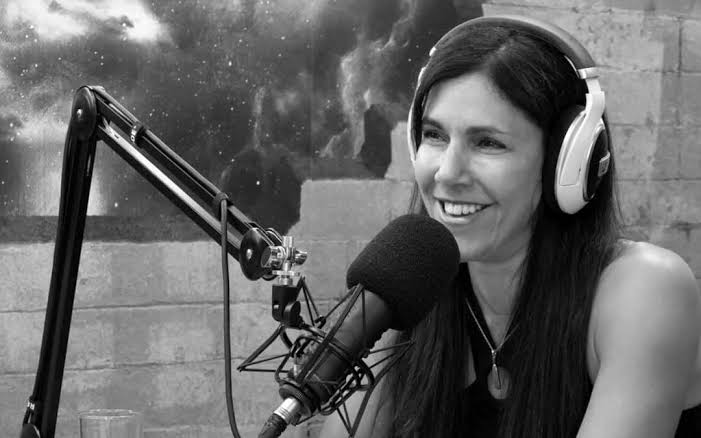
Join us for an in-depth conversation with Paul McArthur and Daniel Reid from BitKiwi, New Zealand's premier Bitcoin community organisation. Discover their journey into Bitcoin, the growth of crypto adoption in NZ, and what the future holds for digital currency in our nation.
Topics Covered:
Bitcoin's role as a store of value vs medium of exchange
Currency debasement and the decline of fiat money
Lightning Network and Layer 2 scaling solutions
Bitcoin taxation challenges and de minimis exemption proposals
Institutional adoption: BlackRock, JP Morgan, and the changing landscape
Central Bank Digital Currencies (CBDCs) vs Bitcoin
The K-shaped economy and inflation's impact on savings
Bitcoin's comparison to the internet revolution
Stablecoins and their role in crypto adoption
Whether you're a Bitcoin beginner or seasoned holder, this conversation offers valuable insights into the current state and future potential of Bitcoin in New Zealand and globally.
About the founders:
Paul McArthur: better known in the New Zealand Bitcoin community as Bitkiwi Paul, is a passionate advocate for Bitcoin adoption in New Zealand. Paul is a co-founder of Bitkiwi, the grassroots movement behind New Zealand's premier Bitcoin event. Paul is also a co-founder of Orange Pages, a Bitcoin-focused marketplace project designed to connect buyers and sellers within the Kiwi Bitcoin community, making it easier to trade goods, services, and value using Bitcoin. Paul is a Bitcoin expert with a deep passion for Bitcoin education, regularly sharing knowledge to help onboard and empower individuals and businesses in the space. Professionally, Paul is an IT programmes and projects consultant, bringing proven expertise in project delivery, strategic implementation, and technology management to the Bitcoin ecosystem.
Daniel Reid: better known in the Bitcoin community as Bitkiwi Dan (@satstothemoon), is a passionate advocate for Bitcoin adoption in New Zealand. Dan is a co-founder of Bitkiwi, the grassroots movement behind New Zealand's premier Bitcoin event. Dan is also a co-founder of Orange Pages, a Bitcoin-focused marketplace project designed to connect buyers and sellers within the Kiwi Bitcoin community, making it easier to trade goods, services, and value using Bitcoin. Dan is also a dedicated home miner, using the heat generated from his Bitcoin mining setup to efficiently heat his home during New Zealand winters and warm his pool in summer. Professionally, Dan is a Chartered Accountant (CA) and a chartered member of the Institute of Directors, bringing financial expertise and governance insight to the Bitcoin eco space.
Connect with BITKIWI:
Website: Kiwi BitCoin Guide
X: @BitKiwi1
Learn about Bitcoin Policy New Zealand's initiatives and how you can get involved in the Bitcoin community across New Zealand.
Upcoming BITKIWI Events:
BitKiwi 15 - Christchurch: March 7th (featuring Francisco Colombo)
BitKiwi 16 - Auckland: July 20th
BitKiwi 17 - Wellington: October
🧬 Know your health risks before they become problems
Your Health Compass: 11 Health Screenings. 10 Minutes. Zero Guesswork
Your Health Compass gives you 11 clinically validated health screenings in about 10 minutes — covering diabetes, autoimmune conditions, brain health, cancer risk, mental health, and more.
No blood tests. No doctor's visit. No waiting.
Just science-backed questionnaires used in real medical research — now available to you for a one-time $19 payment.
✓ Instant personalised risk scores
✓ Downloadable report you can share with your doctor
✓ 100% private — your data never leaves your browser
Stop wondering "should I be worried about this?" and start knowing where to focus your prevention efforts.
→ Take the assessment now at: yourhealthcompass.org
📌 Topics Lisa can help with:
Lisa is a Genetics Practitioner, Health Optimisation Coach, High Performance and Mindset Coach.
She is a qualified Ph360 Epigenetics coach and a clinician with The DNA Company and has done years of research into brain rehabilitation, neurodegenerative diseases and biohacking.
She has extensive knowledge on such therapies as hyperbaric oxygen, intravenous vitamin C, sports performance, functional genomics, Thyroid, Hormones, Cancer and much more. She can assist with all functional medicine testing.
🔬 Testing Options
Comprehensive Thyroid testing
DUTCH Hormone testing
Adrenal Testing
Organic Acid Testing
Microbiome Testing
Cell Blueprint Testing
Epigenetics Testing
DNA testing
Basic Blood Test analysis
Heavy Metals
Nutristat
Omega 3 to 6 status
and more
Lisa and her functional medicine colleagues in the practice can help you navigate the confusing world of health and medicine .
She can also advise on the latest research and where to get help if mainstream medicine hasn't got the answers you are searching for whatever the challenge you are facing from cancer to gut issues, from depression and anxiety, weight loss issues, from head injuries to burn out to hormone optimisation to the latest in longevity science. Book your consultation with Lisa
🤝 Join our Patron program and support the show
Pushing the Limits' has been free to air for over 8 years. Providing leading edge information to anyone who needs it. But we need help on our mission.
Please join our patron community and get exclusive member benefits (more to roll out later this year) and support this educational platform for the price of a coffee or two
You can join by going to Lisa's Patron Community
Or if you just want to support Lisa with a "coffee" go to
https://www.buymeacoffee.com/LisaT to donate $3
🌟 Lisa’s Anti-Aging and Longevity Supplements
Lisa has spent years curating a very specialized range of exclusive longevity, health optimizing supplements from leading scientists, researchers and companies all around the world.
This is an unprecedented collection. The stuff Lisa wanted for her family but couldn't get in NZ that’s what it’s in her range. Lisa is constantly researching and interviewing the top scientists and researchers in the world to get you the best cutting edge supplements to optimise your life.
🎥 Subscribe to our popular Youtube channel
with over 600 videos, millions of views, a number of full length documentaries, and much more. You don't want to miss out on all the great content on our Lisa's youtube channel.
📚 Order Lisa's Books
Lisa has published 5 books: Running Hot, Running to Extremes, Relentless, What your oncologist isn't telling you and her latest "Thriving on the Edge"
Check them all out at
https://shop.lisatamati.com/collections/books
🔴 Red Light Therapy:
Lisa is a huge fan of Red Light Therapy and runs a Hyperbaric and Red Light Therapy clinic. If you are wanting to get the best products try
Flexbeam: A wearable Red Light Device
https://recharge.health/product/flexbeam-aff/?ref=A9svb6YLz79r38
Or Try Vielights’ advanced Photobiomodulation Devices
Vielight brain photobiomodulation devices combine electrical engineering and neuroscience.
To find out more about photobiomodulation, current studies underway and already completed and for the devices mentioned in this video go to
www.vielight.com and use code “tamati” to get 10% off
🎙️Enjoyed This Podcast?
If you did, subscribe and share it with your friends!
If you enjoyed tuning in, then leave us a review and share this with your family and friends.
Have any questions? You can contact my team through email (support@lisatamati.com) or find me on Facebook, Twitter, Instagram ad YouTube.
For more episode updates, visit my website. You may also tune in on Apple Podcasts.
To pushing the limits,
Lisa and team
Episode Transcript
Pushing The Limits Podcast Transcript
Bitcoin, Hard Money & the Kiwi Bitcoin Community — with Dan Reed & Paul MacArthur of Bit Kiwi
---
Lisa: Well, hey everyone. Welcome into Pushing the Limits. Fantastic to have you with me here today. I've got two lovely gentlemen for you to meet who are going to be sharing quite an inspirational story. We're all Bitcoin fans and these two gentlemen are definitely Bitcoin fans. So we've got Dan Reed and Paul MacArthur with us today from Bit Kiwi and we're going to be doing a deep dive into Bitcoin, Bitcoin in New Zealand, and what you guys have been up to. So welcome to the show guys. Fantastic to have you. How's your morning down there? Are you guys in Wellington?
Paul: Yeah, we're in the Hutt at the moment where I live, and Dan's in Upper Hutt down in Wellington. Yeah, good morning. Bit of torrential rain that never hurt anyone.
Lisa: Yeah, it's been a bit wild in this country lately.
Dan: Yeah, we're luckier than some other people at the moment. So let's count our blessings and hope everyone's okay on the other side of the island.
Lisa: Guys, I want to dive into your backstory a little bit. Each of you — how did you get into Bitcoin? Tell us your backstory and then we'll get into Bit Kiwi, which is what you guys have started.
Paul: Yeah. Myself and Dan and another mate of ours, a longtime friend since childhood, we just started talking about Bitcoin. Our other mate and Dan in particular sort of perked the interest. And it's the classic story — you think "is there a bit of money to be made?" and then you go down the rabbit hole and everything changes. So in a matter of months the three of us started talking about it and learning about it — podcasts and YouTube videos and books and reading a whole lot — and just became obsessed, all three of us at once really.
And as you probably know, and a lot of Bitcoiners know, it's kind of life-changing once you start to understand what's going on. Then it spreads into economics and monetary history and "what is money?" and it just kind of changes your whole outlook on life really. In a matter of months, it went from normal life to "okay, this is a kind of life-changing moment in history with something like this coming about."
Then we just got a passion for it. This is the future and we want to be involved in it. And you get that early thing where you just want to tell the world about it. So we sort of went out into the Bitcoin community, but there wasn't too much going on. There was the odd meetup here and there, but it was kind of tough to meet Bitcoiners in real life. We were looking for events and there weren't really any. So we were just like, "Oh, bugger it. We'll just start one."
And that's sort of how Bit Kiwi came about. Started off as — we'll just put the word out there in the community through Twitter at the time and see if anyone shows up. And 20 or 30 people showed up to the first event. Like, "Oh okay, this is something." So then we just started building on it and we've done 14 of them now.
Lisa: Wow.
Paul: They've grown and we get regular speakers and we try and go through a few themes and different aspects — education and just getting the Bitcoiners together really. We've been really lucky. A great crowd joined from day one and a lot of them have gone on to create Bitcoin businesses and initiatives in New Zealand. Now it's a really great community and a really awesome place for anyone with any level of interest and knowledge to come along. It's a good place to network with other Bitcoiners.
Lisa: And Dan, how about you? Was your journey similar getting into this?
Dan: Yeah, it was. At the time Paul and I were with the same employer. We were sitting on Parliament grounds. I think it was early in the year, so it wasn't as busy at Parliament. And Paul sort of said to me, "Oh, you know, me and Dan are looking at Bitcoin. What do you know about it?" And I rubbished it. But I quietly went away and did some research. And within a few days, I thought, "Gee, there's something here."
I thought at that point I'd rather look back and go, "That was silly," rather than look back and go, "I didn't get involved and now I'm feeling silly." So yeah, I credit Paul for getting me into Bitcoin — pricking the interest. And here we are.
Lisa: Brilliant. So what is it about Bitcoin? My journey started in about 2020. How long have you guys been in the space? What sort of year was this?
Paul: 2019–2020. Very similar.
Lisa: Yeah, I think a lot of people came during the COVID times when there were a lot of paradigms being broken in many ways, shapes, or forms. We were sort of like, "Hang on a minute, things are not working like we were told they were going to work." Certainly that was the case for me. It made me look at government debt out of control worldwide, then fiat currency, then monetary history — and you start to realize that this whole thing was built on a house of cards that is sliding off a cliff. We need a hard money. What's your take on why Bitcoin is so important for our future and the change of the monetary system?
Paul: The biggest takeaway when I started reading about Bitcoin and spreading into monetary history was around the debasement of money. You just saw it repeated over and over since the first types of money were formulated. As soon as someone has an opportunity, more money will be created and the currency will be debased — the primary cause of inflation. That's just how it's always happened.
I think we've got this huge normalcy bias because our whole lives, our grandparents' lives, our parents' lives — it's kind of worked. You don't really question it. Then once you actually start reading, you realize it's on shaky ground. It's about a trust element in society. If we all believe the money works as the money, then it works.
I had no appreciation that currencies generally don't last that long and that the number one driver behind a successful currency is the scarcity and hardness of the money. Understanding that and then seeing how the gold standard worked and why it was so successful throughout the world, and how it's become separated from money now — and then realizing that Bitcoin is actually the ultimate scarcity and you can't even beat it. Once the wheel's been invented, you can't invent it a second time. That was the hardest thing to get your head around.
Once you understood that, it just seems so obvious to me that Bitcoin is the next advancement of humanity beyond the gold standard. We're currently living in this little blip in time between those two things, where natural human tendency towards debasement has occurred and now we're ready to move into something we've discovered rather than invented — this ultimate scarcity, a digital currency that can't actually be copy-pasted like everything else digital. It just becomes really obvious.
Lisa: It takes a lot to get your head around. Now, where Bitcoin has really grown exponentially is in the idea of a store of value and that it's a hard currency. People can see the debasement happening all around the world. We also saw last year gold and now silver ripping through the roof, and usually Bitcoin follows that. There's been a bit of a break in that correlation of late but I think those crocodile jaws will come back together. What do you see, Dan, as some of the roadblocks to where we want to go as Bitcoiners? We'd love to see it not only as a store of value but also as a medium of exchange on the daily. What are some of the problems getting it there?
Dan: I still feel we are very early. That's sort of why there's a number of hurdles to get over. I certainly think the taxation side — taxes on purchases and the complexity of that — is one. People's general understanding, including merchants, as to the ease for which this can be used. We are still early.
The politicians — we need them to come a long way. The world's got excited by the Trump administration and the like, but we probably haven't quite seen some of the progression we had hoped to see. Things are still taking time. But it is growing. There's over 40 merchants in Queenstown now accepting Bitcoin. Where we host Bit Kiwi in Wellington, Shushu Bar accepts Bitcoin. It's probably growing at an exponential rate and I'm optimistic in three or four years' time it'll look very different to what we've got today.
Lisa: Especially with things like the Lightning Network coming online. I've interviewed Jeff Booth and people like that who are working on those layer twos. For people who don't know, the base layer of Bitcoin only has about seven transactions per second. That's not big enough to scale to a medium of exchange where you've got millions of transactions happening every second. You need these layer 2 systems to help scale that — things like the Lightning Network and others. And then we've got the taxation problems. Every transaction is a taxable event. You've got to keep records that are quite extensive. It's still very clunky and difficult at the moment. But I'm hopeful the technology will go roaring ahead pretty quickly.
Where do you think our trajectory is, and what are some of the obstacles for Bitcoin in the next couple of years — from a regulatory point of view both internationally and nationally?
Paul: The way I see Bitcoin is it really is a full economy. I personally see it as a series of use cases that an economy serves. The store of value is the big use case front and centre which is working now — it's doing what it said on the tin. It's a hard currency which can't be debased. That's why most people's viewpoint of Bitcoin is that's all they understand it to be — some kind of investment.
When I'm talking to people, I like to open with: Bitcoin is not actually an investment product. You can buy and sell it and there is a market, but actually it's a full economy and other use cases are going to come. The medium of exchange is kind of one of the final dominoes to fall. I feel that will truly hit tipping point when you've got a large amount of merchants that want Bitcoin. If you want it, you're going to incentivize its use and want your customers to give you Bitcoin. That could happen at any moment.
One outfit doing great work is Bitcoin Policy New Zealand, which has released their paper for a de minimis tax exemption. At the moment, technically, if you buy some Bitcoin and then go to the shop next door and spend it, it's a taxable event — seen as though you've invested for an hour. Getting those sorts of things changed will be huge because at the moment the lawmakers don't understand Bitcoin and that it's different to anything else. They're trying to put the square peg in the round hole.
It's up to people like us to educate and get moving with these initiatives. There's a lot of good things going on — Bitcoin Policy New Zealand, Lightning Pay, the Bitcoin Basin — hopefully we see a lot of activity on that soon.
The beauty with Bitcoin is anybody can build things. It's an open network. It's like the internet protocol to me — once you plug in, you can build anything. They're pushing open banking in the fiat world now, which is a good step forward, but it's nothing compared to what's possible by integrating with the Bitcoin network. That's open banking on steroids. It's an open market for any clever innovator or entrepreneur to just come up with something cool and give it a crack. Just like we saw in the '90s with the internet.
Lisa: Absolutely. And Dan, how do you see things like stablecoins? They've been around for a decade, but now with the Clarity Act in America and so on — stablecoins have taken some of the use cases of Bitcoin away for transactional things, especially for the unbanked in the developing world. Do you see those as a positive development, or could they slow down Bitcoin becoming a medium of exchange?
Dan: Good question. Look, I think down the track we might look back and go stablecoins weren't all that bad. I don't actually think long-term stablecoins are needed. At the moment, stablecoins are appealing in countries with even higher inflation than what we've experienced. I could understand why they've been picked up so quickly in those countries.
But I think ultimately Bitcoin — the base layer with Lightning, the layer two, and down the line there might even be further layers added. I do think the market for stablecoins is evident now in some economies, but down the track, stablecoins have introduced people to digital payment, which is actually positive for Bitcoin.
Lisa: That's an interesting point. Once you're in the digital economy with your digital stablecoin dollars, it's one click away to go, "Oh well, I'll put some of that in Bitcoin." Then you understand wallets, exchanges, all of that. So maybe it takes a piece of the pie in the short term, but long term it's onboarding people into the digital economy.
We've seen Bitcoin adoption going sky-high in the third world and now a lot of people using stablecoins because they want US dollars. If you've got a really terrible fiat currency — say you're somewhere with horrific hyperinflation — luckily in New Zealand we live in a pretty stable economy. We've got inflation but not hyperinflation. But in those places, where are you going to put it? Bitcoin or stablecoins. China and Europe are pretty scared of these stablecoins and whether America could become very dominant because of them.
What's your take, Paul, on the Clarity Act and Genius Act that have gone through in the last year in America?
Paul: I think it's positive overall. I do think Bitcoin, because of its strength and fundamentals, is inevitable. If they weren't pursuing these things, I think it would still happen. But it's about the pace. So I've been happy to see it.
But a big part of what I talk about is that Bitcoin is really bipartisan. Sometimes I get slightly worried that people make a political association between the right and Bitcoin, where Bitcoin really is libertarian. The right is a more natural quick embrace with the freedom and government playing less of a role in people's lives. So I do sometimes worry about that aspect. But overall, whatever your political affiliations and the motives behind some of these things, ultimately I think it's good for people.
Dan: We've got the Clarity Act that has progressed a bit slower than we hoped. A lot of what has happened is probably more in the stablecoin and crypto space. I'm looking forward to Bitcoin naturally pushing through and dominating the conversation. I think there's still confusion amongst lawmakers in the US as to what is best. And things like Trump Coin are evident that it's still not where we want to be.
Lisa: We definitely don't want to be there. And this is not a political show — we're not endorsing either direction. What we are endorsing is Bitcoin.
For me, Bitcoin is almost a spiritual journey at this point. I came for the investment. I also came because of government overreach. I am a libertarian sort of person at heart and I don't like being told what I can and can't do. Every time I try to pay a bill for my company, buying something from China or somewhere around the world, the banks block my cards and tell me it's "for my safety." Those things are a violation. I find that very controlling. And that's getting worse — the censorship, the controls.
Things like in England where they can see what you buy and whether it's created a carbon footprint. That's sort of like the social credit system in China. That's horrific. We do not want to go to places where you're told, "You're overweight, you can't buy a packet of chocolate biscuits." That's the type of thing that could come in when we let controls at that level into our monetary system. And CBDCs — the ability of governments to completely control their citizenry through these Orwellian spy coins, as I call them.
What's your take on CBDCs as opposed to Bitcoin, which can't be taken off you?
Dan: Only really focusing on the Reserve Bank's attempts at a CBDC — I haven't been overly concerned because they're working towards some sort of 2030 test launch. I think by then the ship has well and truly sailed. They will be spending millions of dollars per year on something they will shelve because they're going to be way too late. In this environment, 2030 is a long way out.
At a principled level — awful things. I'm just completely confident they will be so far behind the curve that it will become irrelevant by the time they think they've got something.
Paul: I'm equally optimistic on CBDCs. The track record of government delivering cutting-edge technology is not great. Having worked in government departments, I struggle to see how they push through the security approvals. A CBDC is not really a digital currency — it's kind of just a more modern form of fiat currency. There's going to be a level of centralisation that has to be protected that you don't have in Bitcoin. Security looks like a problem.
Worst case scenario, the government delivers a CBDC that's what they demand you transact with — they'll pay you in CBDC, you'll pay your taxes in CBDC. But Bitcoin is permissionless. Nobody's ever going to store their wealth in these things. They'll always be storing it in Bitcoin. They can't stop Bitcoin.
I'm pretty optimistic. Governments will try and they'll sadly waste a lot of taxpayers' money. Hopefully others try and fail and then others see that and realise it isn't worth the effort.
Lisa: China's already had a CBDC for a number of years and nobody's adopted it, even in a place where you're told to adopt it. The European Central Bank has had to set theirs back to 2029. It's a complete mess really.
But in amongst all this is this massive change happening to our monetary system. We can all feel it. We can see the K-shaped economy — where assets are going up. Bitcoin's going up, equities are generally going up, gold's going up. All of the people that have assets are doing okay. Anybody who doesn't have assets is really in trouble because our currency is debasing constantly. If you're not invested in really good stores of value, you're going down the toilet at a hell of a rate.
The inflation and debasement together rate is about 12 to 14% a year. My husband's a firefighter and they're on strike at the moment — they're being offered 1% or something ridiculous for the next five years. You're losing your purchasing power at 12 to 14% a year! You go to the supermarket, you know what a steak costs nowadays. A lot of young families can't buy cheese, can't buy the staples that New Zealand produces. We can still afford the stuff that'll make us sick — somehow that's cheaper — but buying fruit, veggies, cheese, butter, milk, steak? Things are just out of control.
Sorry for the rant, but the debasement is real. There are a lot of people in deep trouble financially. I run three companies — the last few months have been tough. We've seen a massive drop-off. Things are getting pretty tight for a lot of people.
Paul: As you say, the inflation numbers versus what people see in the supermarkets... I do think classically Bitcoin fixes this. But what it comes back to is that equities and assets are going up because of inflation. That's where people need to store their wealth because you can't just save it in cash.
When I talk about Bitcoin, a big thing I always come back to is people just want to save their money. Every second person you talk to now is in Sharesies and Kiwi Saver and all these things. All of a sudden everybody's tried to become some kind of expert investor. But we're all investing in the same things. We're creating what looks like a legitimate kind of Ponzi where we've all got to invest in the same things. Underneath it all, people just want to save their money and have it for the future.
The Reserve Bank's targeted inflation rate says that if I put $100 in a savings account on January 1, come December 31, I can buy $98 worth of stuff. That's the targeted goal! And learning about Bitcoin and Austrian economics makes you think: why is this 2% targeted? There's no science behind it — it actually originated in New Zealand with Roger Douglas, and America took it on.
Getting your head around the fact that 2% inflation is not good for the average person and doesn't need to be that way — that's a big step. Why can't I just put $100 under my mattress and a year later it gets me $100 worth of stuff? That's what Bitcoin brings. Then you can save your money. Without debasement, we've got a natural market force curbing inflation and the rise in prices, and people can afford good things.
Lisa: Dan, what's your take on that?
Dan: Going back to the K-shaped economy — the money printing and inflation has led to asset price growth as those with assets park additional money in assets to continue growing their wealth. When you talk about the last few months being quieter, I do worry about that. I've experienced it myself — any disposable income you had at the end of the week is now gone. Whether it's insurance, rates — there's a whole range of things with double-digit inflation. I do worry that people have lost their disposable income and it's not coming back.
I think even those that have some assets are now hurting to the point where for a lot of people, Bitcoin probably is the only way out. But one of the biggest hurdles — people say to me, "I understand what you're saying. It's really good. It sounds too good to be true." Since we've come from a monetary system our entire lives where it has issues, finding something perfect — it just can't be. And that's where people have got to go and do the homework.
Lisa: We can lead them to water, but they need to go and study monetary history. This has happened over and over again over thousands of years. Our problems really started in World War I when the Bank of England started debasing the currency and issuing war bonds with nothing behind them, getting off the gold standard. Then in 1971 Nixon took us completely off the gold standard. Since then, fiat currency has been normal for us — it's our framework of thinking.
It takes a big jump to actually look at what is money — it has to be divisible, a store of value, transportable over time and space. And this is where Bitcoin is the perfect money. Gold was great for 5,000 years, but try taking a gold bar across the border. Bitcoin goes across the wires in a split second. It's divisible down to the tiniest Satoshi. It's the perfect system and answer to our ills if we let it be the base of our economy. The banks and central bankers are going to go down kicking and screaming, but technology has a way — you can't stop it once it's here.
Paul: Absolutely. It's a piece of technology that can't be stopped and won't be stopped. It's just about the velocity of the change. I always draw the biggest parallels with the adoption of the internet protocol. The established institutions went down kicking and screaming but eventually they had to integrate. Bitcoin is to money what the internet was to communication. The traditional newspapers that didn't build a website went down, and I think it'll be the same with banks.
We've got a guy who used to come to Bit Kiwi events, James Scower, who is around the world developing great things in Bitcoin. He was telling us about some of the things he'd seen in Brazil where major banks have your accounts in the app and then Bitcoin at the bottom — they're already integrating through popularity. They'll bend the knee because that's what the customers want. They'll look at the risk profile and say, "It's a bigger risk for us not to work with this than to pretend it's not there."
I worry about the pace a little bit. The difference to the internet adoption is that Bitcoin is money — there's a whole lot of extra skin in the game. That's where I get frustrated with the cryptocurrency movement because it detracts from seeing the value of Bitcoin when people's natural first look is, "Oh, Bitcoin is one of many cryptocurrencies."
Lisa: It's a separate thing. It shouldn't all be under the one name "crypto." It's Bitcoin and then there's crypto — completely different. Some of those technologies will do fine, just like some companies will do fine, but nothing is Bitcoin. It's the immaculate conception — a different beast. The branding of "it's all crypto and it's all criminals" has been damaging, but Bitcoin is very different and needs to be handled differently in law. America has separated Bitcoin out, which is great.
We've seen massive turnarounds from people like Jamie Dimon at JP Morgan — going from "if any of my employees are found buying Bitcoin, they're getting the sack" to now selling Bitcoin products and ETFs. Or Larry Fink at BlackRock — going from "it's rat poison" to now their biggest most successful product and "we're going to tokenise everything." A complete 180. Vanguard going down in the last couple of weeks. It's like, finally.
Paul: Those examples are actually massive. We've been interested in Bitcoin six, seven years now so we lose sight of those feelings from the early days. But there is no bigger pivot in the economy than the likes of BlackRock, Vanguard, and JP Morgan completely changing their tune. It's pretty groundbreaking.
Lisa: And going from the Biden administration to the Trump administration — the massive change from Choke Point 2.0 "kill everything" to completely the opposite. We live in interesting times.
Now, Bitcoin isn't just an investment — it's a spiritual journey, a change, a hope for humanity. But the price action of late has been "disappointing" for some. We expected it to go a lot higher this cycle. When you see gold ripping but Bitcoin not ripping with it — what's your take on what's happening?
Dan: I was expecting a lot more last year and probably a quieter year this year. What may happen is the doom I was worrying about for 2026 may not arrive. With the institutions coming in — two trillion is a lot of money but it's also not — there is ability to play around with price through options, through paper Bitcoin. I do think we are going through a period of huge rotation out of people that have held Bitcoin for 15 years into treasury companies.
We're probably going to have a quieter period for a few months before we rip again. If we can paint a green candle in 2026, that will be confirmation the four-year cycle is over or never really existed. And if that's the case, we might get a beautiful 10 years ahead where we only see green. Despite the disappointment of 2025, I'm rather optimistic about what 2026 will bring.
Lisa: I've got a friend, Jordi Visser — brilliant macro analyst, Bitcoin guy, AI expert — who wrote a piece that went viral about this being Bitcoin's IPO moment equivalent. We were all surprised at why it didn't go up at the end of last year, and he said it's just a change of the guard. We're going from the old OG Bitcoiners who've held it for a decade into new hands, somewhat institutional hands, and that's a normal progression. If Bitcoin was a company, this would be like it going public — a step change into a bigger thing, but during an IPO there's often a dip or flatness while things are digested.
The old OGs who were selling a lot over the last 12 to 18 months have really slowed down now, and we're seeing them come back in. A lot of people saw that as the original gangsters getting out because they don't believe in it anymore. I don't think that was the case — a lot were just taking chips off the table for their own lifestyle. China banning and putting pressure on miners probably caused a lot of selling out of Asia too.
Jordi thinks all of that contributed to the suppression but this is actually a good setup for another rip higher — whether later this year or who knows. In the meantime, I'm stacking whatever I can while it's at these levels.
Paul: That's a really interesting and quite logical viewpoint. You can imagine someone who understood Bitcoin really early, bought a lot, sat on it for years — they deserve to reap what they've sown. It sounds quite exciting when you paint it as a changing of the guard — we're just moving to the next phase.
In our time in Bitcoin, I've just been proven wrong on short-term predictions again and again. Everyone gets excited when the price goes up. But then you see Michael Saylor buying all the tops — he says he buys the tops. He doesn't care. As soon as he gets the money, he's buying. DCA.
I realise it's pretty normal and it takes you back to just trying to save what you can when you can. Inside five years I'm not going to accurately predict much at all, but that classic zoom out — I know what this is doing long term. It's not a get-rich-quick scheme. This is low time preference saving for my future. I like to say to people: I don't invest in Bitcoin. This is just how I save my money.
Lisa: Exactly. You can make money short term — the volatility has enabled people to get rich doing that. But for us it's moved beyond that. We know where this is going long term. There's only about 15 million of them. Don't have that unit bias where you think it's too expensive at $100,000 US. A few Satoshis could be worth a lot of money in fiat terms in the years ahead.
Don't think, "Dogecoin is only a few cents, I'll buy that instead" — that's not the same thing. And don't think it's too late. We're at the beginning of Bitcoin's journey — about 3% in. This is going to be a hundreds-of-trillions-of-dollar asset in the future. We're only at $2 trillion now. We're early. As early adopters we have to take the ups and downs. As Michael Saylor says, volatility is vitality. And we've actually had a lot less volatility of late as it matures as an asset class.
Guys, we're coming up on the hour. You guys have Bit Kiwi with events going on in different parts of the country. Tell us how people can get involved — come learn, have a beer with you, find out more.
Paul: We've got our next couple of Bit Kiwi events scheduled in. Bit Kiwi 15 will be in Christchurch on March the 7th at the Duck Central, 1:00 PM. We're lining up speakers — our first confirmed speaker is Francisco Colombo. He runs the Bitcoin Journey — they do educational workshops around what Bitcoin is, how to use it, how to run cold storage. They work with Lightning Pay around some of the merchants down there. They're at bitcoinjourney.nz. He's a fantastic guy — really engaging, knowledgeable Bitcoiner who's been in it for a long time.
We've also got Bit Kiwi 16 which will be in Auckland in July at the Bird Cage on the waterfront — our last Auckland event was at that venue and it's great. And then Bit Kiwi 17 will return to Wellington in October. So we're doing three events a year now — Christchurch, Auckland, and Wellington is our cadence.
Lisa: Can people help set up little Bitcoin communities around the country through you guys?
Paul: We stick to organising the Bit Kiwi events, but we really help promote and talk closely with the people who organise the individual meetups in different centres. There's five or six meetups going around the country. We know all of them, talk with them a lot, and produce our monthly newsletter — the Bit Kiwi Brief — where we put in the details of where those next meetups are. All those organisers are regular attendees to Bit Kiwi events, so we're always talking with each other and helping out. Meetups are the great grassroots organic aspect of Bitcoin — the more that pop up around the country, the better.
Lisa: Brilliant. We all have to play a little part — be a node in the network, as Jeff Booth puts it. Do your little bit for the network.
Guys, thank you so much for your time today. Really appreciate your passion and deep understanding of Bitcoin and what you're doing for New Zealand and our future down here. It's really cool to have some Kiwis to interview. If people want to reach out, give us your website and socials.
Paul: We put out a bit on Twitter/X — our handle is @bitkiwi1 (the number one — somebody already had Bit Kiwi sadly!). We don't have our own website but we run a lot of information through the Kiwi Bitcoin Guide website — that's a great community initiative started by Andrew down in Christchurch. It's at kiwi bitcoinguide.org. They carry a lot of information on what's going on in the Bitcoin community and we've got a dedicated Bit Kiwi page on there. You can subscribe to the newsletter for free through there.
You can also reach out via email at inquiry@bitkiwi.co.nz.
Lisa: You guys are rock stars. I'm glad to have met you. Very grateful for all the work you're doing for Bitcoin and for Kiwis. Thanks for your time today — it's been wonderful.
Paul: Thank you, Lisa. Pleasure.
Dan: Thank you for having us on, and thank you for everything you do.

Listen Via...




What listeners are saying
My favourite running podcast by miles⭐ ⭐ ⭐ ⭐ ⭐
This is the best podcast for long runs. Lisa is just so relatable, honest, funny and inspires me to push my own limits. Awesome guests (I particularly enjoyed the podcast with Kim Morrison) and a wide variety of topics covered. Thanks for keeping me running, Lisa!
Jinni S via Apple Podcasts · Australia · 07/02/19
-----------------------------------------------------------------------------------------------------------------------------------------------------------------------------
My favourite podcast ⭐ ⭐ ⭐ ⭐ ⭐
Helps me get through my boring desk job. Absolutely love this podcast. Great topics and advice that has helped me to better myself and my approach to running.
alekslikestorun
-----------------------------------------------------------------------------------------------------------------------------------------------------------------------------
Two thumbs up ⭐ ⭐ ⭐ ⭐ ⭐
Always great guests, great insights and learnings that can be applied immediately for every level of experience.
JonnyHagger
-----------------------------------------------------------------------------------------------------------------------------------------------------------------------------
Motivational and Inspirational ⭐ ⭐ ⭐ ⭐ ⭐
I am getting my mojo back with regards to my health and running after treatment for breast cancer, I connected with Lisa as I was looking for positive influences from people who are long distance runners and understand our mindset. Lisa’s podcasts have been a key factor in getting me out of a negative space where I allowed others limiting beliefs to stop me from following my heart and what I believe is right for me. After 18 months of being in cancer recovery mode I wanted to get out of the cancer mindset and back to achieving goals that had been put aside. Listening to Pushing The Limits has put me onto other great podcasts, and in the process I have learnt so much and am on a pathway to a much better place with my mindset and health. Thanks so much Lisa for doing what you do and always being you.
L.Faire