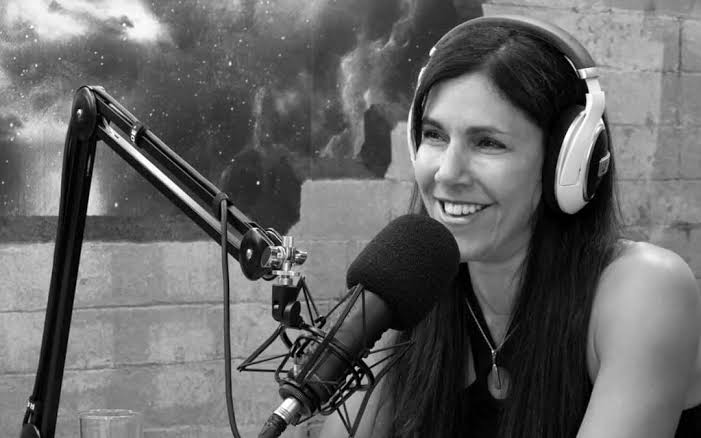
In this episode, we sit down with Thomas Kranzle, aka TradeApologist, a macro-minded swing trader obsessed with charts and disruptive assets. Tom breaks down complex markets into actionable insights, blending technical analysis, fundamentals, and psychology to help traders navigate equities like Tesla and Robinhood, and crypto such as Bitcoin and Solana. We dive into recent market volatility, including the massive dip triggered by Trump's tariff tweet on China, and explore how an athlete's mindset translates to business and trading success.
Whether you're a beginner setting up your TradingView or an experienced trader looking to remove emotions from decisions, Tom's journey from video production to full-time trading offers inspiration on achieving financial freedom.
Connect Thomas:
YouTube: Patreon: X (Twitter):
📈 Start your crypto journey today:
Get started with Bitcoin confidently with our 1 on 1 coaching - learn security basics and let us hold your hand through the start of your journey.
👉 Email us at: support@lisatamati.com to find out how we can help you!
📌 Topics Lisa can help with:
Lisa is a Genetics Practitioner, Health Optimisation Coach, High Performance and Mindset Coach.
She is a qualified Ph360 Epigenetics coach and a clinician with The DNA Company and has done years of research into brain rehabilitation, neurodegenerative diseases and biohacking.
She has extensive knowledge on such therapies as hyperbaric oxygen, intravenous vitamin C, sports performance, functional genomics, Thyroid, Hormones, Cancer and much more. She can assist with all functional medicine testing.
🔬 Testing Options
Comprehensive Thyroid testing
DUTCH Hormone testing
Adrenal Testing
Organic Acid Testing
Microbiome Testing
Cell Blueprint Testing
Epigenetics Testing
DNA testing
Basic Blood Test analysis
Heavy Metals
Nutristat
Omega 3 to 6 status
and more
Lisa and her functional medicine colleagues in the practice can help you navigate the confusing world of health and medicine .
She can also advise on the latest research and where to get help if mainstream medicine hasn't got the answers you are searching for whatever the challenge you are facing from cancer to gut issues, from depression and anxiety, weight loss issues, from head injuries to burn out to hormone optimisation to the latest in longevity science. Book your consultation with Lisa
🤝 Join our Patron program and support the show
Pushing the Limits' has been free to air for over 8 years. Providing leading edge information to anyone who needs it. But we need help on our mission.
Please join our patron community and get exclusive member benefits (more to roll out later this year) and support this educational platform for the price of a coffee or two
You can join by going to Lisa's Patron Community
Or if you just want to support Lisa with a "coffee" go to
https://www.buymeacoffee.com/LisaT to donate $3
🌟 Lisa’s Anti-Aging and Longevity Supplements
Lisa has spent years curating a very specialized range of exclusive longevity, health optimizing supplements from leading scientists, researchers and companies all around the world.
This is an unprecedented collection. The stuff Lisa wanted for her family but couldn't get in NZ that’s what it’s in her range. Lisa is constantly researching and interviewing the top scientists and researchers in the world to get you the best cutting edge supplements to optimise your life.
🎥 Subscribe to our popular Youtube channel
with over 600 videos, millions of views, a number of full length documentaries, and much more. You don't want to miss out on all the great content on our Lisa's youtube channel.
📚 Order Lisa's Books
Lisa has published 5 books: Running Hot, Running to Extremes, Relentless, What your oncologist isn't telling you and her latest "Thriving on the Edge"
Check them all out at
https://shop.lisatamati.com/collections/books
🔴 Red Light Therapy:
Lisa is a huge fan of Red Light Therapy and runs a Hyperbaric and Red Light Therapy clinic. If you are wanting to get the best products try
Flexbeam: A wearable Red Light Device
https://recharge.health/product/flexbeam-aff/?ref=A9svb6YLz79r38
Or Try Vielights’ advanced Photobiomodulation Devices
Vielight brain photobiomodulation devices combine electrical engineering and neuroscience.
To find out more about photobiomodulation, current studies underway and already completed and for the devices mentioned in this video go to
www.vielight.com and use code “tamati” to get 10% off
🎙️Enjoyed This Podcast?
If you did, subscribe and share it with your friends!
If you enjoyed tuning in, then leave us a review and share this with your family and friends.
Have any questions? You can contact my team through email (support@lisatamati.com) or find me on Facebook, Twitter, Instagram and YouTube.
For more episode updates, visit my website. You may also tune in on Apple Podcasts.
To pushing the limits,
Lisa and team
Episode Transcript
FORMATTED TRANSCRIPT: TRADING, INVESTING & FINANCIAL FREEDOM WITH TOM Kranzle
Opening Quote
"It's like first, take control of your own assets. Because even with a little bit of know-how and picking the right assets, you can outperform picking the indices."
Introduction
Well, hey everyone. Welcome to Pushing The Limits. Today I'm super excited to have Tom Crants with me. Tom, welcome to the show. Fantastic to have you. Thank you so much for coming on. Really cool.
Tom: Thank you so much for having me, Lisa. It's my pleasure.
Lisa: Yeah, we've just been riffing, everybody. Tom is a wonderful trader, and he teaches people about trading and empowers people to really take the bull by the horns and learn this what many of us think is very complex - and it is in the trading world. But he's also an athlete who loves to get out in the mountains and hike and stuff. And we were just riffing on how the athlete mindset really benefits you in your business life and in your trading and all of that.
So Tom, tell us a little bit of your backstory and what sports are you into? And you live up in the beautiful mountains because you sent me a lovely video the other day and I'm like, "Oh my god, stunning." Yeah. So tell us a bit about yourself.
Life in the Mountains
Tom: Yeah. Yeah. So now we live in the mountains of British Columbia where we have easy access to climbing and hiking and skiing and trail running and all that. I used to live in the city in Seattle. And now - it was just before COVID actually that we moved up here, two weeks before the world shut down.
And my wife and I, we had always thought, "Oh, we're going to retire in the mountains where we're close to the activities we enjoy." And then we said, "You know what? Why not do it when we are still young enough to be able to get outside and do that?"
The Age Factor
And also, I mean, just as an anecdote - looking around at, and I'm generalizing here, but at the older population where we used to live in Seattle compared to our neighbors here - it's night and day. You know, we ski tour with folks in their 70s who are thin as a rail, are still hiking up the hills at faster paces than myself sometimes. And we thought, "Gosh, as we age, that's what we want to aspire to," as opposed to some of what we were seeing in the daily grind.
Lisa: Absolutely. Absolutely. And this is the thing with longevity and anti-aging - you really, if you can keep your body together now, especially like with all the technology that's coming and all the AI stuff and all of that, you know, if we can hold our bodies together for another decade, then we're going to have ways and means of living longer, much much longer and having healthy lifespan.
So really, it's really important to sort of stay fit now, keeping yourself together so that you can enjoy a much longer, healthier life. That's what I'm sort of like aiming for anyway.
And you're right - when you see people living in nature and living that natural lifestyle, they are much fitter, stronger for much much longer. And it really shows when you go from the city to the countryside, so to speak.
The Trading Journey Begins
So absolutely. Tom, tell us a little bit about the other part that is not about health and hiking and trail running and skiing. Tell us about your trading background. How did you get to become a trader and teach people about trading?
So we're talking trading equities and crypto here and all of the fancy stuff that we got into. And why is it important for you too, while you're telling that story, to empower others to do this? Because it's really a way forward for people. So yeah, tell us your backstory.
The Film Production Years
Tom: Yeah, I've got a lot to say on that. One thing I just wanted to add on the fitness side is that I've always led an active life. My parents, they taught me to go backpacking and climbing at a young age. So the outdoors were very much involved. But I've seen both sides of it. And this will connect to how I got into trading.
But I, in my early 20s, I started a film production company producing documentaries and commercials. And that grew to multiple offices on the west coast and the east coast of the US, a bunch of employees.
The Health Decline
But you get so busy. And in my early 20s, it was like every weekend I was out rock climbing or surfing in the mornings when I used to live on the coast in California. And then as it got busier and busier and, you know, multiple flights a week and meetings - health just slipped.
And by my early 30s, I had terrible sciatica. I was overweight. I had to pull myself out of the car. I had massive back pain. And I was still getting out on the weekends. But then when we made the move up here, I feel like that really saved me. I caught it in time.
If I would have let it slip throughout my 40s into my 50s, it might be much harder to recover. But it just had me realize - it's like, okay, chasing success or these bigger projects or accolades is no good if your health fails.
Quality of Life
And I didn't see it in the moment, but my quality of life was terrible. My mood, my energy - I couldn't get through an afternoon without taking a nap. And now, just - and I'm not as fit or as disciplined as you - but just regular exercise, watching the nutrition, and it's night and day in the quality of life, the no more pain, all of that.
Lisa: So I mean, your audience probably knows, but that's what we love talking about. Because it is about being - okay, I'm starting to go on that slippery slide. And that is most people in their 30s and 40s and 50s - they are going on that slide at some rate, and they don't see it until something big happens often, or something hits them in the face.
The Modern Lifestyle Problem
Because we're so busy trying to - you know, our careers and our achievements and our businesses and money and family and all of these things that, you know, parents, all the things that we have to take care of - we can get left on the back burner. And then the slide goes really really quickly if you're not really watching.
And the human body is such that we need to live in a way that our ancestors lived as best as we can while enjoying the comforts of our modern life. But not letting the comforts of our modern life completely rule the way. Because our human biology still needs to move, needs sunlight, needs to see the sunrise and sunset and, you know, circadian rhythms and all of those bits and pieces that are part of a healthy human being - just get left on the wayside when you're busy working.
So did that lead you then to go, "I need to find a way to make ends meet and live but stepping back from the production company"?
The Transition to Trading
Tom: Yeah. And I mean, that might be a great way to transition into the backstory a little bit. And then we could talk about why I got into showing others or teaching others how to trade.
External Pressures
And I guess just going on to the responsibility and career part - I think there's also so much pressure today, and this all ties back to Bitcoin and hard assets. But with the cost of living increasing - not just rents and the cost of housing, but the cost of food, everything else - so there's that external pressure to work, work, work, grind, grind, grind to meet those obligations.
And then it's easy to let the health slip by the wayside. But if you maintain that, it'll set you up better for all of these things.
Business Growth Before COVID
But it's a long story, but the abridged version is that my business - and I really enjoyed the creative pursuit. I never thought finance or investing was something that I would do, that I would even enjoy, because I love the creative pursuits so much.
And the business grew between 2007 when I started it, or late 2006, so right before the GFC. Generally it was growing at about 15 to 25% a year - so gradual expansion. And then COVID happened and everything shut down. And film permits weren't even being issued for the first eight or nine months in most jurisdictions to go out and do that.
And thankfully in the states we had this Paycheck Protection Program that didn't cover everything, but it let you keep the employees on.
The Crypto Entry
But in 2017, I had a lot of friends who were in the tech space and working on SEO kind of stuff, and they were into crypto. And I had dabbled a little bit in 2017 and just traded casually.
And then it was 2020, and it was like, "Well, what am I going to do now? There's nothing we can do." And I think a lot of people did get into trading at that time, into crypto, and had all that time.
And it was really an accelerated process of learning through some online education, reading books by WD Gann, who's a trader from the 40s and 50s who I subscribe to. And really just having that focus time.
The Backlog and AI Disruption
And then for my particular industry, there was this big backlog in 2021, 2022 where it's like this demand of content. And then it started trickling out again.
And I really, in my industry, started seeing the impacts of AI. I mean, this year, for example, in Hollywood, it's 25% less physical production jobs.
Lisa: Wow.
Tom: So, the lighting techs, the hair and makeup, the people on set - because it's already being displaced by AI-generated content. And the projections are by the end of 2026, that's going to be 40 to 50% less jobs.
Lisa: Wow.
The Second Industrial Revolution
Tom: And I don't think my former industry is an outlier. I think there's going to be a massive shift across many industries. And people are - I think we'll be okay as humans. We'll figure it out. But I do believe there's going to be a period of pain as we adjust.
And the analogy that maybe folks have mentioned on your podcast in the past - but there was the industrial revolution where human muscle was being replaced. Now it's the second industrial revolution, but instead of muscle being replaced, it's brain power being...
Lisa: That's a really good replaced or augmented analogy.
Tom: Yeah, it is. Yeah, the intelligence is coming. And the intelligence is looking like it might be better than ours.
Lisa: Eventually. It's more objective, maybe. I don't know.
Tom: Yeah. More objective and more detailed and bigger memory and all of that stuff. I still think there's a place, but this transition is going to be rough.
Bitcoin and Freedom
And the printing that's going on - of course, we've talked on the podcast before about the spiraling debts all around the world, not just in America, but everywhere. The governments are printing money to kick the can down the road.
Lisa: Fiat - the fiat money system is broken. Broken money. We have a broken money system created by debt. It's a debt-based system.
And that's what led me into the Bitcoin space in 2020. And also the freedom side of Bitcoin - very much libertarian in that sense. And the government overreach, the surveillance that's going on, the things - all of that type of stuff - made me want to look deeper into what are the ways that we can protect ourselves from if such things should happen in future and get worse.
The George Orwell 1984 type prediction - sort of fictional novel that's eerily true. So I got into it from that perspective as well.
The Great Rethinking
Also during that crypto - I think a lot of people in that phase started to rethink their entire life philosophies in that phase. Where am I going? What am I doing? Where is this heading? Where is society heading? And each of us has answered that in their own way.
Exponential Change
But we are living through a time of exponential change. And we don't do very well with exponentials as humans. We like linear progression. We get that 10-15% growth a year - fine, good, that's all lovely. But when things start to explode like AI is exploding exponentially - and what does that actually mean for us? - that's when it becomes really difficult.
So did you then transition into trading full-time, or how did that happen?
The Creative Trader
Tom: Yeah, so it was something I found I really enjoyed. And I didn't think the creative skill set would carry over into trading quite as much as it has.
But really, people look at charts and they feel a little bit overwhelming, intimidating. But really, it's just a read on human emotion playing out on the screen. And rather than seeing numbers, we get to see these patterns play out, which are much easier for our mind to recognize and to see kind of what's going on with buy and sell demand.
Structure Meets Creativity
And so that creative skill set mixed with - I'm also, I'm kind of an odd blend where I'm also very structured and organized, and so I set very strict rules for myself. And maybe that discipline carries over also from some of the sports side.
But I found that those two things work really well together.
The Slow Transition
But in terms of the transition, it was a slow phasing out where I saw the slowing in my business. I unfortunately bit by bit had to let my team go, close offices. And then made this my full-time job between 23 and 24.
Freedom and Flexibility
And it's - I've really, outside of having to let the team go - that's another story, especially when you're close to them. But I would say I've never, even though it's a challenging job - and I can get into why it's challenging - I've never been happier just in terms of the freedom and the flexibility.
Terminal vs. Instrumental Values
And now with the coaching side of things too - we're talking about terminal or instrumental values. I don't know if you've ever done that exercise. You just ask yourself, like, "Why do I do this? Why do I do that?"
And a terminal value is the why. So that would be pursuing happiness or freedom or love or something like that. And then the instrumental value would be the how you get there. So that's maybe pursuing discipline or an education and that sort of thing.
And I found it's like for me, it's personally the freedom side of things - both the self-sovereignty, the autonomy. And then also it's the helping others. Making money is great, and we have obligations, and it makes life easier. But I found a lot of fulfillment from yeah, the coaching side and smoothing out the bumps for other people along the way.
Lisa's Journey
Lisa: Yeah. And super empowering. Because I've been, like I said, in this space for like going on six years. And we have a mutual wonderful teacher, James - shout out to James of Invest Answers - wonderful man, very caring, very compassionate, and very, very amazing mathematician. He's so advanced, it's crazy. But he's been a great guide over the years. And I know you're part of that community as well.
Finding Tom's Channel
And then finding you and finding your channel through DCA, of course. That's how I originally found you.
Tom: Really? So just a few weeks ago.
Lisa: Yeah. Yeah. But then I dived into your catalog of information and education that you've been putting out. And I was like, "Oh, wow." Like, I actually understand what you're saying. And when you were explaining the charts...
The Intimidation Factor
Because it's been intimidating to me. I haven't - I've been investing but not trading. And when I looked at the charts, I've made a couple of attempts prior, and I've just like gone, "I don't know." I start losing myself in the jargon.
And I know that I have the capacity to do it, but I've also got multiple companies and mom and, you know, a very busy life.
Breaking It Down
So someone that can break it down into small steps for people and make it manageable - because I do feel like that, the being able to invest in the right things with a long-term perspective is great. But you also have - I have this want, and I know a lot of other people that are in similar positions - you want to be able to use whatever the market's doing.
If we're going into a bear market next year, I don't want to wait two years before I make any money. You know what I mean? I want to be able to trade in any market that's happening, whether that's good, bad, or ugly at the moment. And that's why the trading side of things appeals to me.
The Trading Apologist
And your teaching style I found really fantastic. And you've got this wonderful YouTube channel that everybody has to go and subscribe to. Tom, tell them your name on the YouTube channel and X as well.
Tom: Yeah. Yeah. It's A Trading Apologist, which is a bit esoteric. Most people don't know the term apologist. But it comes from the world of religion actually. An apologist is someone who would give reasoned arguments for what they believe is true.
Lisa: I didn't know that.
Tom: So yeah. So it's not someone who's saying sorry all the time. Although maybe I do do that too much.
The Mission
But I figured, you know what, I'm trying to convince folks that there is value in trading, particularly in a third-year bull run like we're in right now that's marked by more volatility. And there are different points in the market where different styles excel.
And we can get into that in a moment. But basically encouraging folks to take control of your portfolio.
Financial Advisers
A financial adviser doesn't have your best interest at heart. Their number one motivation is to not lose money, which is a very different end goal than wanting to grow a portfolio to maximize returns.
And within that spectrum, we also have to be a bit cautious to not expose ourselves to outsized risk.
Portfolio Management
So balancing your portfolio, making sure you're not too heavily allocated to the wrong assets - all of that.
But in terms of just convincing people to trade - so it's like first, take control of your own assets. Because even with a little bit of know-how and picking the right assets, you can outperform picking the indices.
The S&P 500 Problem
And this is probably been discussed before, but if you're picking the S&P 500, you have like 40 companies that have performed this year, and the rest that's just dragging you down in that basket of 500 companies. And this year is very much a stock picker's market.
Step One and Step Two
So that's step one. And then step two, once you feel a little bit more comfortable, then learning to rotate in and out of assets when the sentiment and the overbought and the oversold signals are flashing.
The Simple Rule
And just in a very simple sense, I always tell people: when your portfolio is up so much that you're so excited that you're always checking your app, that's probably a time wherein you should trim a little bit.
And when it's a day like we had last Friday where things are down so much that you're like, "I don't even want to open it" - that's probably the kind of day that you should be looking to enter some positions.
Lisa: Enter. Run into the burning building.
Tom: My...
Lisa: My husband's a firefighter, and I always - run into the burning building, as James quotes as well. When everyone - when there's blood on the streets and everything's down, that's when you go in. Not when there's euphoria and your mother-in-law is asking you about Bitcoin.
The Auntie Signal
Like, I literally had my auntie ring me yesterday and ask me about Bitcoin. And I'm like, "Oh, uh, might be coming to the end of the bull run shortly." I don't know.
But I don't know if it's true, but I saw someone post on X that Michael Saylor recorded on the Joe Rogan Experience yesterday. I was like, "Oh no, that's not a good sign if that's true."
Lisa: We're going mainstream.
Tom: Every time we go mainstream, it's time to get out of that train.
Where to Start
Lisa: And where do you start? Because you have a wonderful Patreon as well that you've started just very recently, and I'm going to join that.
Where do you start people at when they're real beginners? Like I've started with spot and shares and Bitcoin mostly and some alts that I'm sort of regretting after last Friday. There was a big correction in the market for those who don't know.
Where do you start people? Is it swing trading, multiple-week swing trades? Or is it day trading? Or perps? Or high-risky perps? Or leverage?
Where do you start if you don't know any of this terminology that I've just thrown at you? Where would you recommend people start? And like, just learning the charts to read the charts first?
Starting Points
Tom: And yeah, I would say that's a great place to start. Well, first, identifying the right assets is number one. And then the easiest type of trading is just buying and selling spot or the straight shares.
Spot Explained
Lisa: So spot for people who don't know, that's what they call buying crypto without leverage.
Tom: Then it would be pair trading. So swapping one asset to another. And as James always says, everything is a pair in trading. You don't have to think in US dollars, and even to assets more broadly.
Real Estate
You know, real estate might see some hiccups over the next couple of years and WD Gann...
Lisa: Yeah. Real estate cycle. I'll be - I'd love to talk to you about that actually at some point.
Tom: Sure.
Lisa: Because I'm trying to marry that with the current new AI system and how does that work? Because we've got some different market structure and AI and things like that happening. But let's park that for a little bit further down the track.
Real Estate Strategy
Tom: Yeah, absolutely. Yeah. And I have some friends who are very into real estate with a bunch of rental properties, and they've been already unloading some of their C-grade properties. So the ones that are deferred maintenance in a worse neighborhood and that kind of thing, with the thought that it's going to do better in markets for the next 18 to 24 months.
And then if we see a correction in real estate, you don't have to stay in markets. If there's an opportunity like we saw in 2008, that could be a wonderful time to think about real estate as another hard asset with a little different strategy.
Trading Types
But going back to the trading - so there's buying and selling just the shares. Then you can pair trade, which means just flipping one asset...
Lisa: Sorry, microphone.
Tom: ...to another. And I don't know if you get this detailed, but we could show the audience a chart how you do that. In TradingView, which is the software we use for charting, you just put one asset divided by another, and then you can switch on those swings.
Options and Perps
And then beyond that, then there would be getting into playing with options, which is a little more tricky. And then there's a large chasm before we get into perp trading, which is what you mentioned.
Lisa: Yeah.
Tom: Which is playing with leverage on crypto. And that's excessively risky, and I would say people shouldn't do that right away.
The Patreon Structure
But in the Patreon, I post a lot of educational content to first get people comfortable reading the charts, using a bit of technical analysis. And then I'm posting trade alerts. We do a call every Sunday to go over, "Okay, what are the opportunities in the market? What are we looking out for? What are we expecting for the path forward?" To really help them kind of bring all that together.
Different Lifestyles
And then it all depends on the lifestyle and availability of each person as well. Because some folks really are already doing this full-time, and they want to be trading more actively. So they might be trading more volatile stocks that they can get into and out of over a few days to a couple weeks.
Amazon Example
And then other people just want to look at it occasionally. So right now, something like Amazon's at a very good value zone, and it's not going to spike by crazy percentage points overnight. But it is something safe to be layering into that is probably going to be worth more in 24 months - or 12 months even - than it is right now. Just if you look at the PE ratio and all that.
Lisa: Yeah. Yeah. Yeah.
Learning the Charts
Lisa: And that's really interesting. Because that's probably where I'm at at the moment for learning from you - I'm just focusing on learning the charts and learning to set my TradingView up correctly.
TradingView, for those who don't know, is a platform where you can read all the charts and have everything - all the indicators and everything that you can put in there to work out technical analysis, which is what we're talking about here. Because you need to be able to read the charts.
Fundamentals vs. Technicals
But also Tom, how do you pair the technical analysis part with the fundamentals of the companies that you're looking at? What do you look for in fundamentals when you're looking at a company's potential?
Long-Term vs. Trading
Tom: Yeah. And I would say it's really different depending on whether it's a longer-term investment or whether it's a trade. Because longer-term investments, you want to look at the fundamentals. You want to make sure they have a strong balance sheet - all these things are in place - because markets can be volatile.
And we can have red days like last Friday, or as you can see by the tickers behind me, as we had today in the US we had another mini crisis in regional banks. So that mixed with muted results or disappointing results from some of the semiconductor players like TSM today led to a selloff.
Emotional Weather
But so you want the fundamentals to be in line for your longer-term holds so you as an investor as well can emotionally weather the storm. Because there are going to be drawdowns and market cycles and all of that.
Trading Fundamentals
Now with trading, I don't care about fundamentals quite as much. And this is where James and I differ a little bit. Because James, he really does a wonderful job of analyzing the fundamentals and picking the winners out of this basket of possible options.
Hype and Momentum
But there are certain sectors that run on hype and momentum. And we've seen that in semiconductors, in the quantum computing space, where some of the quantum computing stocks this year have run over 4,000%. And none of those companies are profitable right now.
Lisa: Wow.
Tom: And most of them won't make it to 2030, and a couple of them will. But because there's all this hype in the sector, I'm okay seeing the capital rotation and saying, "Okay, I'm going to jump on this," just being aware that this isn't a long-term hold. I'm riding it for a few weeks, and then I'm watching it closely for the appropriate time to get out.
The Truth in the Charts
And fundamental analysis is one thing, but I always say that ultimately the truth is in the charts. And James, for his part, his fundamental analysis is great. But sometimes he sees things so early that you have to invest and then wait a couple of years for everybody else to catch on with the thesis.
Whereas the truth in terms of the money flow, where people are actually parking their capital, is not showing through yet.
Lisa: So for the trades, it's really...
Tom: Far ahead.
Lisa: Yeah. Yeah.
The Solana Example
Tom: For the trades, it's really about identifying that. It's more current versus what's...
Lisa: Let's take a Solana, for example, which is one of the major altcoins in the crypto space. James has been talking about Solana for years, and he's done really really well because he got on really really early. But when the point that I've got it, it hasn't done so well comparatively. Even though the fundamentals you would say - this is absolutely killing it - but it's not showing in the valuation of a stock. And it hasn't.
And other stocks have done better, or Bitcoin's done better.
Ahead of Time
And I don't think it's because James was wrong. I think it's because he was ahead of his time. And the people haven't caught on to the fundamentals of Solana and how amazing - how much assets under management are, and how many transactions, and what's been done on the chain and what's been built on the chain, and all those fundamental - that composite score that he has for all the alts.
People Aren't Advanced
But the people are not so advanced. I've actually noticed this, Tom, in the health world. Because I've obviously been in the health and the performance space for a long time.
The TV Show Story
Like, I used to have a TV show. And I was talking - this is like 12-13 years ago - and we were talking about keto and low carb and high fats. We were too far ahead. The producer came in the second season because he said, "This is absolute rubbish. You're talking rubbish." And then the producer - so they canned the show because they were not up on the latest.
And then a couple of years later, the producer rings me and says, "I have to apologize. I was completely wrong. You were right."
Always Ahead
We were just ahead of the thing. And I've always been ahead on the longevity and stuff. Like my mom's story - people say in the medical world it's a miracle. No, it's not a miracle. It's the current research. It's the current stuff. And it's not there, but people are just stuck back 20 years ago doing the same thing that they were.
Real-Time Trading
And so there's a little bit of that, isn't there? And so you're saying the charts are actually showing in real time right now what's actually going on. And you're playing that, reading that right now.
Portfolio Structure
So do you have your long-term bags, say your Bitcoin and whatever else you're in - maybe some good stocks that you've picked as your long-term plays - and then have a portion of your portfolio where you're actively trading that?
Tom: Yeah.
Lisa: So how do you sort of...
Different Seasons
Tom: Yeah. And that changes over time. And I think this is a good - if the audience is thinking about this - this is a - you can just use my own journey as an example. But there are different seasons in trading where different styles outperform.
Long-Term Generally Wins
And generally speaking, I would say the longer-term investments do better because they benefit from the compounding over time. They don't get shaken out by the short-term volatility. They cut out the human element that might make mistakes in trades. So they generally outperform.
Cash is King
And then there are also periods in the market where the old saying "cash is king" is true. So if you look back over the last 25 years, there are five of those last 25 years where cash has outperformed the S&P 500, where you would have been better off just sitting in cash.
So roughly - well, exactly - 20% of the time. So you do have to be conscious of that.
The 80/20 Split
But then out of that remaining 80% of the time, I think you could break it down again into an 80/20 split and say 80% of the time you're probably better off having high conviction, picking the right assets, and letting that compound over time.
But again, keeping a small basket. I think it was Paul Tudor Jones - no, I'm going to misremember who it is - but a famous investor who said, "Everybody says don't keep your eggs in one basket." He said, "I've always had a small basket, but I watch it very closely."
Concentrated Positions
Meaning that same thing - it's important to be in the right assets. Maybe a little bit of diversification across sectors, but not so diversified that you're getting weighed down by all the losers.
Lisa: Not so great.
Tom: Yeah. Yeah.
Sector Momentum
And then also identifying for trading what sectors have momentum right now. So for my portfolio, it's fintech, it's AI, dabbling a little bit in the quantum space. Obviously tech is still outperforming. Oh, I'm trying to think what...
Healthcare Rotation
And there's been a rotation back into healthcare, which is interesting - not biotech, but healthcare - which is sometimes the sign of later cycle markets.
2022 Bear Market
But what I just wanted to mention on the trading front - so 2022, we had a bear market. And so when there's a bear market, you're getting a little bit more defensive. So healthcare, consumer staples, maybe even - there's an ETF called SQQQ which shorts the NASDAQ, which is very tech-heavy.
So you can do that to be more defensive, or you could sit in cash.
End of Bear Market
And at the end of a bear market, that's the time to look for value. So you're saying, "Okay, what companies are fundamentally strong but are really beat up on their price?" And you get in that buy-and-hold position.
2023-2024 Strategy
So 23 and 24, I was 80% long-term hold and then 20% trading, just to take advantage of some opportunities. Because there are always things that go counter-trend, like we're seeing with metals right now that are running on their own cycle. They've been in a bear market the last couple of years and now are hitting, I guess, that 2022 point that tech hit a couple of years ago.
Third Year Bull Run
But then this year, as we're getting into a third-year bull run - if you look back in history, anytime there have been two 20%+ years on the S&P 500, that third year is normally marked by a lot more volatility, which we've seen this year.
I didn't know we would get as much volatility as we had in April with tariffs. But then in the US - I don't know if you heard - but we also had Trump come back into the White House.
Trump 1.0 Volatility
And if you look at Trump 1.0, there was a lot more volatility. And that's not even meant to be a political statement. It's just a statement on the style of leadership. Markets like certainty. And that administration throws a lot of ideas out there - sometimes just truth or X - and they see what... It's like throwing the spaghetti at the wall and seeing what sticks. Markets don't like that.
Planning Ahead
So that had me thinking, "Okay, I already - part of my plan was with the crypto cycle, which traditionally has run four years (we'll see if that continues) - was to sell some assets at the end of 2025."
I thought, "Well, with things pointing to more volatility, why don't I sell those at the beginning? I'm already over the long-term capital gains tax threshold." And free up some more of my portfolio to trade and work around these swings.
Current Split
So this year it's been 40% still long-term hold, 60% trading. But if the market cycle changes and we clearly see we're going into a correction, then it would be: get more defensive and then look for the opportunities again 12 to 24 months down the line, depending on how long the correction runs.
Beginner Advice
Lisa: And if you're a beginner, you probably would have 60% in trading and only 40% in long-term holds. It would probably be, you know, a bit more conservative from the get-go.
Tom: Yeah, I would say so. Yeah. Yeah.
Tax Considerations
Lisa: Just so you work in - you take a small portion. That's what I'm planning to do. You've also got to look at your tax jurisdiction and what your tax implications... And that's been a thing that's been a bit of a hold-up for me too while I try to work out what exactly and how do I separate my long-term holdings so they don't get impacted by the trading that I want to do over here?
Crypto Accounting Challenge
And especially when it comes to crypto - because in New Zealand, there's not a heck of a lot of accountants. There are a few, but there's not a heck of a lot of accountants that have got their head around the crypto space at all. And so the accounting of it can be quite complex and difficult to do it right. And you want to do it right. You don't want to do it wrong.
But nobody's giving you guidance on how to do it right, which is really fun. Every accountant's got a different opinion at the moment is what I'm finding.
US Tax Structures
So you've got to work out your tax jurisdiction, what is allowed. And in America, you've also got like tax-free IRAs where you can trade as much as you like. And we don't have that advantage over here, unfortunately, which would be really...
Tom: Too bad. You don't have like a superfund like they have in the UK, or maybe it's Australia that they have those.
New Zealand Superfunds
Lisa: No, no. At least, and if anyone knows out there that one that is, please let me know, because I might be wrong. But no, we - most of our superfunds are completely controlled, and only recently have they opened up that we can have any control over what we're investing in.
And to me, that's like - it's been gold this year. One of the platforms here, Sharesies, has opened it up so that we can have 50% - we have to have 50% in the S&P if we're doing it - and then 50% of stocks that we can pick. But it's still not - I can't trade in and out of and take advantage of that.
Control
And you still don't have complete control. And as an investor now, I want to have control over my portfolio. So I've stopped putting into things like that. But there's money that's stuck in there, which is a bit...
Reading the Charts
But so just coming back to the reading of the charts and - how do you start? Like, what are the indicators that you're using most commonly?
Like I've seen you're using the VRVP and the RSI a lot, and your support and resistance lines. Can you explain some of those terminologies to people? Or what's... Where should they be - like set up a TradingView account for a start?
Tom: Yeah. Yes. Let me just - is it okay if I screen share for this one?
Lisa: Go for it. And if you're on the podcast, make sure you head over to the YouTube channel and watch it on there.
Screen Share: Solana Chart
Tom: Okay. So this is TradingView software here. I'm just going to move it up to my upper monitor so my eye line's good.
And here we're looking at Solana, which is one that you were talking about. And I've got all these lines going on, which I should probably delete. But let's turn them off just to clean things up for folks.
The Indicators
But these are the things I normally trade with, which is mean reversion, which is down here. RSI, the relative strength index. And these are...
RSI Explained
RSI is a momentum indicator. So it's indicating momentum based on buy pressure to the upside and then sell pressure to the downside.
So when you get above this line here, above 70, you're overbought, usually corresponding to a point where things are going to cool off. And then when you get to the bottom end, then things are oversold.
Mean Reversion
And then mean reversion is just how far the asset has deviated from the mean of the trading range, which here would be at zero, right in the middle. And you can see it just takes these very predictable swings back and forth.
4-Hour Chart
And so what I'm really looking for - and this is probably an oversimplification - and we'll look at this maybe on the 4-hour chart because we'll get a few more signals.
Lisa: Explain the 4-hour versus like, you know, the difference - how many, you know, one day, one week.
Tom: Yep. Yeah. So the chart I just had was the daily chart. So each little candle up here would have represented one day of trading. And now we're on the 4-hour, which - each candle represents four hours of trading. So you have that breakdown into your 24-hour day there.
The Signals
And let me just make these small so folks can see it. But really - and this is too much for a lot of people to look at this - but if I'm getting RSI oversold below 30, mean reversion dots, that's a great entry point. If it's overbought like it was back here...
Lisa: Yep.
Tom: That's telling me to exit, telling me to get in, telling me...
Lisa: Wow.
Tom: ...to exit, telling me to get in again last Friday.
Lisa: Yeah. So simple - can be as simple as that.
Even Simpler
Tom: It can be, but it can be even simpler. Because yeah, there's a lot of lines going on. But you don't have to use all of these if someone is just getting started.
James's Optimized Trend Indicator
Honestly, the easiest thing I tell people to do is just to download the optimized trend indicator from James, which - I don't know how he programmed this, but I read price action a lot to determine when a trend has flipped bullish, moving in the upward direction, or bearish, moving in the downward direction.
Price Action Reading
In an instance like this, I would look at the price action. Imagine these blue and red-orange lines weren't here. And I would say, "Okay, we've made a lower high, and as soon as we break below these lows, we're making a lower low. So I have to assume the trend is turning down."
The Indicator's Accuracy
This indicator nailed the flip. Let me just turn the opacity up so the audience can see it a little better.
Make sure you go to the YouTube channel, guys, and watch this.
Somehow, this nailed the trend flip up here already, which would have been at $240 on Solana. I wouldn't have identified the trend flip just based on the price action until $234.
So it's really quite remarkable. I mean, you're not nailing the top, but James's optimized trend model did pick it up earlier.
Lisa: Did pick it up earlier.
Tom: Yeah.
Binary Trading
So really, it's just trading based on - it's very binary. And it's just based on the flip to blue for an uptrend or flip to orange for a downtrend.
Time Frames
And depending on the asset you're trading, you might want to change the time frame. Because you can see in periods like this, there's a lot of swapping back and forth. So maybe the 4-hour isn't the best to trade, and you want to slow down things and go to the daily, which is much more predictable.
Daily Chart
And here you're in a trade for about six weeks, then you're in a trade for about a month, and then for another month, then about a week period, and then for another five weeks to the upside. So very reliable.
Lisa: That's a very, very simple way of just swing trading.
Tom: Yes, exactly.
Lisa: Without getting - and you can get a lot more fancier than that. But that's a really good place for people to start - the RSI and the optimized trend, which you have to buy the optimized trend model from James.
Tom: Yeah. Mhm. Yeah.
Simplicity
So trading doesn't have to be overly complicated. And right now, say for the period we're in right now, this particular asset has an underside support that we've been holding since April. And you can see how that's held up, and we just bounced from it last Friday.
Support and Resistance
So we have that underside. It's in an uptrend over a longer time period.
Lisa: It hasn't broken that key support level even on the Friday when...
Tom: Yes. Exactly. Yeah.
Lisa: Which is even though we're...
Tom: Yeah. Even though we're in a local downtrend right here.
Lisa: Yeah.
Two Scenarios
Tom: But so my simple statement is: if we break this underside support, then I sell some of my assets or I hedge and get a little bit more defensive. And if we break this overhead resistance, then I'm assuming we're going to start recovering, and I'm looking to the upside. It's just one of two scenarios and reacting to either one of those.
Lisa: Wow.
Tom: Yeah.
Adding Confluence
Lisa: So it can be that simple. And then you can add on other indicators to get more confluence between things to check that, "Yep, we really are..."
Tom: Yeah. And that's where you're getting...
Lisa: But that's a very simple way of showing that, how simple it can be.
Pair Trading Example
And if you're doing something like a pair trade, which is what I'm trying to work on at the moment - the Tesla to MicroStrategy pair trade - then you would be having - you would pick the MicroStrategy to Tesla pair, and you'd see how they compare. And then you're just trading in and out of those two assets.
Why That Pair Works
And what I find good about that pair - and that was a tip from Mobbot. That interview that you did with Mobbot, who hopefully I'm going to interview later in the year or early next year.
Tom: Oh, she's great.
Lisa: Yeah, she's amazing.
Those are both stocks that I'm happy to hold for a longer period of time anyway. So my thought was, "Well, if I stuff it up, I hopefully I won't stuff it up too bad because I'll be in two assets that I believe in anyhow," so to speak.
The Pair Chart
Tom: Yeah. Yeah, absolutely. Yeah. And here's that chart just on the daily time frame. So you're comparing one stock, MicroStrategy, versus Tesla. So it's the same theory. When you're in the blue trend, you want to be in MicroStrategy. When you're in the orange, you want to be in Tesla.
Time Frame Selection
I don't normally trade this one on the daily time frame because it doesn't get too close to the price action. I normally go with the 4-hour time frame for this one. But you can see for the last - I mean, since July, you generally want to be...
Lisa: Yeah, in Tesla.
Tom: And you can do this with any asset really.
Weekly Time Frame
But one last thing I just wanted to mention for the audience if they don't want to take actions that often. Going back to Solana that we were just looking at - you can pick the time frame that works for you.
So we were looking at this on the daily at one point, but you can go to the weekly time frame, where each candle represents one week of price action.
Lisa: Mhm.
Four Trades a Year
Tom: And then you can really see that - I mean, you've taken maybe four trades this year.
Lisa: Yeah. You're looking at the... Yeah. You've taken maybe four trades this year. So lots of options.
Part-Time Trading
Lisa: Yeah. Yeah. Yeah. Wow. And one thing I always...
Tom: You don't have to be on the minute perping and doing leverage in order to be a trader. And you can do this as a part-time thing while you build your confidence and build your knowledge base up and still have some wins. And maybe start paper trading first.
Paper Trading Explained
Lisa: Paper trading means that you're not actually doing it live. You're just testing your hypothesis and your skills with an artificial portfolio - an amount of money that's given to you to play with but isn't real. That's a really good way to get started too, isn't it, Tom? Just to...
Paper Trading Demo
Tom: Yeah, you know, absolutely. And I could just - if folks do end up downloading TradingView - and we just go back to this real quick. Let's see, what time frame are we on now? Let's go back to say the 4-hour for Solana.
I should have erased some of these lines before we got started, but that's okay.
Replay Feature
So just trading off what I was talking about with the mean reversion signals and RSI matching up - you just hit Replay right here. Start new session. And you drag this back in time. And if people practice, I always tell them go like two years back in time so you're not familiar with the current price action.
Practice Run
But imagine we're starting here, and let's just hit Buy to say we have 100 tokens in our portfolio. You just hit the play button, and it goes forward in time. And then we're just watching these, and we're like, "Oh shoot, I'm getting a signal. I should probably sell around this point here because it's really spiked up."
And then you can just go through, and you can practice. And you can say, "Am I learning to read the charts appropriately?"
Signals in Practice
And oh, we got another little top there, but we're getting a bearish divergence. Oh, we got another signal. And I was a little slow to hit stop there. We should have gotten it right here. But, you know, same thing.
And so they can just go through and do this and see, "Okay, am I at least 60% accurate?" Because you need to be at least 60% accurate. And now - well, we're cheating because we have our lines. We know there's resistance there. But you're getting the same signal, so sell.
No Cost Practice
But it's a no-cost way to say, "Yeah, am I reading the things appropriately? Am I getting at least that 60% win rate, ideally 70 to 80, to really go apply this?"
The Sports Analogy
And I guess it goes back to maybe not what we do in terms of solo endurance sports, but you're not going to go out on the soccer pitch without having practiced or on the baseball field without having taken a few swings. And before you've run a 5K...
Lisa: Maybe not.
Tom: Exactly.
Lisa: Yeah. Take a few swings at things before you have a go for real. And then use a small portion of your portfolio to practice with, get more and more confident.
AI and Bots
But this is doable, Tom. Like, this is not something - a pipe dream. Well, what about the AI and the bots and the bot trading and people talking about, "Well, this is all going to be impossible for the average person to do anymore because the bots are going to..." You know what I heard yesterday? AI is taking the volatility out of everything. I'm like, "Oh wow, that's a new concept."
What's your take on all that - bots coming in and taking your lunch?
High Frequency Trading
Tom: I mean, high frequency trading bots have been around for a while. They're going to get better and are probably going to spot these opportunities more readily in real time.
What They Can't Do
The things that they aren't thinking about - so the pair trade that we just talked about, just swapping between two positively correlated assets when one is undervalued and the other is overvalued - that's taking another step in the direction of complexity that they can't do, or probably aren't thinking about.
They're most likely looking at just overbought/oversold conditions on individual assets. And that high frequency trading is what cuts out some of the volatility.
Pair Trading Advantage
So yes, they might cut into that. But pair trading - James from Invest Answers also has the rotation model where it's doing the pair trade but comparing five assets essentially that you can rotate between.
Future of Trading
And I suspect our job as traders is going to be less focused on the shorter-term trades moving forward, but still having that conviction. And this comes back to creativity a little bit - that ability to envision what is going to happen in the future and where the demand is going to be.
COVID Example
And in hindsight, it sounds so simple. But if you look back to COVID, and you would have just thought about everybody being stuck at home - it's like, well, of course the Pelotons of the world, the food delivery services - like those kinds of things did well.
Unity Software Example
So one play for me right now is I've been scaling into a company called Unity Software. And they - this is not a world I'm really involved in at all - but they produce a lot of the render engines for video games.
Lisa: Oh, wow.
Tom: And they have very advanced AI technology. So when you play a video game, these NPCs, non-playable characters, they can respond in a way that feels much more interactive.
The Future Vision
And they've already been tapped by Netflix and some other players to produce AI-generated content. And so I'm just thinking down the road, "Okay, yeah, people's jobs are getting displaced by AI. They're going to need more entertainment. The movie industry is getting disrupted. Content there is being generated by AI, but the studios in a traditional sense aren't set up to do that."
So a play like that, I'm thinking, "Okay, there's going to be this new world of entertainment. Maybe it's kind of like cinema. Perhaps it's a blended thing where it's a bit more interactive, and they're perfectly positioned to do that."
The 2030 Vision
So this is thinking out to 2030 or so, where - I don't know if you watch much TV. I don't really have time for it myself. But Lisa, you would come home, and your system would know that you have 30 minutes. This is the kind of narrative you like. And it will just generate something specifically for you.
Lisa: So that's a bit of a long shot. People shouldn't take that as investment advice. But it's just the example of like thinking through - thinking what's coming, where things could land years down the road.
Other Sectors
I mean, I've been looking into things like rare earths and trying to get exposure to rare earths or the energy sector in America. Because I know that the big buildouts and the lack of energy that you guys are facing over there with the demand from AI...
So trying to pick the right things and then using the AI to tell me and analyze the picks that I'm looking at, the stocks that I'm looking at, and comparing those.
Jordi Vista
And then trying to - so I listen a lot to Jordi Vista, who's just a fabulous guy to follow on the macro side of things and how he uses - he teaches a little bit about how he uses the LLMs to simplify his research and pull things together.
Retail Advantage
And I mean, there are so many ways to quasi make money in this world at the moment where things are changing so fast. And what's exciting to me is also that retail - the little guys like you and me - are out front-running the institutions in a lot of these things.
And certainly in things like Bitcoin, we've been front-running the institutions for a longer period of time, and they're starting to now come into the space.
First Time in History
So it's an advantage for the little guy right now. I feel like for the first time in history, it's not that you need to have a - you know, be a Wall Street veteran of 30 years to actually get...
In fact, a lot of those guys - it's a bit again like going back to the medical model. If you've gone through medical school, sometimes you've got the blinders on as to what's actually happening over here. And sometimes the arrogance of thinking that you know it all, and you guys are idiots because you didn't go to medical school.
Wall Street Analogy
It's a little bit like that with Wall Street as well. Traditional - got the blinders. "This is how it's always been. This is what we'll do because that's the way it's always been." But we're living in a very, very different time. And retail is picking things up quicker now.
The Medical Breakthrough
Tom: Yeah. Total aside, but I saw an article last week from the States that doctors were frustrated that more and more patients were asking about the root causes of underlying issues as opposed to just going with the treatment.
Lisa: We're finally having the breakthroughs then. That's gold. Because yeah, the band-aid approach is not working. And the just-drugs-only approach is not the full picture. Like, it's great, but it's not the full picture.
The Learning Relationship
And when people are pushing back like that, that means you have to up your game. Now, as a clinician, I get the same thing. I get people coming back at me with their research that they've done. And that's great because I learn from them, and it's a co-learning experience.
Humility
So always have humility. And whatever you are an expert in currently, you can still learn from others. And you can still keep an open mind to the change in market structure and the markets and what's happening.
And if you keep that humility, then I think you're much more open-minded to seeing things from somebody else's perspective rather than your own echo chamber that we all tend to get into. We watch the same channels and we do the same things, and we think we know it all.
Different Perspectives
But it's - I find it really refreshing to look at somebody else's completely different way of looking at things or paradigm and then go, "Never thought of it like that." And don't agree with it, but maybe I can take this away from that.
And I think if we all did that, we'd probably live in a better world. We're not right all the time. That's for sure. And as a trader, you'd know that. Like you said, you just got to get to 60%.
Holding Ideas Loosely
Tom: Yeah. And you hit on something very important that I tell people, particularly in my TA classes. Because technical analysis - we look for chart patterns and we set up price targets. So when certain levels get broken, you can kind of tell where the price is going to go over X period of time.
And having a thesis like that is important to give you conviction in a trade. But you also have to hold your ideas loosely. Because people get really hurt when they have this thesis, and they're so proud of it. And maybe it plays out for a bit, and then the chart does something different.
Adapt Quickly
It's like you have to adapt quickly with humility and say, "Okay, I was wrong," and try to adapt and change your positioning.
The traders I see that get really hurt - they hold to their thesis dogmatically...
Lisa: Yeah.
Tom: ...while the charts are telling them for weeks or months something completely to the opposite. Or years even.
Lisa: Yeah. Yeah.
Berkshire Hathaway Example
Lisa: You know, like where people just have a way of doing things, or they live on their track record. If you look at Berkshire Hathaway - good example. Huge - I mean, obviously Warren Buffett was the greatest investor of all time and did amazing and incredible. But what they're doing now - it's not...
And now he's stepped down. They're not...
Tom: He said himself he missed Amazon and Apple and all those things.
Lisa: Are not always right. And again, this - the Bitcoin is here, and crypto is here, and the world has changed, and you've got new administrations, and you've got - so you've got to change with that.
The Trump Meme
What do you say? I saw a funny meme on X this morning. It was, you know, made up of Trump holding up two signs saying, "Your TA will never match my tweets." And I thought that was gold, you know, after what we just went through last week.
The China Tariff Crisis
For those who don't know, the China - there was a Truth Social or tweet or whatever came from Trump that he was putting on 100% tariffs on China. And there was...
Tom: And the cooking oil.
Lisa: Yeah, and the cooking oil stuff and soybean farmers and etc. And there was a massive liquidation in the market. And crypto got hit really, really bad. The altcoins got really smashed to smithereens.
Manipulation Analysis
What's your take on that and how much was manipulation? How much was already showing in the cards? And then they used that Trump situation that caused a drop in the market to cascade it down?
Two Factors
Tom: There is some market maker stuff going on, but technically it's probably more than we want to get into there. There were kind of two factors at play.
Perp Trading Explained
And for your audience who doesn't know - in the world of crypto, when we talk about perp trading, people are betting with leverage on the price to go up or down.
So say X coin is at $100, and I'm putting a $10,000 bet with 10x leverage that it's going to go up. Well, for every dollar it drops, I'm losing $1,000. And if it drops to 90, it means I'm completely liquidated, and my $10,000 position now belongs to the exchange.
The Incentive
So there's a massive incentive for them when they see these people who are going 50 or 100x on their leverage to push the price around to try to wipe those players out.
So that's why we say don't perp trade unless you really know what you're doing. And if you do do it, do it with very low leverage so you can't get hunted.
But so there was some of that going on.
The Binance Oracle Failure
But then this big exchange in the crypto world, Binance, where 80% of other exchanges peg their crypto prices to the oracles that are determining the pricing there - Binance basically had a depegging event with their oracles that was then sending incorrect pricing information.
And then if the computers aren't putting any bid in, it's really easy for an asset to drop just with a little bit of selling.
System Failure
So without getting too into the weeds, basically the system failed because of how volatile the event was. And people who had stops in place, the price was just jumping from $100 to $70, and it was just missing their stops entirely.
Or I had a position on this exchange called Bitunix where for 45 minutes I had no control over my trade. It just wasn't showing up on the chart. I could still see my wallet balance dropping, but it was a major cluster, for lack of a better term, in the crypto world.
The Hangover
And I think we're seeing some of that hangover now where a lot of retail players got really hurt. And it takes time to come back from something like that and for confidence to come back in.
The Warning
So I would say - and don't - just don't perp unless you're a real expert. Don't. And stick to the major players like Bitcoin and maybe a couple of the layer-1 alts. But some of the altcoins dropped 80 to 90%.
Lisa: Yeah, Cosmos - ATOM, Cosmos - went down to zero.
Tom: For a minute there, it was at zero. We had some...
Lisa: Yeah. And that was a factor of that just...
Tom: Yeah, no bids coming through on the automated system.
Lisa: So that's just... So there was a systemic problem as well as market manipulation by the big players. And the tweet that went out there.
The Timing
Tom: Yeah. So the whole tweet came out right after the US markets closed, which is going into a weekend. It's the most illiquid time. So it was like the worst time for those news to come out.
Lisa: So all of those factors coming together. So crypto got especially hurt.
Alt Season Questions
What do you think is going to happen in the alt space in general off the back of that? Is it too early to tell? Because it really did take a massive hit.
Not Bitcoin so much, because we know Bitcoin went down, but it came back. And it's big - it's different. It's the mother ship, as I like to call it. It's pristine, and it's just different.
Alt Season Uncertainty
But the alts - so my sort of take on playing too much with the alts is now rattled a little bit. And I don't know if that's going to happen.
Whether that time in the alt season where the alts, the alternative cryptos called alts, start ripping - was usually what a lot of us have been waiting for for the last couple of - six months.
And hasn't happened. Hasn't happened. Hasn't happened.
Do you think that event really might cut that off at the knees completely?
The Big If
Tom: I mean, we might see something if - this is a big if - if crypto gets another blowoff euphoric top end to the market.
Measured Move
The move up has been much more measured this bull run. In terms of if you look at the Bitcoin chart in past bull markets, it's kind of gone vertical. And it's just been gradually stairstepping its way up, which is actually very constructive for market structure.
Lisa: A healthy market.
Tom: Yep. Yeah. And the drawdowns have been much less on Bitcoin. In cycles past, you'd see 50-70% pullbacks. This cycle, most of them have been in the 20% range. There have been a couple that have gone up to 30%.
Less Excitement
But because of that, there isn't the same excitement, and people aren't coming into alts as readily.
Also, there are so many of them now that are being minted every day. So capital is dispersed.
Stock Market Competition
And the stock market has also been performing so well. Like we were talking about with the quantum space moving 4,000% this year. It's like, why do you need to chase a 10x altcoin when there are these opportunities in markets that actually have a company behind them - and it's not just, I guess, hype? It's all you're trading in the coin space.
Lisa: Yeah. Yeah. Yeah. Yeah. Yeah.
Tom: So it'll be interesting to see how it comes out of this.
Lisa: And a lot of people unfortunately got hurt last week.
Volatility and Cycles
Just coming back to another topic - like the VIX. Do you see a lot of volatility coming? Like, we are getting more volatile as we're getting towards the end here. We may be a few months out from the end.
Bear Market Question
Do you think there's going to be a full-on bear market in this environment? Say with Bitcoin - traditionally it's had its four-year cycle, and then we expect a bear market and so on and so forth.
But we've got the institutions coming in. We've got banks coming in. We've got a very positive administration for this space. Do you see a less of a drawdown, a less of a bear market in Bitcoin? Or still a "could go down 70%" type of scenario like has been the usual sort of thing?
Most Likely Scenario
Tom: I mean, I would say most likely not the 70% scenario, just because of that constant bid from the ETFs, from government adoption.
The Job
I think our number one job as traders and investors right now is figuring out if the traditional four-year cycle is going to continue or if things are potentially extending.
Gold Example
So gold, when the ETFs first launched, it went into an eight-year bull run. And we just had the ETFs come on for Bitcoin in 20 - it was January 23, I think.
Lisa: Yeah, somewhere around there. Or was it 24?
Tom: It's all blurring together now.
Lisa: Yeah, about eight months, I think.
Post-Rate Cutting Cycle
Tom: But if Q4 for the S&P 500 and NASDAQ can finish positive, all the historical indicators going into a post-rate-cutting cycle are pointing to another 18 to 24 months of positive price action. So I'm using that as a bit of a gauge.
Cracks in the System
There are a lot of cracks under the surface - just what we're seeing with housing, with sovereign debt, with consumer debt.
I have friends who are mortgage brokers in Seattle, and they've already seen folks who unfortunately got laid off from their tech jobs who haven't adapted their lifestyle or adapted to reduce their spending. They're borrowing against their homes to pay for their credit card bills, to pay for their auto loans. And it's just like, you know, there all these little things going on that you're like, "This isn't healthy or sustainable."
Lisa: No.
Liquidity vs. Economy
Tom: But we also have liquidity coming in, and the market isn't the economy. So we can notice those cracks, but the market can still be running. It's just seeing when that turning point's going to come.
Bitcoin and Equities
And bringing it back to Bitcoin - if traditional markets continue to climb and we have injections of liquidity persist from nations around the globe, it's hard to imagine an environment where Bitcoin would be going down at the same time that stocks are going up.
Gold Indicator
And the way it's - maybe a little bit of an oversimplification - but over the latter part of August and September, we saw gold climbing while equities were climbing, which is generally indicating a flight to hard assets. So people are afraid of holding US dollars or whatever their native currency is.
Lisa: Fiat currency.
Tom: Any fiat currency.
Recent Shift
Now since Friday, that's shifted a little bit. Gold has continued to climb, but equities have been selling off. So that's telling you that at least near-term things are shifting a little bit more risk-off. Still a flight to hard assets, but risk-off.
Watching the Shift
So watching that mindset shift is very interesting. And we haven't been in the kind of environment where people are just selling off and going into cash. But if we can see momentum pick back up in the next week or two for equities again, it seems like that risk-on market would...
Lisa: Yeah, yeah, trickle on to Bitcoin.
The Big Question
I'm wondering if we've got a really good fourth quarter coming up - maybe the next three to nine, ten weeks, something like that - and then whether it starts to shift and start to go down. Or whether we've got another six months to run.
The Game
That's the game I think we're all playing: when do we get out? When do we take profits?
The Emotions
And it's really hard - the emotions of taking profits is quite hard. Like, it's actually quite hard to sell anything and to lock in some of those wins.
Taking Profits
Tom: Yeah, I want to say one thing on volatility, but you're right.
But the more you trade short-term - or perp trading has really trained me to take profits - because there's always that fear of missing out of, "Oh, this asset ran."
Abundance Mindset
But if you're looking at the indicators and what traditionally happens when something's overbought, I encourage people to adopt more of an abundance mindset with markets. Meaning that there's always another opportunity.
Even if the sector you have been trading isn't moving, look to the left and right, and there are things like right now metals are outperforming, and there are certain things you can pivot to.
Thank the Market
So it's better to just say thank you for the gift the market gave you in that swing up. Lock in some profits as opposed to riding it back down and then seeing, "Okay, where's the next opportunity?"
Because this thing's overvalued. It's probably closer to the end of its run than the beginning. What is just starting that turnaround that I can move this over to?
Lisa: So that's really gold. Because it is about managing your emotions, isn't it?
Emotional Management
To know when to get out and when to get in. And it's the hardest thing to do - is to not FOMO after something that's already chasing candles, chasing green candles. And then knowing when to step out and step away into cash.
But cash is devaluing, so you're like, "How long do I stay in cash?" You know, like, all of these things that you've got in the back of your head.
The 10x Thinking
But someone just said to me, a friend who's in the space yesterday - I just picture that every day that I'm locking in that profit that I've taken is going to bring me a 10x in the next bear cycle, at the bottom of the next bear, when I'll be able to put it back in.
And I'm like, "Yeah, that's a really good analogy. That's a good way to picture it."
Don't Need to Nail the Top
So lock in some things. Even though it might run another 20% or whatever the case may be and you missed out on that - it's still better to have locked some in.
And you don't have to nail the top. I think people get too hung up on that. But I really think of it just with each of these major market swings - we looked at the charts and the ups and downs.
The 60% Rule
If you can nail 60% of the middle and get within 20% of the peak and 20% of the bottom when it's turning around, you're doing better than 99.9% of traders.
So just take the chunk out of that wave.
Volatility Warning
One thing I did want to mention on volatility before I forget.
Lisa: Yep.
Tom: So we've seen more volatility this year. And I would just - if folks are just getting into the market, I think there is still opportunity, but it is marked by that volatility.
Be Patient
So if you're not in, if you can be patient and wait for pullback periods like we might be experiencing right now, that's much safer.
Historical Corrections
And looking to next year - traditionally, markets see one bigger correction of 10 to 20% and one smaller correction that's more the garden variety, like 3 to 5 or 3 to 8%.
And so we obviously had that big one in April with tariffs. We might be seeing that second one right now.
Next Year's Outlook
But next year, looking at just some of the historical overlays - if you overlay our current price action to 1998 and the dot-com bubble, we're right about in that neighborhood, which would suggest still a little bit of time to run into that time in early 2000 where it burst.
But next year, we could see two 10%+ corrections on the S&P 500. So I just want people to be ready. Also mentally, if they do get in at an inopportune moment...
Lisa: Drops.
Tom: Yeah. Early traders get hurt.
The Chase Problem
I've seen so many people where they get in at the wrong moment, it drops, and they sell. And then it runs back up. And then they're chasing at higher prices. And then they lost on both ends of the equation.
Lisa: Yeah, it's so easy to do.
The Learning Curve
And it's really logical to buy the lows and sell the tops, but it's very, very difficult to do. And if you're new - and the other thing I think is, as new investors, as new traders, you are going to pay your dues somewhere along the way. And you're going to make mistakes.
The Price of Learning
And being to some degree okay with the learning - that's the price of learning. You're going to make things - you're not going to get 100% right from the get-go.
If you go in with that mindset, you're probably not going to survive the first wiggle-waggle that happens. You're probably going to jump right out of it. "I lost 20% in a week. Oh my god, I'm out." And you don't re-engage.
Stay Engaged
If you can just - as someone who's made a few mistakes - it's been the biggest learning curve. And I think once you've been through a number of cycles - I've heard people say like once you've sort of been through a number of cycles, the third cycle is when you really start to hit your stride if you stay engaged with it.
Keep Learning
And it's just been more and more - the challenge then to me is to actually learn more, learn more, learn more, rather than to beat yourself up because you made a bad choice at some point.
Security
And understanding there are bad players out there. You've got to be very, very careful with your security and all of that sort of jazz.
So that's the place to start - is actually locking down your security if you're getting into crypto especially, and cold storage and self-sovereignty and what is all of that about and how does that work and doing that correctly. And just making sure you don't get completely ripped by the bad actors out there.
Making a Career
And then trying to make the right decisions. But having said all that - you've made a life out of this. You've made a job and a career. You're helping a lot of other people.
WD Gann and Real Estate
Just before I let you go, Tom, because I've taken up a ton of your time - the WD Gann story. I've been sort of like a little bit confused. How does that theory and that structure with the sort of 18.6-year cycle in the real estate marry with the current situation, given that AI is a complete game-changer?
The Question
And are we still going to have the same cycle in the housing market? Because I think everybody's underestimating AI from a job loss perspective, from a disruption perspective, and also the massive gains that are going to come from it and the abundance that might come out the other side, hopefully.
So what's your take on marrying those two sort of different theses?
Cycles Will Break
Tom: Yeah. No. Yeah, it is interesting. And at the end, I did want to mention one thing about mentality and risk management. So maybe we can put a little earmark in that.
But with the cycles - all cycles will eventually break.
The 18.6-Year Cycle
The 18.6-year real estate cycle is looking at the last 150 years of market action. And roughly, if you average it out, every major correction has landed about 18.6 years on average and has been land-led - meaning not just land, but people's houses - that's where the majority of individuals' net worth is tied up.
So when there's some crisis there, then it trickles over into markets and a bigger reset.
Multiple Cycles Converging
Then we also have a hundred-year cycle landing right around now. We have a 20-year cycle. All these things are coming together. And that hundred-year cycle reset that might be due - based on all the things you mentioned on AI.
Why Cycles Work
So I guess the reason cycles work, the reason charting works, is because humans don't change. Even though technology is changing, human emotion and the way we react to things - fear and greed.
Human Emotion
I mean, all we see on the charts with the price action is people getting overly greedy at the top, and then some big players start taking profits. And then folks get fearful, and they start selling on the way down. And then smart players will step in, and then it runs back up. And people get greedy - "Oh, I'm missing out on it."
Lisa: Yeah. Yeah. Yeah.
Tom: It's just that playing out on repeat.
Cycles Should Persist
So I think the cycles should persist. I mean, we obviously have to be open to things adapting. Like we're talking about, "Oh, is the Bitcoin four-year cycle that's played out the last 12 years - is that potentially going to shift?" Because it most likely isn't going to last forever in the exact same fashion that we've seen over the last decade and a half.
Lisa: Yeah. Yeah. Yeah.
Maturing Asset
Lisa: And it's a maturing asset class. And it's still very new - pretty new. So the data that we have to go on is pretty short-term data really.
And yeah, so whether - and now institutions and all of that coming in, it really is putting a bid underneath it that's probably not going to go below that certain level.
Emotions: The Final Point
You had one more thing that you want to say on the emotions side.
Mastering the Charts vs. Emotions
Tom: Yeah. So I mean, everything we've talked about with the charting and trading - I always tell people that, well, two things I want to touch on.
Mastering the charts, even though that feels overwhelming - it's really not that hard once you learn how to use the tools and how to read things. That can come pretty quickly. And you just - it's about spotting repetition and patterns and knowing when to get in and when to get out.
The Real Challenge
It's mastering the human emotion side of things that is the most challenging. And some people have to work on that more than others just based on your temperament and your personality.
And if you can figure that side out, trading might be for you.
Adapt Your Style
And also, maybe adapt your style of trading. If you're very anxious or nervous, you probably don't want to be perp trading where you see these massive swings.
Risk Management
But also, if you're getting into it and you feel stressed about the swings in your portfolio and you can't sleep at night, you're probably risking too much of your overall net worth in too risky an asset.
So if you're getting into it, don't...
Lisa: Yeah. Don't start all-in altcoins.
Start Steady
Tom: Pick some things that are more stable and steady. And then with a smaller portion, you can explore out on the risk curve.
But the last thing I want to see is in an environment where everybody's trying to keep up with rising costs and "How can I generate more income?" or "How can I have my assets work for me?" - to try to chase gains too quickly and then get hurt by that. Because it takes a long time to gain that back.
Why It's Hard
And going back to the beginning, what I said about this being a hard job - I don't mean that like, "Oh, woe is me, this is a hard job." There are many much harder jobs. I have a lot of flexibility. I can trade in the morning. I can go for a hike with my dogs. My life offers a certain level of freedom.
The Punishment
What I mean by a hard job is that there's no other job that punishes you for bad performance. I mean, yes, you might lose your job. But if I'm wrong in a trade, not only am I not making money, money is being taken away from me.
And that ties back to the emotional component.
The Reality
And I won't get into exact figures, but between Friday and then the drop today, I've lost two years of my former salary in five days in my portfolio. And you have to be able to cope with it.
Lisa: Yeah.
The Elevator Down
Tom: And put that in perspective. And markets unfortunately often take the elevator down and then the stairs back up. And so you get these sharper drops. And then, "Gosh, okay, do I have the endurance to see this through?"
The Athlete Mindset
But despite all that, we do. And that's where the endurance mindset comes in and the athlete mindset comes in. It's just - I'll grind my way back up again and learn the lessons and hopefully get myself more educated and better at doing it.
Lisa: And those are usually the people that have wins in the end, because they stick at it. You've just got to...
Monopoly Money
Lisa: Yeah. I just look at those figures on my portfolios as just sometimes like Monopoly money. Like, I just don't - I don't emotionally attach to it when I've got a big win. And I don't - unless it's been like a thing that I've really mucked up.
Not Lost Until You Lock It In
But it's generally just like, "Oh, it's up today or it's down tomorrow. Oh well." It's not lost until you lock it in either. Especially with the long-term trading things. They're going up, they're going down. If Bitcoin turns into a bear market tomorrow, I'm not worried. "Okay, right, time to stack more" is the sort of mindset.
Different for Swing Trading
It's a little bit different when you're swing trading and you're trying to be in short-term. And so that's why working out what you are and what you're good at and what you want to be - how much you want to dedicate to this - is important conversations to have with yourself.
Patreon Information
But Tom, so Patreon - people can join you, they can learn from you, they can... So your Patreon, where do they go for that? They just go to the...
Tom: Yeah, I'll give you the link, but it's patreon.com/tradingapologist. Or if you find me on YouTube, it's in the video descriptions.
Top Tier Capped
I did just cap the top tier, so there are like 40 seats left or so. Because I want that top tier to be more of a high-touch environment.
The Structure
But the idea with the Patreon is to help people in their investing journey. It's both trading-focused and trading-education-focused.
So I'm putting out weekly educational content. I'm posting my trade alerts. And then for that top tier, we have a chat, and then we do weekly calls where we go over the market prep. But I need to keep that small so I can respond to everyone and give them that attention.
But there's still a lot of value even in those lower tiers.
Lisa: Lower tiers.
Tom: Yeah. Yeah.
Lisa: And one thing I...
Tom: Very affordable.
Lisa: So it's very affordable, people. So do... Yeah. Even in the lower tiers, just to get you started on your journey - that would be a really good place.
Outgrow It
And it might not be a forever thing for folks. But my hope is that it can at least get them over those initial hurdles, get them comfortable with trading and investing. And then maybe - I actually hope that they outgrow it and they say, "Okay, I've got this figured out." And then they can move on.
The Discipline: Focus
But the one thing I always encourage people in there to do, which is I think the most important discipline in trading, is focus. And I mean that on multiple fronts.
Focus on Assets
We talked about assets. You don't want to be in every asset. You want to be focused to a few.
Focus on Styles
In terms of the styles of trading, there are many styles of trading. I have one friend who just trades commodities futures. So he's like trading soybean futures and wheat and things like that, and he makes a great living at it. I don't touch that.
So there are multiple styles of trading. Find the ones that work for you.
Focus on Indicators
And then also on the technical analysis front, there are so many different indicators and tools. And there are some really good ones like MACD or others that I don't use personally. I'm not saying they're not good. It's just I found the rhythm that works for me.
Lisa: Yeah.
Specialization
Tom: So find those two or three things that work for you. And the best traders out there that I've met - they specialize. And they sometimes just trade one or two chart patterns, and they have them down. And they know exactly what to look for. "This is my setup. This is why I'm trading." And I'm - like you said, with the having the blinders on on the horse - it's like, "This is my lane, and I'm mastering this and sticking to it."
Lisa: That's really good advice.
Start Simple
And start with something more simple, say like a pair trading or a swing trading, than going for the leaps and options and perp trading.
Tom: Exactly. Yeah.
Lisa: Start with one thing. And that's...
Explore
Tom: Yeah. And then master that, and then maybe you can look further afield when you get more confident.
Tom: Yeah. And you can explore other things. Like I did a class two weeks ago on futures trading just to see what it was all about. And I was like, "You know, this isn't for me."
So there's no harm in exploring. But figure out the things that work for you. And you don't have to do everything.
Lisa: Yeah. Yeah.
Closing
Lisa: And that's really, really gold. Tom, you've been so generous with your time. Thank you so much for your wonderful teaching.
Tom: You're welcome. It was fun. It was fun.
Lisa: And I think we're going to stay connected. And yeah, I really appreciate you and what you're doing. So thank you for putting all this goodness out into the world. That's really great. That's empowering people. Thank you very much, Tom.
Tom: Oh, it's my pleasure. Thanks, Lisa.

Listen Via...





What listeners are saying
My favourite running podcast by miles⭐ ⭐ ⭐ ⭐ ⭐
This is the best podcast for long runs. Lisa is just so relatable, honest, funny and inspires me to push my own limits. Awesome guests (I particularly enjoyed the podcast with Kim Morrison) and a wide variety of topics covered. Thanks for keeping me running, Lisa!
Jinni S via Apple Podcasts · Australia · 07/02/19
-----------------------------------------------------------------------------------------------------------------------------------------------------------------------------
My favourite podcast ⭐ ⭐ ⭐ ⭐ ⭐
Helps me get through my boring desk job. Absolutely love this podcast. Great topics and advice that has helped me to better myself and my approach to running.
alekslikestorun
-----------------------------------------------------------------------------------------------------------------------------------------------------------------------------
Two thumbs up ⭐ ⭐ ⭐ ⭐ ⭐
Always great guests, great insights and learnings that can be applied immediately for every level of experience.
JonnyHagger
-----------------------------------------------------------------------------------------------------------------------------------------------------------------------------
Motivational and Inspirational ⭐ ⭐ ⭐ ⭐ ⭐
I am getting my mojo back with regards to my health and running after treatment for breast cancer, I connected with Lisa as I was looking for positive influences from people who are long distance runners and understand our mindset. Lisa’s podcasts have been a key factor in getting me out of a negative space where I allowed others limiting beliefs to stop me from following my heart and what I believe is right for me. After 18 months of being in cancer recovery mode I wanted to get out of the cancer mindset and back to achieving goals that had been put aside. Listening to Pushing The Limits has put me onto other great podcasts, and in the process I have learnt so much and am on a pathway to a much better place with my mindset and health. Thanks so much Lisa for doing what you do and always being you.
L.Faire