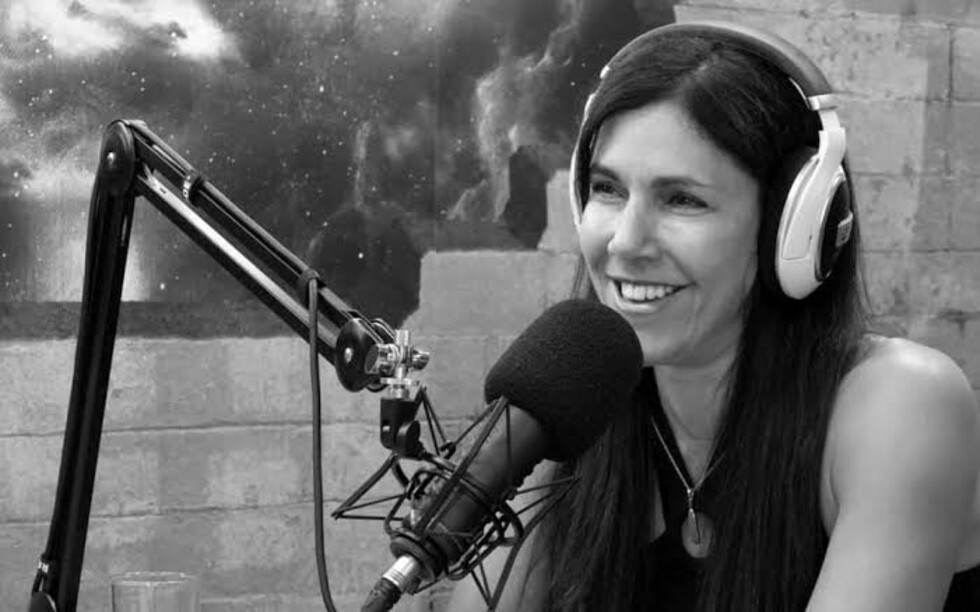
Wall Street macro investor Jordi Visser spent 30 years managing billions in risk — then turned those same turbulence models on his own biology. His HRV longevity framework took his heart rate variability from the 20s to the 60s, not with a single protocol but with a systems approach built on gut health, breathwork and muscle as a signal organ. If you've been tracking your wearable data without seeing real change, the HRV longevity connection Jordi lays out in this episode will shift how you think about what's actually driving your biological age. We also go deep on why Bitcoin and AI infrastructure are inseparable, why capitalism's labour bargain broke in 2025, and how the same pattern recognition behind HRV longevity applies to reading macro markets. — and why heart rate variability, longevity, Bitcoin and AI are all connected by the same framework.
Jordi spent 30 years managing billions in risk on Wall Street — building turbulence models to predict market crashes before they happened. Then he turned that exact same framework on his own biology. The result? He raised his HRV dramatically — not with a protocol, but with a system.
In this episode we go deep on all of it — what your wearable is really telling you, why your gut health is the foundation of your HRV, why breathwork beats meditation, and why muscle is a signal organ not just a performance tool.
Then we flip to macro — why Jordi believes capitalism's 10,000-year bargain between capital and labour officially broke in 2025, why Bitcoin is the architectural blueprint for what comes next, and why AI can't survive without crypto infrastructure.
This is one of the most wide-ranging, mind-expanding conversations we've ever had on Pushing The Limits.
What We Cover:
How to raise HRV naturally
What HRV actually measures and why wearable users get it wrong
The gut microbiome–HRV connection
Why muscle is upstream of biological ageing
Bitcoin as store of value in the AI era
AI replacing jobs in 2026
Why fiat systems can't handle AI agent infrastructure
Wall Street longevity hacks
Links Mentioned:
Jordi Visser on X: https://x.com/jvisserlabs
Jordi's HRV Substack: https://visserjhrv.substack.com
Jordi's Macro/AI/Bitcoin Substack: https://visserlabs.substack.com
Jordi's YouTube: https://youtube.com/@JordiVisserlabs
Book mentioned — Heart, Breath, Mind by Leah Lagos
🔬 Resources & Links
Rejuvenate Pro — Immune, Gut & Longevity Support Lisa's flagship supplement developed with Dr. Elizabeth Yurth at Aevum Labs. Targets immunosenescence, gut integrity, and cellular aging. → https://shop.lisatamati.com/pages/rejuvenate
My Immune Age Calculator Find out how fast your immune system is really aging — using scientifically validated blood marker ratios from a standard CBC. Get a personalised 16-page clinical report with actionable recommendations. → https://myimmuneage.life
Your Health Compass — 14 Health Screenings in 10 Minutes Clinically validated risk assessments covering diabetes, autoimmune conditions, brain health, cancer risk, mental health, and more. No blood tests required. Instant personalised report. → https://yourhealthcompass.org
Lisa's Full Supplement Range Curated longevity and health-optimising supplements from leading researchers worldwide. → https://shop.lisatamati.com
Book a Consultation with Lisa Functional medicine consultations for complex health cases — genomics, hormones, gut health, longevity protocols. → https://shop.lisatamati.com/pages/work-with-lisa
🤝 Support the Show
Pushing The Limits has been free for over 11 years. Help us keep it going: → Join Lisa's Patron Community: https://www.patreon.com/pushingthelimits → Buy Lisa a coffee: https://www.buymeacoffee.com/LisaT
Subscribe: Apple Podcasts | Spotify | YouTube Contact: support@lisatamati.com
Episode Transcript
Lisa: Well, hey everybody. Welcome into Pushing The Limits. Today I have the amazing Jordi Visser back. He is a repeat offender on the show. Jordi, welcome back. It's just wonderful to have you back on.
Jordi: Thankfully, this is the first time I've been called a repeat offender. So, it's good.
Lisa: In a positive way! Jordi, you've been on the show before, so people may be aware of your work. If you haven't heard that episode, I'll link to the podcast that we did, which was one of my most popular podcasts. You're an absolute legend in the world of macro and macroeconomics, AI, crypto — that whole nexus. 30 years as a Wall Street veteran. You're also like me heavily into slowing the ageing process or reversing it if we can, and you're right into longevity and HRV specifically. I must say, I've been in the longevity space for 10 or 11 years now, but HRV — I knew about it, was doing it, but not to the degree that you've now shown me about it and how important this is. Can you explain how you brought your macro mind, the way that you approach financial markets, into the HRV world and your own health?
Jordi: I'm glad you're starting here and I'm glad you're doing this, Lisa. I'm going to tell you the whole story because I think for people listening it ties into macro and technology.
I read a book around 2007–2009 called The Art of Learning by Josh Waitzkin. He's most famous for the movie in the early 1980s called Searching for Bobby Fischer — it was about a prodigy chess kid who was supposed to be the next in line after Bobby Fischer had disappeared from chess. The reason I became attracted to the book was it was referenced in a macro research paper, and it was at a time when I was spending a lot of time on meditation and the brain, really trying to think about how I could improve my decision-making during a stressful job of trading. This was all during the great financial crisis.
What Josh wrote about was as he got older and the stress came from being this chess prodigy, he eventually gave it up. He was literally one of the top ranked people in the world at chess, and he burned out. Then he got heavily involved in the martial arts as his next thing. Since you've been following me for a long time — if I consider myself anything, I'm an insatiable learner. I want to learn about different things.
I break life down into four buckets. One is health, which we're talking about now. The other is your finances — how you save money, how you compound money. That's originally what got me involved in the markets. My father was a blue-collar worker, a construction worker. I could see it was hurting his longevity working in that field, and he couldn't compound money because he wasn't getting paid much. But he had a very good engineering brain. So I took those two and said, I don't want to age, I don't want to lose my hearing, I don't want to lose my knees. I want to remain young and happy for a long time, and I want to focus on my finances.
The third is work — I really want to make sure I put myself in a position where I like the work I'm doing, that I'm solving puzzles, using something I'm passionate about. And the fourth is the friends and family that you have in your life on a regular basis. If you can handle those four things and put them in a good place, it makes your life easier to enjoy. But it all relates back to heart rate variability.
So let me go back to Josh Waitzkin. He's gone on to become world class in multiple fields — chess, martial arts, surfing — whatever he sets his mind to. Fast forward about a decade, I'm walking and listening to a podcast with him, and he mentions this woman Leah Lagos and heart rate variability and talks about how important it was for him.
When you listen to someone in your life who you think is a polymath, who has a special skill, and they start saying heart rate variability was something crucial in bringing happiness and joy — and that this was a controllable feature — I started doing my research. That started just before COVID. Then COVID happened, and I decided to really go to college for HRV and learn everything I could about it.
Heart rate variability to me is really the connection between the biological side — the part for us that is no different than a lion, a plant, a bacteria. Our brain is different than other animals. So what we have is the difference between the biological brain which is in the gut, the emotional and decision-making brain up here, and there's a communication highway between those two — the vagus nerve. That's where heart rate variability became important to me.
I figured if I was going to be healthy, if I was going to be happy, I needed to understand more about how my gut was sending signals. Things like cravings — what does that mean? When your body's sending that signal to you, when you have pain, how do those things work together? That led to me not only learning about HRV, but realising that all of the things that improve your HRV also prevent you from ageing. And I think you and I both agree that ageing is a disease and that you can slow it down.
Lisa: Absolutely brilliant to give us that background. HRV is something I personally struggled with. Like you and I — both Type A personalities, charge hard. As you say, we've got an evolutionary body and then this cognitive brain that wants to do something else. We're not always in alignment, especially when you're so driven. I've had a lot of trauma in the last 10 years, grief and trauma that just stacks in your body. You're in this hypervigilant state that I'm still trying to unpack.
I've been really diligent on the food, exercise, nutrition — stacking hyperbaric, red lights, all the gadgets, the training. But the HRV is something I haven't focused enough on. Since getting your amazing Substack — people should go subscribe to Jordi Visser's HRV Substack — it's really starting to change my mindset. I've started doing resonance frequency breathing. Can you explain why breath is that quickest access point rather than meditation? Why is breath absolutely central to this HRV discussion?
Jordi: I'll give people something to watch. Have you seen the series Limitless with Chris Hemsworth?
Lisa: I have, yep.
Jordi: They mention HRV like one time, but at the very beginning of the series, they show Chris Hemsworth standing inside a room. He puts on virtual reality goggles, and now his body thinks he's standing on the edge of a building 100 stories up. He knows he's not there. He has control of his brain. And yet, as they're measuring him, all of his evolutionary body is sending him into fight or flight. His heart rate's going up, his HRV is changing.
As other episodes go on, they talk about why Navy SEALs get training in breathing so they don't panic and can stay underwater longer. Why firemen are trained with breathing. Breathwork has always been used for police, firemen, Navy SEALs, military people. What it allows you to do is get rid of that sensory response and bring a sense of calm to that evolutionary brain.
If you take a polar strap and measure your heart rate while doing slow breathing — when you inhale and exhale, there's between a six and seven beats per minute change. The more you can slow it down to where it's four seconds in through your nose and six seconds out through your mouth, you start to see this change.
The most fascinating part — and I know you've read the book — the resonance frequency breathing brings you back to a place that's different for every human being. Through Leah Lagos's process, you're trying to find the rhythm in your body where maybe it's 5 seconds in and 7 seconds out, or 4.6 and 6.2. Everyone has this optimal spot where their HRV actually gets to that level. You train your body to get there, just like working out for six weeks — your body gets used to it.
The breathing gets your heart and your lungs in line. If you go back to COVID — people that ended up on respirators, their heart was an issue. The lung and the heart are like the engines on a plane. If you lose one, it puts so much pressure on the other. That's why controlling the stress in your body is so important — allowing you to live longer by having more heartbeats, but also not letting it sit in one spot and ruminate. Low heart rate variability means you're constantly in rumination, like a child having a temper tantrum. You just can't let your heart rate come back down.
Lisa: This is going to take a lot of training. Every time I try nasal breathing — I've always been a mouth breather because I was asthmatic right through my life. Not now, because I've got on top of that, but still have that habit. And at night, I did mouth taping for a couple of years. All of these are little things we can add to improve our health and longevity.
In the longevity space, the technology is going ahead so fast. I heard Peter Diamandis talking the other day about longevity escape velocity by 2033. Bring that on! But if we're living in fight or flight — which I do a lot — can you explain the connection of the gut? How does gut dysbiosis, a terrible microbiome, affect the whole situation?
Jordi: This became probably the most eye-opening thing during COVID because I was caring so much about the immune system. I was trying to understand why someone who was compromised in terms of their immune system was more likely to die from COVID. What does a weakened immune system mean? You start realising how complex the microbiome is. About 70 to 80% of your immune system is in your gut.
If you eat a lot of processed foods, your immune system is going to have the bacteria from that food. If you eat food that isn't organic with lots of pesticides — which is the case in the United States — processed foods and pesticides have become an issue. It starts to cause problems that lead to obesity and diabetes. It's not just people eating too much. It's a lot of chemicals, a lot of things that go into the body.
I started to realise how important antioxidants were because you can't avoid all toxins. I can eat organic from a farm every day, but I live in New York City. I'm taking toxins in no matter what — pollution in the air. Everything is about trying to create this calmness in your gut, which allows you to have more control over your breathing and not go into fight or flight.
So I ferment my own food. I eat fermented foods — probably three to five different ones a day. So far today I've had a concoction of turmeric and ginger fermented in honey, miso in a smoothie, sauerkraut, kefir, fermented garlic. You want to make sure you're going to the bathroom properly, that your immune system is functioning, that the communication between your brain and your gut is fine.
I'll leave it at this: everyone has been at that point where they've had too much to drink. The next day, your body wants some kind of fatty bacon, egg and cheese — your body is sending these signals as it's recovering. Always think about the fact that your gut is sending signals up to you. I feel that my immune system prevents me from getting sick — I don't think I had one runny nose this entire winter. Microbiome is critical.
Lisa: It's a focus of my practice. The first test I usually get is a microbiome assessment to see what's going on under the hood. So much obesity is related to the flora in the gut. If you've got too many Firmicutes and not enough Bacteroidetes, people think "I've got to eat less and exercise more." But hang on — you're metabolically unsound in a number of ways, and here's one we can work on. There's real nuance to this conversation.
One of the other ones you did was on muscle, which I'm a big fan of. I go to the gym every day. I've been an ultramarathon runner for way too long, and now my whole focus is building muscle. I'm very muscular for my age, deliberately so, because muscle is the currency of longevity. It's a positive signal that sends out into the body — it's an active organ. What's your take on the muscle part, and why people need to focus on that?
Jordi: You've made so many important points. Do you keep track of how much protein you eat?
Lisa: I try to get 1.6 to 2 grams per kilo a day, not always successfully — I'm a little bit under.
Jordi: Here's the thing, and for people — this is my equation of life. Protein is the building block of life. End of story. Muscle is the one organ in our body that we can alter and actually change the shape and size of. Think about that — of all our organs, we can do whatever we want with muscle. Our heart's not changing. But muscle is the largest organ when you take everything in there.
You've all seen people as they get older become more frail. They're losing muscle. Everything starts to break down. People who look better than their age act better, walk more upright — there's muscle involved with that.
I try to work out six to seven days a week. I do a lot of bodyweight exercises, all resistance training. But I have to have a lot of protein. If you have a lot of protein, this is why lean protein becomes so important — finding the balance between calories so you're not gaining weight, how much fibre you need (fibre is critical for a healthy microbiome). If you're not feeding the microbiome the fibre it needs, a diversified group of probiotics and prebiotics, you're in a very difficult situation.
I try to have 150 to 200 grams of protein a day. If I did that with red meat, I'd be well above 4,000 calories. What I want to do is burn about 500 to 600 calories a day from workouts, maybe another 200 from walking, and get 2,500 to 3,000 calories max. The equation just doesn't work unless you get a lot of lean protein. The problem is lean protein is generally more expensive than fatty protein. Through powders — pea protein and some other protein powders — you can get up there.
I eat a lot of chicken breast, chicken thighs, lean grass-fed beef. For vegetarians or vegans listening — study how difficult it is for the body to synthesise plant protein. You need a lot more soybeans to get to the same level.
I just wrote a Substack on seeds because they're my magic ingredient. Hemp, flax, and chia — I have them almost every single day. The amount of protein, fibre, all the micronutrients — these are little bombs of growth that are perfect. Same way eggs are little bombs of growth. Seeds, eggs, nuts — they are these bombs to help things grow. Supplement with a lot of leafy greens, vegetables, and as much lean protein as you can afford. More muscle means you're less likely to get injured, you're going to come back faster from illness — but you need that balance with fibre if you're going to have a heavy protein muscle diet.
Lisa: Totally agree. I take things like creatine, leucine, HMB — just to supplement because I don't tend to eat enough. Pre and postbiotics, all the polyphenols that come with your vegetables — eat the rainbow. I had an interview with Dr. Ross Pelton, the Natural Pharmacist, and he was like six to nine cups a day of veggies. That's a lot! But that's my goal. As much variety as you can, because that feeds different bacteria. You don't want to just eat broccoli or just cabbage.
We could wax lyrical forever on HRV and longevity, but in the interest of time, I want to get to your other core expertise — the macro world, the AI world. You've had a massive impact on my business, on my life, and the way I run my day-to-day schedule. When I started listening to you saying "Don't fade AI. Lean into it" — it still scares the crap out of me, but I've realised you have to lean in if you don't want to be left behind.
I took your advice and leaned full in. I'm a non-technical person who has always tried to outsource all of that. But I run a business online with multiple income streams. Before, I just hired consultants who often didn't do the job well because the algorithms change every week and nobody can keep up. Now I have a lot more control over how my business works because AI has taught me everything about my business — how my MailerLite works, how my Shopify works.
Every time I run into a brick wall, I just ask Claude. That was the other thing you said — pay for the highest level because you're not getting the gems on the free tier. When Opus 4.6 came out and I paid the maximum subscription, the amount of money I saved in consultants was just exponential.
I've made three apps in the last couple of months. I've got OpenClaw running with five agents on Slack. It's chaos at the moment — I'm not quite sure what I'm doing. But it's opened up a whole world. On the flip side — society has no idea what's coming. How many jobs are we going to lose? I've gotten rid of most of my consultants. Replicate that over millions of little companies doing the same thing, and this is going to be a shock to the job market.
Jordi: What you're describing is a world of empowerment. If I had to pick a word that means the most to me with regards to my children, it's empowerment. I want them to grow up feeling power and feeling like they have control over their own destiny.
People who work in a job they don't like, who don't have enough money and aren't good at saving — those people are starting to suffer more and lose any feeling of empowerment because technology is moving so fast. They need to embrace it.
The consultant you got rid of is because you adopted AI into your business and figured out a way to be an entrepreneur. Companies that have become very efficient, like Google — they don't have many people that work for them relative to revenue. That's what's worked over the last 15 years. That's why these companies have gotten so big.
But for someone who loses their job — can they go get a job at Whole Foods? Sure. Can they drive for Uber or DoorDash? Yeah. Just because they're employed doesn't mean they're happy with their education and feeling empowered. What you've chosen to do, and what people watching should do, is the same thing. It's not about learning how to be an AI expert. It's very verbal. You can talk to it. You can build a relationship with it. You can incorporate it into how you run your life, your business.
Every time you do something with it, you're amazed. It gives you this proud feeling — "I can't believe I got OpenClaw on my laptop, I can't believe I did this." That is a very empowering feeling that for most people doesn't happen much in life once you get past 30 years old because you end up in a job doing the same thing every day.
That's why I started skiing in my 40s. I'd never skied. Someone said I was good at picking things up, why not try? Now I can ski anything on the mountain. If you have that approach with artificial intelligence, just roll up your sleeves, do the hard work, start small. That's why I did a video series for people — I wanted to show them how to do it.
It makes me happy that you take my video and put it into an LLM. If people haven't played with NotebookLM, use it. Put all of my videos in there — the last five from YouTube. Upload them and ask it to write: if I was going to invest based on what this person said, what would I invest in? It'll give you its opinion based on what I said. You can do that with any YouTube. It's amazing how quickly you can learn things.
Now you're getting a YouTube from someone like me, and you can upload the entire thing into an LLM and say "Please expand on this part about the microbiome." We're just at a stage where you have to use artificial intelligence. I would not worry about jobs because I think the Googles are going to suffer the most. Companies that have a lot of people are going to have more trouble against the nimble entrepreneurs. The only way Google can compete is to get rid of people to keep up with entrepreneurs. Entrepreneurs are really getting rid of the middlemen. You don't need as many middlemen.
The world is going to shift to the empowered and the entrepreneurs. And everyone listening to this can be an entrepreneur if they want to.
Lisa: One thing I'm concerned about — how fast are we going to be inundated with competition? You spend all this time developing a product, and then next week it's outdone. Look at Cursor getting to a 500 million run rate in a year, and now it's stalling out because Claude Code is basically doing the whole thing. So you build this massive company and then run into problems. The time compression — you wrote about AI compressing time and moats around businesses. If you put too much effort into one product and then next week it's outdone, are we going to be completely outrun constantly?
Jordi: Let's use some economics. The median income in the United States is about $70,000. There's a massive distribution of wealth problem across the globe that's worsened because of innovation and technology. The big seven US companies have taken most of the earnings power.
What I believe is going to happen is: if you create seven apps and yes, there'll be competition, but competition is out of the entire pie. Assume the market for an app that helps you with longevity, HRV, breathing — you create one, get some users, and make $5,000 a year. That's not a lot of money, but as long as you're building it and you have the time to go build 20 other ones, 30 other ones. Yes, there will eventually be competition, but the competition is going to take a long time.
It's a community of 8 billion people. You and I met because you reached out from New Zealand. If you only accumulate $5,000 or $10,000 per idea and you're able to build these things, there's no reason why you can't create 50 or 100 of these. That's what Google does. That's what Apple does.
If by the end of the year something making you $60,000 only makes you $12,000, but you've created another one making $30,000 and another one generating income — that's why I talk about revenue streams. There is a way to stay ahead of the competition. But it's fun.
And that's why I wrote about HRV so much. If your HRV is not moving higher and you're healthy like you and me, it's most likely related to stress. Part of the stress is financial and job-related. Really putting yourself at one with nature, not beating yourself up every day — it's going to help you today, and by 2033 the escape velocity for longevity kicks in. The other thing that kicks in is deflationary power — humanoids, the cost of things going down.
This next seven or eight years is about empowering people to understand what's happening with AI and seeing the benefits coming down the road. That's why I got interested in Bitcoin and crypto — I believe there's a place to invest your money for the future that will not be disrupted.
My joy every day is knowing that I'm going to be healthy, that I've thought about the financial world, that I'm technologically trying to be advanced and able to do things on my own and not depend on a job — because if you lose it, there's a depression that comes with that — and making sure I'm surrounded with nature and family and friends that truly bring me joy. AI is part of that equation, and it's more important than you recognise.
Lisa: It's so empowering. You can change your destiny if you're stuck in a job. You just start. Put in the hours of practice every day. I've been having discussions with colleagues who don't want AI because they think it'll replace them, when actually it'll exponentialise what they can do.
I'm working on a book at the moment — a longevity survival guide — using AI. People go, "Well, that's AI, that's slop." I've got 11 years of 450 podcasts, an hour long each, with world-leading people. I can't go through thousands of hours of transcripts. AI can pull out the magic and help me massage that into a coherent guide that would otherwise sit there unused. It doesn't mean I'm lazy. It means I'm using a much more powerful tool.
Jordi: The funny thing is you've heard the term ghostwriter — meaning the person didn't write what was written. You have an editor — what do you think an editor does? They come in and change the work. Do you think the people who write books are all done when they hand it in? Of course not. Someone changes things, moves it around.
Goodwill Hunting — go read the story behind what that movie was about before. Matt Damon and Ben Affleck won the Academy Award, but they didn't even write the script as it ended up. It got altered so much it's not close to the final version.
AI is an incredibly powerful tool that does not create slop unless you just say "Write me a paper on this." The way I use it — I go on a walk, have an idea: "I want to write about Bitcoin and how AI is speeding up so fast it's destroying the value of all companies three years out because of competition. I want to bring in how Bitcoin benefits from the fact that it actually doesn't have anything — no narrative that can hurt it."
My ability to write four papers a week has gone up dramatically. I don't lose the ideas. I can have a rough draft from 45 minutes of verbal without typing anything. Then I go back, do the editing, read through what I like, what I don't, what to add. It's all my recipe. Someone else is helping with the finished product. If you go to a restaurant and think some famous chef is cooking — most of the time they're not. It's just the recipe.
Lisa: One thing — this is really important.
Jordi: I wrote a Substack about the difference between brainstorming and just sitting there coming up with a thought. The power of AI is that it's a thinking partner. When you take an idea and brainstorm consistently with it, two things happen. The idea gets far more powerful. You're playing ping-pong with an idea you started, and by the time you're done, you've created something unbelievable. All you did was walk down Park Avenue having a conversation, and when you get back to your desk, you go, "What was that conversation?" and you go into your context window and there's the whole thing.
I've always believed — as someone who's managed people my whole life — if you put 10 people around a table, I want everyone to speak. It's not based on education. It's not based on what others perceive as intelligence. Every human being has an incredibly deep, interesting perspective on things by the way they were brought up, grew up, travelled, cooked, done sports. Everyone has a unique story. There's not a single person on the planet that I don't believe has a unique way to impact a brainstorming session. That's what AI is capable of.
Lisa: It brings it all together so beautifully. Let's switch topics — Bitcoin, where it's at, the situation with AI and these agents coming. I did an interview last week with Cern Basher, a financial analyst, expert on Tesla, robotics, and dematerialisation. The agentic movement we're in now — we're going to have billions of agents. There's going to be security issues, bad players. He has a thesis based on Jason Lowry's work — the Softwar book — about Bitcoin as a defence weapon.
These AI agents are going to need payments. The fiat system is not going to run the rails. Banks are closed most of the day, agents don't have identities. They're going to need this system. Tell me about that story — how does that impact Bitcoin?
Jordi: I want to take people back a long time. I have a very different perspective than almost anyone I've heard talk about Bitcoin. When we go back — and I'm going to bring this to the microbiome for a second — I listened to someone during the microbiome days who made this interesting argument about how technology has destroyed our microbiome. His argument was that when the plow came into existence, it allowed us to move into cities, leave our communities.
This is a critical word — community. Basically, capitalism is about middlemen. Before, when you were in a community, there was no stock market. If you needed work on your house, you gave them food because you were a farmer. A community of people exchanged things. As people left and the plow allowed one person to feed an entire community, people could leave and become lawyers, doctors, and middlemen — everything needed in capitalism.
I'm someone who never believed in the capitalist system from one perspective — why can't the stock market go down? Why can't housing go down? It can't because we've got debt against everything. Once you are a credit-based system, assets can never go down, because if they do, we have the Great Depression. So since the Great Depression, we've just been printing more money whenever there's a problem.
We reached the point of the internet, which exchanged information and data across the globe — you and I can do this TV show on our laptops, or a $50 phone. Then you get through the internet to mobile, more bandwidth, videos. Eventually in 2008, someone says: the only thing we can't do yet is exchange money digitally without government restriction. We can exchange information, but not money at that speed. So we need a digital currency that allows us to move money as fast as we can communicate.
Bitcoin is not money. But the Bitcoin white paper was the solution for that. Then something very powerful had to happen — the middlemen needed to be disrupted in a democratising way. That's what artificial intelligence is. AI now allows you to create a business that can compete with Google. Allows me to compete with Morgan Stanley and hedge funds. I can create research at a much faster pace than sell-side firms. I'm faster, more agile, can make more money per hour, and don't have to work for someone I don't want to work for.
Where Bitcoin fits: over the next seven years, with humanoids and the disruption to every public company — right now, if you want to turn money into more money, it's all in public markets. There's private credit, which they finally opened up to retail over the last five years. You can all read how that's going — not so good. The transparency is missing. There are frauds, defaults, everything else.
When people talk about risks with Bitcoin — "It's too volatile." Well, it's been up basically every rolling five years since it was created. The Sharpe ratio is the best in the world. It's accepted by hundreds of millions of people. The age of those people will soon be the dominant force in owning assets and money, at about the same time that humanoids and everything else will be driving the middlemen out of business.
Between AI and humanoids, you'll drive deflationary pressures down. Fiat assets, particularly anything built on code, are going to have a hard time. Commodities and semiconductors and hardware will be fine for the time being. But the irony of Bitcoin is that when quantum comes, we'll be solving everything at the nano level — materials, commodities — at the same time humanoids are coming. You can't name a business that won't be disrupted by AI.
If everything is free, money still has to go somewhere. Value will still exist. Bitcoin is way mispriced relative to its size, to what young people care about, how they embrace it, how much they're being disrupted in their own jobs, how angry they are, how they're voting. Socialism is rising in US cities. It's already in Europe.
The private credit situation in the US is going to worsen. It will lead to the central bank and treasury having to create a facility — similar to Silicon Valley Bank. I believe it will happen this year, and at that point Bitcoin will be at the early stages of a massive phase involving network effects, because AI agents will be transacting more and more. That's the driving force.
Lisa: That is so crucial to hear. With the private credit situation — are we heading into a 2008 situation? And when you add oil, war, the Strait of Hormuz — a couple of weeks ago we were talking deflation, technology creating this massive deflationary force. Now oil is going through the roof, inflation is back in the discussion, prices going up. Every investment thesis I had is a little bit on its head. Private credit is becoming contagion. Things are unravelling.
Where do we park ourselves if we haven't got huge amounts of money but want something safe? We've been in Bitcoin for five or six years, just stacking more. But of late, that's been hard — gone from 126 down to 60-odd. People lost money overnight. How are we meant to navigate this inflation, deflation, war situation?
When I listened to Jeff Currie — who you put me on to, by the way, great stuff — talking about copper and a massive shortage of metals because you can't just make a mine tomorrow. And now with oil, the infrastructure, the pipes — it's not just declare victory and the straits are open. It's going to take longer. Is it best to be out of the hyperscalers?
Jordi: First of all, there's no chance of another 2008 ever again.
Lisa: Really?
Jordi: The reason 2008 happened is because we didn't have the tools we do now. The ability to do what we did with Silicon Valley Bank, what we did during COVID. We shut the economy down for a long period during COVID, and the reason we didn't have a 2008 was because we just shot a lot of money into the system. The negative effect is inflation. There is no chance of a 2008 repeated.
Now, it doesn't mean we won't need something to happen, because the insurance industry is behind the private credit. As this spirals, we'll eventually get to a place that involves retail. But people signed up for something where there wasn't a lot of liquidity. When you get into annuities, that's a big problem, especially in an election year. I don't think the central bank will allow that to happen.
In terms of oil — as much as I like Jeff Currie, I think he scared you a little too much. Oil will stay elevated because the disruption will take weeks if not a couple months to resolve. But here's what people need to realise: Iran is one country on the planet, and not one other country wants to see oil prices higher. Nobody. Iran is the only one because it's all they have to cause pain to Israel and the US, and that's not going to work. India and China don't want this to go on.
At some point you have to be rational. The world is one big community. If everyone is losing except Vladimir Putin and Iran, eventually smarter heads will calm down and this will stop. Iran has taken a heavy beating. They want to cause as much pain as possible to keep control and rebuild. Unless the US goes for regime change — which Trump says he's not interested in — they just want to set everything back and let Iran deal with itself.
Don't worry about oil. Don't worry about 2008. As the year goes on, this will stabilise.
What Jeff talked about that I agree with — commodities are in a bull market for a while. We need an enormous amount of compute, which requires semiconductors, power, water, chemicals. People should be investing away from software, away from code, away from US heavy technology and more into commodities. It's good for New Zealand, good for Australia, good for South American countries that produce commodities.
Commodities are in a bull market. It's going to feel like the 1970s with commodities shooting up every now and then, and US equities having a really hard time. GDP grows, inflation has episodic moves up to four or five percent, then comes back down from deflationary pressure. The jobs market is not great, but nowhere near as bad as the 1970s.
Lisa: Thank God for that. It's very confusing with all these things happening simultaneously. I hope New Zealanders are listening — we need to get things like mines going again. We've had a very ESG regime and shut everything down. I live in a province where oil and gas was all shut down, and local people lost their jobs. We need the impetus. How do I get exposure to commodities in the right way?
Jeff told a great story about a mine that flooded, and they needed pumps the size of the Statue of Liberty. China had them there in 30 days while Germany was going to take seven years. That shows how far advanced China is. It made me realise — bacon doesn't come from the fridge, it comes from growing the pig, slaughtering the pig. All of this stuff doesn't just appear.
With the hyperscalers doing massive capex on data centres, some falling over, push back from people and environment — is it best to be out of the hyperscalers? Maybe with the exception of Tesla or Nvidia, but out of Microsoft, Google, Apple?
Jordi: I would avoid the four — Microsoft, Amazon, Google, and Meta. They're taking a lot of debt, spending a lot of money, and depending on enterprises adopting fast enough. Adoption is just not happening at a fast pace, and the cost for enterprises is going up.
If you're going to choose technology, the two names you mentioned plus Apple — Apple, Tesla, and Nvidia have one common thread: they're all hardware companies. Hardware is where you want to be. Servers, semiconductors, optical fibre, chemicals, energy, materials, silver. People are going to be very surprised over the next three to five years — those things are just going to go higher.
Energy is going higher right now, but I have full confidence that oil prices will come down sharply once things settle in the Middle East. Once Iran lost air supremacy, the US and Israel were able to bring B-52 bombers over because there are no missiles left. War is not a good thing, but when you're done, you look at what's going to flow from an investment standpoint. Venezuela has been — you're going to have a lot more oil on the market coming out of this.
Donald Trump has a very important midterm election. He will eventually bail on this whole thing. Before we get to April, you're already going to have oil prices that have come down somewhat. I think he wants this done before Memorial Day in the US, because that's when driving season starts.
Things are much more stable. We'll deal with private credit in the next month or two. Focus on semiconductors and those hardware names.
Lisa: Brilliant. Last year I listened to you on Liberation Day, and Pomp and I did really well out of that one. Thank you. Jordi, you've been absolutely generous with your time. I could talk to you for hours. People can subscribe on 22B, and the HRV Substack — go check that out — and the weekly video on YouTube, which is also gold. Get my earnings call analyser so you can understand some of the lingo if you're not a Wall Street veteran.
Every time I listen to you, I learn a little bit more — a couple more abbreviations, what they mean. I go into Claude and say, "What the hell is this?" And then I'm a little more educated the following week. Very cool. Jordi, you're an absolute legend. Thank you for everything you put out into the world. You're empowering people with the AI stuff — lean in, go hard, especially if you've got young people who don't necessarily need to go to university anymore. Just lean into this revolution. Any final words?
Jordi: I want to say to everyone watching and listening — I surround myself with people that move forward. Every time I see them, maybe it's been a year, maybe four months, the people I like to spend time with over the long haul are the ones that are always moving forward. They've learned something new, done something new, tell me something that shows they're trying to live life to its fullest.
You're one of those people, Lisa. You were an inspiration when you sent me the email a long time ago. The fact that you've taken on AI, that you listen every week and don't understand everything I'm saying but you're trying and going through it — all of you out there, just move forward. If you keep moving forward and surround yourself with people that are moving forward, your life's going to get better because they will inspire you.
Lisa: Thank you so much, Jordi, for your time today. It's been absolutely legendary. I'll see you again soon.

Listen Via...




What listeners are saying
My favourite running podcast by miles⭐ ⭐ ⭐ ⭐ ⭐
This is the best podcast for long runs. Lisa is just so relatable, honest, funny and inspires me to push my own limits. Awesome guests (I particularly enjoyed the podcast with Kim Morrison) and a wide variety of topics covered. Thanks for keeping me running, Lisa!
Jinni S via Apple Podcasts · Australia · 07/02/19
-----------------------------------------------------------------------------------------------------------------------------------------------------------------------------
My favourite podcast ⭐ ⭐ ⭐ ⭐ ⭐
Helps me get through my boring desk job. Absolutely love this podcast. Great topics and advice that has helped me to better myself and my approach to running.
alekslikestorun
-----------------------------------------------------------------------------------------------------------------------------------------------------------------------------
Two thumbs up ⭐ ⭐ ⭐ ⭐ ⭐
Always great guests, great insights and learnings that can be applied immediately for every level of experience.
JonnyHagger
-----------------------------------------------------------------------------------------------------------------------------------------------------------------------------
Motivational and Inspirational ⭐ ⭐ ⭐ ⭐ ⭐
I am getting my mojo back with regards to my health and running after treatment for breast cancer, I connected with Lisa as I was looking for positive influences from people who are long distance runners and understand our mindset. Lisa’s podcasts have been a key factor in getting me out of a negative space where I allowed others limiting beliefs to stop me from following my heart and what I believe is right for me. After 18 months of being in cancer recovery mode I wanted to get out of the cancer mindset and back to achieving goals that had been put aside. Listening to Pushing The Limits has put me onto other great podcasts, and in the process I have learnt so much and am on a pathway to a much better place with my mindset and health. Thanks so much Lisa for doing what you do and always being you.
L.Faire