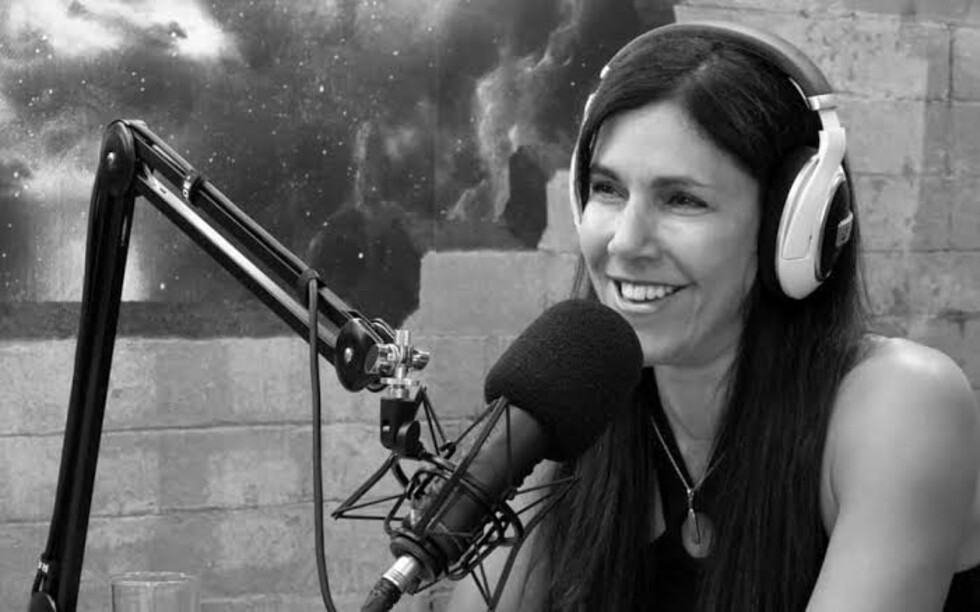
Immune system aging is the hidden clock behind how well you actually age — and almost nobody is measuring it. In this episode, Lisa Tamati breaks down the science of immune system aging: what happens inside your body as the years tick over, why it sits underneath nearly every disease we associate with getting older, and exactly how to measure and slow immune system aging using a standard blood test you can get anywhere in the world.
You'll learn the two opposing forces driving it — immunosenescence (your immune system getting weaker and less precise) and inflammaging (the silent, chronic inflammation that never fully switches off) — plus the cutting-edge research from Dr David Furman's 1000 Immunomes Project and the iAge inflammatory clock. Lisa shows how to turn an ordinary CBC blood test into a single Immune Resilience Index using seven scientifically validated ratios (NLR, PLR, MLR, LMR, SII, PIV and ELR), so you can track your immune age over time and see whether what you're doing is actually working.
She also unpacks the gut-immune connection (around 70% of your immune cells live in your gut), the cytokines of aging — IL-6, TNF-alpha, IL-1 beta, NF-kB and IL-10 — and how the Re:juvenate Pro formulation from Aevum Labs was built to target exactly these pathways.
Measure your immune age from a standard blood test: https://www.myimmuneage.life
Related episodes:
Dr David Furman on the 1000 Immunomes Project and the inflammatory clock of aging: https://www.youtube.com/watch?v=HFOSqEY7CNY
Dr Rod Claycomb (founder of Quantec) on Immune Defense Protein (IDP): https://www.youtube.com/watch?v=VyOfcx9gvbE
Aevum Labs panel with co-founder Peter Lehrke, medical herbalist Mike Eyres and Dr Rod Claycomb: https://www.youtube.com/watch?v=EstwHB3p3nI
Dr Elizabeth Yurth on immune aging and how to slow it: https://www.youtube.com/watch?v=h_-_rFXcBIA
Shop Re:juvenate Pro
Pushing the Limits podcast: https://www.lisatamati.com/ptl-podcast/
Lisa's supplement store: shop.lisatamati.com
Longevity Newsletter: Sign up for the latest in longevity, health optimisation and more. Get my Longevity Cheat Sheet : www.lisatamati.com/lisa
Books: shop.lisatamati.com/collections/books
🔗 WORK WITH LISA:
🎙️ Pushing the Limits Podcast — lisatamati.com/podcast
PTL SIGNAL — AI, Tech, Bitcoin and Markets:https://ptlsignal.comFree founding member access to our AI-powered Financial Document Analyzer — earnings transcripts, annual reports, Fed minutes analysed in 60 seconds.
🔬 Resources & Links
Rejuvenate Pro — Immune, Gut & Longevity Support Lisa's flagship supplement developed with Dr. Elizabeth Yurth at Aevum Labs. Targets immunosenescence, gut integrity, and cellular aging. → https://shop.lisatamati.com/pages/rejuvenate
NAD+ Next Gen by Aevum Labs: Launching soon our next generation NAD supplement. Get on the list to hear first and get special deals once its launched.
My Immune Age Calculator Find out how fast your immune system is really aging — using scientifically validated blood marker ratios from a standard CBC. Get a personalised 16-page clinical report with actionable recommendations. → https://myimmuneage.life
Your Health Compass — 14 Health Screenings in 10 Minutes Clinically validated risk assessments covering diabetes, autoimmune conditions, brain health, cancer risk, mental health, and more. No blood tests required. Instant personalised report. → https://yourhealthcompass.org
Lisa's Full Supplement Range Curated longevity and health-optimising supplements from leading researchers worldwide. → https://shop.lisatamati.com
Book a Consultation with Lisa Functional medicine consultations for complex health cases — genomics, hormones, gut health, longevity protocols. → https://shop.lisatamati.com/pages/work-with-lisa
🤝 Support the Show
Pushing The Limits has been free for over 11 years. Help us keep it going: → Join Lisa's Patron Community: https://www.patreon.com/pushingthelimits → Buy Lisa a coffee: https://www.buymeacoffee.com/LisaT
Subscribe: Apple Podcasts | Spotify | YouTube
Contact: support@lisatamati.comhttps://www.lisatamati.com/ptl-podcast/NAD+ Next Gen wait list
Episode Transcript
PUSHING THE LIMITS PODCAST
Well, hey everybody, and welcome to my YouTube channel. Today I'm going to be talking about the immune system as the master clock of aging, and how to measure and support it.
I want to start with a question that changed how I think about aging completely. How old is your immune system? Not how old you are — your immune system is different. Because here's what almost nobody understands: there are two numbers that are often wildly different. And it's your immune system's age, not the number on your birth certificate, that's quietly deciding how well you're going to live, how fast you recover from anything, and honestly, how long you've got on this beautiful planet of ours.
I came to this the hard way. Many of you know, if you follow my channel, that I've spent the last 10, 11, 12 years as the primary carer for my mum — through an aneurysm, a stroke, brain cancer, a stack of comorbidities. And when you live inside a medical crisis for years, you stop caring about theory and you start asking one question about everything: does this actually move the needle, and can I measure it?
That question led me down a rabbit hole into immunology and longevity science. And it led me to build a tool that I'm going to show you today, and to help formulate a product that I'm genuinely proud of. But first, I need to show you what's actually happening inside your immune system as the years tick over, because once you see it, you can't unsee it — and you'll want your number. So let's dive in.
Here's the thing about the immune system and aging: two things are happening at once, and they pull in completely opposite directions. Understand these two forces and everything else in this video will click into place.
The first is immunosenescence — which is a really big word that just means your immune system is getting weaker, slower, and less precise. And a huge chunk of this traces back to one tiny organ sitting just behind your breastbone, called the thymus. The thymus is the training academy for your T cells — putting it very simply, your adaptive immune soldiers, the ones that learn to recognize specific threats. And here's the brutal bit: the thymus starts shrinking from puberty. Yep, from puberty. So by the time you're middle-aged, it's largely turned to fat. So you're producing fewer and fewer naive T cells — the recruits that can recognize something they've never met before — and you're left leaning on your old memory cells over and over again. That's exactly why a brand-new virus, or a vaccine, hits a 70-year-old's immune system so differently to that of a 30-year-old's. There just aren't enough new soldiers left to send.
Now, the second force is the complete opposite problem. As the system loses its sharpness, it simultaneously gets noisier. This is called inflammaging — a chronic, low-grade background inflammation that never fully switches off. And this is the sneaky one, because you can't feel it. It's not like a swollen ankle when you sprain it. It's silent. It's a smoldering fire burning away in the background of your body, year after year. And it's one of the single strongest predictors we have of frailty, heart disease, dementia, cancer, and how long you're going to live.
A big driver is something called senescent cells, or in popular terms, zombie cells. They should have died and cleared out, but instead they sit there refusing to leave, pumping out inflammatory signals to everything around them — think of a grumpy old man spreading his doom and gloom. So add a lifetime of immune activation, a changing gut, and old viruses your body is still having to police in the background — which is also taking up a lot of your energy — and you get this constant inflammatory hum that slowly ages every system you've got.
So that's the picture: weaker where you need it, louder where you don't. Fewer sharp new soldiers, more background noise. And here's the punchline that took me years to really fully appreciate: almost every disease we associate with getting old sits somewhere on that exact spectrum. Which raises the obvious question — if this is happening silently, how on earth do I know where I stand, and can I actually do anything about it? For a long time, the honest answer was: you couldn't really measure it, and you couldn't really move it. And that has completely changed.
And to explain how, I have to introduce you to one of the most important conversations I've ever had on this podcast. I recently sat down with Dr David Furman — and if you care about aging, you need to know this man's work. He's absolutely amazing. Dr David Furman is the director of the 1,000 Immunomes Project at Stanford University and the Buck Institute. He's an associate professor at the Buck. The Buck Institute is basically the world's leading institute dedicated purely to the science of aging. And he's co-founded companies taking this research out into the world.
So back in 2007 — nearly two decades ago now — David and his team did something almost nobody was doing. Instead of studying mice, they went straight to humans. They took deep immune data from around a thousand people, aged 18 to over 100, and they followed some of them for 14 to 15 years. They measured everything — thousands of proteins, hundreds of different immune cell populations, gene expression — and then they used AI and machine learning to find the patterns hiding in that ocean of data. And here's what they kept finding, over and over, no matter what they looked at: aging signals. Signatures of aging written all over the immune system. It was so consistent that it redirected David's entire career. He came to believe — and he now has the data to back it — that you can use the human immune system to understand aging itself.
Out of that work came something they call iAge, which is an inflammatory aging clock. Now, you may have heard of other biological clocks, like the epigenetic clocks, the methylation clocks. David's is different, and this is why I love it. Instead of reading DNA methylation patterns — and I've done interviews with the leading people in this area, people like Ryan Smith at TruDiagnostic, which, as he freely admits, are still hard to interpret and act on — iAge, the one from the Buck Institute and the 1,000 Immunomes Project, Dr David's one, measures soluble proteins actually circulating in the blood. And that matters enormously, because a protein in your blood is something you can potentially change. You can find what raises it and what lowers it.
He gave me one example that sort of stopped me. There's a protein called CXCL9 — it's a chemokine. When it's elevated in your blood, it's associated with stiffening arteries and an enlarging, struggling heart. Real cardiovascular aging. And do you know one thing that drives CXCL9 up? Formaldehyde — which is off-gassing from new furniture, new carpets, sitting in the air of a freshly renovated room. That's how specific and how actionable this is getting.
This connects to the paper of David's that reframed everything for me. His work makes the case that chronic inflammation isn't just one of the hallmarks of aging — it sits underneath and drives almost all of them. But he's very particular about the language, and I want you to hear this because it's important. He doesn't even like the word "inflammation" for this, because you picture a swollen, red, hot ankle that just got sprained. When you hear that word — that's acute inflammation, a response to an injury or an infection. What we're talking about is completely different. He calls it sterile inflammation. Sterile, because there's no infection, there's no wound — and you're sort of fighting a ghost. So where does the ghost come from? It comes from the environment: the air pollution, the plastics and plasticizers in our food, the hyperglycemic, blood-sugar-spiking diets, the water quality, and — write this one down — a poor, low-diversity gut microbiome. He named that specifically as a driver of chronic inflammation. And hold that thought, because we're coming back to your gut in a big way.
Now here's the part that lit me up. This inflammatory clock isn't just a diagnosis. In a double-blind, placebo-controlled trial in around 200 people, published in the peer-reviewed literature, David's team

Listen Via...




What listeners are saying
My favourite running podcast by miles⭐ ⭐ ⭐ ⭐ ⭐
This is the best podcast for long runs. Lisa is just so relatable, honest, funny and inspires me to push my own limits. Awesome guests (I particularly enjoyed the podcast with Kim Morrison) and a wide variety of topics covered. Thanks for keeping me running, Lisa!
Jinni S via Apple Podcasts · Australia · 07/02/19
-----------------------------------------------------------------------------------------------------------------------------------------------------------------------------
My favourite podcast ⭐ ⭐ ⭐ ⭐ ⭐
Helps me get through my boring desk job. Absolutely love this podcast. Great topics and advice that has helped me to better myself and my approach to running.
alekslikestorun
-----------------------------------------------------------------------------------------------------------------------------------------------------------------------------
Two thumbs up ⭐ ⭐ ⭐ ⭐ ⭐
Always great guests, great insights and learnings that can be applied immediately for every level of experience.
JonnyHagger
-----------------------------------------------------------------------------------------------------------------------------------------------------------------------------
Motivational and Inspirational ⭐ ⭐ ⭐ ⭐ ⭐
I am getting my mojo back with regards to my health and running after treatment for breast cancer, I connected with Lisa as I was looking for positive influences from people who are long distance runners and understand our mindset. Lisa’s podcasts have been a key factor in getting me out of a negative space where I allowed others limiting beliefs to stop me from following my heart and what I believe is right for me. After 18 months of being in cancer recovery mode I wanted to get out of the cancer mindset and back to achieving goals that had been put aside. Listening to Pushing The Limits has put me onto other great podcasts, and in the process I have learnt so much and am on a pathway to a much better place with my mindset and health. Thanks so much Lisa for doing what you do and always being you.
L.Faire