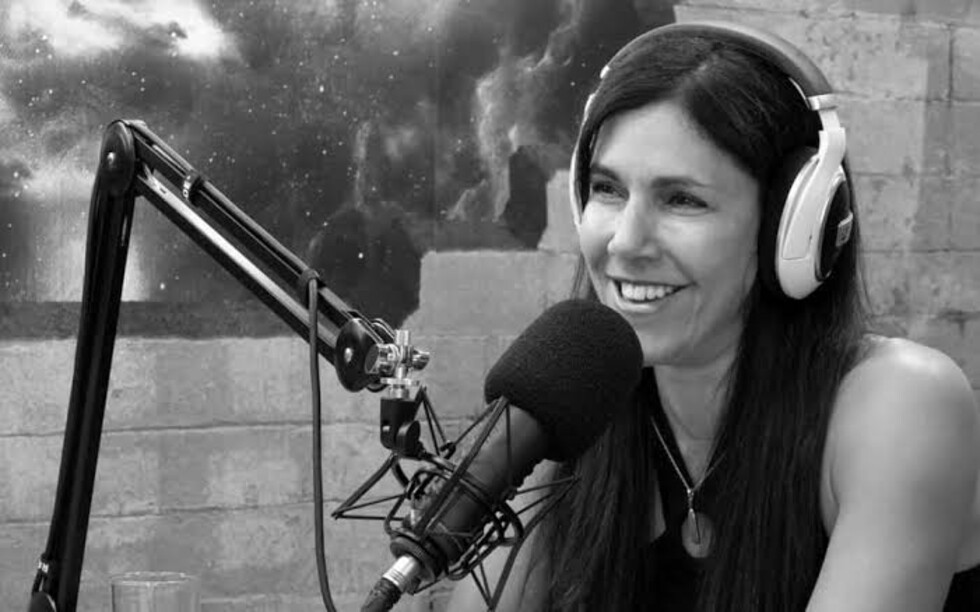
The One System Behind ALL 14 Hallmarks of Aging — And How to Target It | Courtney Van Bussum
👉 FREE Longevity Cheat Sheet — subscribe to my weekly newsletter: https://www.lisatamati.com/lisa/
Your immune system isn't just fighting off colds. It's the foundational system that influences all 14 hallmarks of aging — and when it declines, everything downstream accelerates.
In this episode, I sit down with Courtney Van Bussum, COO of Longevity Launch Labs, to dive deep into the science behind Re:juvenate Pro (known as Cell Restore in the US) — the flagship product from Aevum Labs that targets immune aging at its root.
We unpack why immunosenescence — the aging of the immune system — starts far earlier than most people realise, what Stanford's landmark 1000 Immunomes Project revealed about the real driver of biological aging, and how four synergistic ingredients work across multiple immune pathways to address what no single supplement can.
We get into the science behind Immune Defense Protein (IDP) and the discovery that purifying lactoferrin actually made it weaker, how Immunel colostrum extract doubles natural killer cell activation and supports thymic function, why CXCL9 is the immune aging biomarker most practitioners have never heard of and how carnosic acid targets it, and why kawakawa — a sacred New Zealand plant — may hold the key to restoring the anti-inflammatory resolution that aging depletes.
We also cover gut barrier repair, who benefits most (autoimmune, post-viral, aging, cancer adjunct), safety considerations including blood thinners and pregnancy, dosing protocols, what practitioners should be measuring, and how this differs from standard colostrum and lactofe
💊 EPISODE SPONSOR:
MitoSynergy BioCopper1 — Get 10% off at mitosynergy.com/lisatamati
The patented copper nicotinate chelate I take daily for mitochondrial ATP production, mental clarity, and sustained focus.
🔗 WORK WITH LISA:
🎙️ Pushing the Limits Podcast — lisatamati.com/podcast
PTL SIGNAL — AI, Tech, Bitcoin and Markets:https://ptlsignal.comFree founding member access to our AI-powered Financial Document Analyzer — earnings transcripts, annual reports, Fed minutes analysed in 60 seconds.
We would like to thank the sponsors of this show:
🔬 Resources & Links
Rejuvenate Pro — Immune, Gut & Longevity Support Lisa's flagship supplement developed with Dr. Elizabeth Yurth at Aevum Labs. Targets immunosenescence, gut integrity, and cellular aging. → https://shop.lisatamati.com/pages/rejuvenate
My Immune Age Calculator Find out how fast your immune system is really aging — using scientifically validated blood marker ratios from a standard CBC. Get a personalised 16-page clinical report with actionable recommendations. → https://myimmuneage.life
Your Health Compass — 14 Health Screenings in 10 Minutes Clinically validated risk assessments covering diabetes, autoimmune conditions, brain health, cancer risk, mental health, and more. No blood tests required. Instant personalised report. → https://yourhealthcompass.org
Lisa's Full Supplement Range Curated longevity and health-optimising supplements from leading researchers worldwide. → https://shop.lisatamati.com
Lisa's Ai, Tech, Crypto and Bitcoin website with free Earnings Call Analyzer: https://www.ptlsignal.com
Book a Consultation with Lisa Functional medicine consultations for complex health cases — genomics, hormones, gut health, longevity protocols. → https://shop.lisatamati.com/pages/work-with-lisa
🤝 Support the Show
Pushing The Limits has been free for over 11 years. Help us keep it going: → Join Lisa's Patron Community: https://www.patreon.com/pushingthelimits → Buy Lisa a coffee: https://www.buymeacoffee.com/LisaT
Subscribe: Apple Podcasts | Spotify | YouTube
Contact: support@lisatamati.comhttps://www.lisatamati.com/ptl-podcast/
Episode Transcript
FULL TRANSCRIPT
The One System Behind ALL 14 Hallmarks of Aging — And How to Target It
Lisa Tamati with Courtney Van Bussam | Pushing the Limits Podcast
---
INTRODUCTION AND WELCOME
[0:00] Okay.
[0:04] Well, hi everybody! Welcome into Pushing the Limits. I hope we're recording, yes?
[0:08] Yeah, welcome, um, I just want to welcome my friend Courtney, uh, Courtney, fantastic to have you back again, back on the show. You're a repeat offender, so it's wonderful to have you back again, and we haven't caught up for a while. And today, we're going to be doing a deep dive into the immune system.
[0:24] And also into, uh, our formulation Rejuvenate Pro, which is also known as Cell Restore in the United States, so we'll probably use Cell Restore.
[0:34] for this, uh, episode, but Rejuvenate Pro Cell Restore, same thing. Uh, we just had some trademark stuff, so, you know, we had to change the name. But, um, Courtney, welcome in. Can you give us a little bit of a brief background about yourself and what you do?
[0:49] Uh, and yeah, fill us in there before we dive into the weeds of the immune system, so to speak.
WHO IS COURTNEY VAN BUSSAM
[0:54] Yeah, of course. Well, thank you for having me back, Lisa. It's good to see you. Like you said, we haven't… haven't caught up in a while, so it's always fun to chat.
[1:02] Um, so my name's Courtney Van Bussam. I'm the COO of Longevity Launch Labs.
[1:06] and launch, as we call it, is a business development incubator for novel products, technologies within the longevity medicine space.
[1:16] Um, so we work primarily with supplements, but we also have some education, um, and technology projects that we're working on as well.
[1:24] But excited to talk about one of our, you know, shared passion projects, uh, Cell Restore Pro or Rejuvenate Pro.
[1:30] Which was, uh, really born out of this
[1:32] recognition of how important the immune system is, and so our… at launch, we really work to bring these products to the market, specifically through practitioner channels.
[1:42] And use education to drive the awareness, um, because I believe that educational marketing is really…
[1:49] The most important kind of marketing.
[1:52] Exactly, because you and I are both deep in the weeds in science, and very grounded in that, and everything we do is science-backed and clinically proven. We don't put anything out there that isn't, and we're very much about
[2:04] bringing stuff that actually works to our clients and patients.
[2:09] And so, we're always on a quest to try to improve the lot of our people that we are, you know, working with.
THE ORIGIN STORY — HOW RE:JUVENATE PRO WAS BORN
[2:15] And so this project actually started a couple of years ago, or 3 years ago now. Actually, I was working with Dr. Elizabeth Youth,
[2:23] Uh, at the Boulder Longevity Institute with my mum, and my mum, as people know who know my history, will know that, number one, I love Dr. Yurse, she's amazing, and I've had her on the show multiple times, and she's been a great mentor and teacher, but we were riffing one day about Mum's situation, and she was teaching me about the immune system and how
[2:42] how that goes down as you get older and pharmaconvolution, and, you know, thymus gland, etc., etc., and all the insults that my mum had experienced through aneurysm, through stroke, through hip fractures, through…
[2:54] uh, terminal cancer diagnoses, etc., etc.
[2:58] And I was like, um, you know, very worried about the state of her immune system, because we were hypervigilant onto things like cancer and stuff, and we… I knew that
[3:09] From learning from Dr. Youth is that the immune system is at the core of all of the hallmarks of aging, and that that's what we needed to go after. So, I'd been looking for products on the market that could support immune health, and there was a lot of things, like, you know, echinacea and vitamin C, and
[3:26] Zinc and vitamin D, the sort of basic sort of stuff. We had all those bases covered, but we weren't shifting, uh, the… the real core of her problems, things like her very low lymphocyte count and things after cancer therapies and so on.
[3:41] And we talked personally about colostrum and the power of colostrum. Now, colostrum
[3:47] Tell us a little bit of the story of Colostrum, Courtney, because this is a really good place to sort of start. Or do you want to talk first about the immune system and why?
WHY THE IMMUNE SYSTEM IS THE REAL ROOT CAUSE OF AGING
[3:58] Maybe start with the immune system first, and then we'll go into colostrum.
[4:00] Yeah, definitely. Well, I think… and I'll just sort of tag off of what you were just saying before that, too, Lisa.
[4:05] You know, one of the things that we've seen, and I'm sure you guys in New Zealand are seeing it too, but this longevity medicine market, right, is…
[4:13] it's chaotic, and there's a million supplements for a million different things.
[4:18] And we kind of evolved from the functional medicine mindset of, like, supplements for systems, right? So you have supplements for brain, and supplements for heart, and supplements for gut.
[4:28] And then now you're seeing more cellular medicine-oriented supplements for mitochondria, or NAD.
[4:35] But we're still really looking at very specific, kind of piecemeal approaches.
[4:41] And we're not necessarily…
[4:44] there's not a lot out there to help us attack this broader challenges we're seeing with immune involution, as things are starting to… as just our innate ability to
[4:54] live in the world starts to decline, right?
[4:56] Um, so that's what's really exciting to me, as we'll dive into with the formulation of Rejuvenate Pro, is that it's looking at, like you said, immune health as this
[5:05] underneath piece of all these hallmarks of aging.
[5:08] Um, and it hits things from all these different angles.
[5:18] Yep.
[5:19] So, I wanted to add that in, because we're seeing a lot of, you know, what you… with your mom, we're trying to solve, like, oh, I've got this, and I've got this, and I've got this, but like…
[5:25] Yeah, and it's complicated, yep.
[5:26] especially someone like her, trying to get her to take a million supplements is not easy. So you're really focused on finding…
[5:27] Yeah, exactly. Finding things that have a big bang for their buck across multiple systems.
[5:32] Yeah.
[5:33] Um, and pathways, and how the cell is actually functioning.
[5:36] Yeah, and maybe exp…
[5:39] Yes.
INNATE VS ADAPTIVE IMMUNE SYSTEM EXPLAINED
[5:40] Um, so with that, I'll kind of, like you said, I'll give just a little precursor of what is the immune system, because I think
[5:42] people, you know, they know the immune system, right? They hear it all the time. Oh, I got sick, my immune system sucks.
[5:48] But I don't think people really understand, like, what's going on when you say immune system.
[5:52] I'll say probably the only good thing that came out of COVID was that
[5:57] people actually started to ask questions about immune system.
[6:00] Like, what is a cytokine, and why is it storming? And, like, these words that the general population had never
[6:07] heard of, now they're mainstream. And so that's at least helped
[6:12] to bring this conversation of immune health forward a little bit more.
[6:16] But it's much more than just, like, oh, I'm sick, or it's helping me not get sick.
[6:20] Our immune system is literally active all day, every day.
[6:23] Um, and constantly…
[6:26] navigating and intelligently responding or activating, or deactivating.
[6:33] based on all these threats and insults that were up against as we move through the world, right?
[6:38] And then what I think people also don't understand is that there are two, kind of,
[6:42] um, related parts of the immune system that are always working synergistically. So you have the innate immune system, right? And this is your body's first line of defense.
[6:52] And these are, like, think of this as your built-in protection.
[6:55] It includes…
[6:57] like, the physical barriers of your skin,
[7:02] Mm-hmm.
[7:03] But it's also some of those cells, like macrophages, natural killer cells, that are constantly scanning your body and responding as soon as anything looks like a threat.
[7:10] That's the innate immune system. Then you have your adaptive immune system. Sometimes you call it specific immune system.
[7:20] Yeah.
[7:21] This is that whole memory that immune system has, right? It's slower to respond,
[7:22] But it's much more precise. So, it's where your T-cells and your B cells and your antibodies
[7:28] that they all are, you know, programmed to recognize past exposures,
[7:32] And then they can respond very, like, targeted and intelligently.
[7:36] And so these two things are constantly kind of working together to keep
[7:42] Mm-hmm.
[7:43] Our immune system running, and help us to respond to threats, right? And so, that's where I just wanted to pause and make sure everyone kind of understood the foundations, because
[7:48] There's so much more intelligence
[7:52] Yeah.
[7:53] Happening to our immune cells, our immune system, within all of these, you know, before this, I was kind of going down a rabbit hole and, like, watching some videos, and…
[8:03] Yeah, this is on… yeah.
[8:04] you know, the number of names of cells and cytokines and chemokines and…
[8:06] You could do a whole double PhD in the immune system and still know nothing.
[8:11] Yeah, it's huge.
[8:12] Exactly, yeah, it's like, it's my immuno… yeah, immunology is this crazy deep field that people can really dive down into.
THYMIC INVOLUTION — LOSING YOUR IMMUNE TRAINING GROUND
[8:16] And there's something that's called thymic involutions. We have a thymus gland that's, like, the big… a big gland in a baby's chest that looks like a huge, sort of, tumor in a baby's chest. If you do an X-ray. But this shrinks over time, and already by puberty…
[8:29] Uh, we're starting to see the decline of the thymus, and the thymus is like the…
[8:35] We, uh, Dr. Youth put it this way, she said, it's like the university for your T-cells, and your T-cells are your thymic cells that come out of this university, and they're educated in what they should be going after.
[8:47] And it's that arm that sort of specifically goes down as you get older because of the thymic involution, so we're starting to see fatty infiltrate into the thymus.
[8:57] The shrinkage of the thymus, and by the time you're my age, in your late 50s, there's basically a fatty little nub that's doing nothing, or very little, I should say. It is still doing something, but not very much.
[9:08] And therefore, my immune system is having to rely on its past exposures, its memory cells that it has.
[9:16] And then the ratios of the fresh stuff coming out to the memory cells is basically where it's going awry, okay? And so they're… you often see in your 40s, 50s, autoimmune disorders starting to come out, because the body is starting to get confused, and it's starting to attack self, and there are, you know, many reasons why that can happen, from toxins to leaky gut to, you know,
[9:40] many sort of, um, problems that can come along, but we see that a marked increase in, say, your late 40s.
AUTOIMMUNE DISORDERS, CANCER SURVEILLANCE, AND VIRAL SUPPRESSION
[9:47] They had autoimmune disorders start to happen, and then when you have one autoimmune disorder, you often have multiple autoimmune disorders, because again, the immune system is starting to go awry. And the other thing I really wanted to bring out on the immune system side is that your immune system is your surveillance for things like cancer as well as things like viruses. So, if you immune system is going
[10:11] awry and not doing its job properly, it's also not surveilling properly for cancer, and this is a really big piece of it. And most people think of your immune system as, I get a cold, I get the flu, I might get COVID, I might get a virus.
[10:26] Uh, but they don't think of it in terms of that. Uh, and the surveillance for things like cancer.
[10:32] And also the suppression of old viruses is a big part of the immune system's job, so we have viruses like the CMV virus, the Epstein-Barr virus.
[10:43] Uh, herpes virus, even COVID stays around in the body a long, long time. A lot of these stay permanently in the body, and they go dormant, and they sort of
[10:53] hide out from the immune system, and then they… the immune system has to keep them in check, which it can do when you're younger.
[11:01] It's got a lot of energy, it's making these T cells that can sort of suppress everything.
[11:06] But in the background, it's having to keep fighting these little wars with these viruses,
[11:10] And you'll know, like, I remember, um, I got shingles after my dad passed, because
[11:16] the stress of the whole thing, you know, it meant that my immune system went down.
[11:22] And the herpes virus came out, right? And that showed up as shingles because of the stress that my body had been under and my immune system was
[11:30] was down because of all of that, right? So that gives you an example of the whole time it had been there, but my immune system was strong enough to cope with it until it wasn't.
[11:40] Right? And we see, uh, with mum's cancer, she had an Epstein-Barr virus, uh, um,
[11:47] that actually led to her cancer.
[11:50] So, it was Epstein-Barr positive, if you like, that cancer came from that virus, among other things, sort of
[11:57] also influenced it, no doubt.
[11:59] But she was affected by that, so…
[12:02] she was having to suppress that Epstein-Barr for decades, and of course, at some point, she couldn't.
[12:07] And then, you know, this happened.
[12:08] Yeah.
[12:09] So, to give you a bit of a broad picture on what the immune system is doing, and what the thymus is doing in the adaptive immune arms,
[12:18] Um, so just to, you know, a very…
[12:21] you know, surface level.
[12:22] Yeah, no, I love the… because I think, again, like you said, those are all really, like, you could give talks on any one of those things, like…
[12:28] Oh, yeah.
LONG COVID, EPSTEIN-BARR, AND THE VIRAL CASCADE
[12:29] latent viruses. If you got Epstein-Barr, if you got, you know, when you were in high school, that's gonna stick with you forever, and you're going to have to have an immune system that can manage that. And that's why, like, we're seeing a lot of that same correlation with long COVID and Epstein-Barr reenacted, and…
[12:45] Yep.
[12:46] You know, like, all of the… these diseases and viruses, they cascade because your immune system does get confused.
[12:51] Yeah.
[12:52] Actually, um, I'll bring it up now, but Zach on my team, who I think you've met,
[13:04] Yeah, being a firefighter's wife.
THE FIRE STATION ANALOGY
[13:05] he was… he gave me this analogy of the fire station. Like, your immune system is the fire station, which you'll appreciate, because you have… in your…
[13:06] And so, you know, when you're little, and you have this big, chunky thymus gland, that's, like, all it's… all you're supposed to do when you're a baby is figure out how to ward off pathogens, because you have to build an immune system.
[13:18] So your fire station, it's really on it. It's got all the resources it possibly needs. It sees a fire, it puts it out completely, and then it goes and rests and resets.
[13:28] As you get older, as that coach, that thymus gland starts to shrink down,
[13:33] and become this little nub of not having as much, um…
[13:38] Function, yep.
[13:39] awareness. Now, yeah, now your fire station is overworked.
[13:45] Like our fire station here.
[13:48] Fitting your own trucks.
[13:53] Yeah.
[13:56] That's a great interview.
[13:57] underfunded, and they are running… you know a lot about this. And they're just running around trying to keep up with all these little fires that are popping up here and there, right?
[13:58] And they're never actually, like, getting a full control of them. Maybe they're all just sort of smoldering in the background, like, they're just…
[14:05] put out enough, and… but they're smoldering, and they're… then the fire station is getting so, you know, overreactive and… and…
[14:11] tired that, like, some things might look like a fire, and they'll just, you know, start spraying water everywhere to try and keep up with it, and that's autoimmunity, right?
[14:20] Exactly.
[14:21] And so this idea that, like,
[14:22] your whole corrective mechanism is losing funding, it's losing resources.
[14:29] Yeah.
[14:30] keep up. Now you've got this
[14:31] kind of low, smoldering burn happening, and that's what is chronic inflammation, and that's the whole difference.
[14:37] Yeah.
[14:38] acute and chronic inflammation.
[14:39] So you can steal that, because I know that it's close to…
[14:41] Go. Oh, that's brilliant! Yeah, I'm gonna use that one.
[14:45] But that's a really good analogy, because I got the picture of the 30-year-old trucks that the husband's running around on at the moment, and that's exactly what's happening in people's bodies, that's exactly right. Underfunded and under-resourced.
[14:56] And that's what's happening, right? So you're, uh, enabled… and this is where, uh, if we start to talk about now,
70-80% OF YOUR IMMUNE SYSTEM IS IN THE GUT
[15:04] They ingredients that we were looking at, because we were specifically going after different areas that are affected.
[15:12] in relation to this. So, one of the main things is that 70-80% of the immune system is in and around the gut. So, the gut is inextricably
[15:23] connected to your immune system, and if you have a poor gut, you will have a poor immune system, and a lot of people would have heard of leaky gut, which is when the tight junctions that are in your gut start to pull apart, and we see a lot, a lot, a lot, a lot of people
[15:39] that are dealing with this, you know, when you've had too much gluten, or you've had different allergies, or whatever the case may be.
[15:45] the tight junctions in the gut start to pull apart and let through pathogens, for example, and…
[15:53] Uh, undigested food particles that haven't been broken down properly, and this causes a mass, uh, immune response from the body, and systemic Chronic inflammation.
[16:03] So, and in the gut, we also have a microbiome, we have all these positive, good little critters down there, the lactobacillus, the bifidaobacterium, all of those
[16:14] Different phyla or bacteria that are there to protect us. We also have a mucosal layer.
[16:20] a sort of one cell thick layer that protects us from the pathogens that are coming in on the air, and then our food, and, you know, getting into our body, and we have this in all the barriers, by the way, not just in the…
[16:31] You know, the digestive tract, we have these barriers that protect us.
[16:36] And so we have, you know, all of these aspects to our fort, and the immune system, we put our soldiers at the entrance to our fort, basically. So, which is in and around the immune system.
[16:51] And then we also have things like a microbiome on our hands, because that's what we need to protect the skin, and you disturb the microbiome on the skin, and hello, you're going to have massive problems, right?
[17:00] It's gonna, you know, things like rosacea and things are an output of that, or eczema. Um, so the immune system and the gut
[17:09] a very, very closely linked. Yeah, you go.
TOLL-LIKE RECEPTORS AND GUT BARRIER SENSORS
[17:11] Yeah, and one thing I'll just add to that, because I think to land that,
[17:20] Yep.
[17:21] There's these things called toll-like receptors that you'll see them written, TLR, and these are these immune sensors.
[17:23] And like you said, there is a massive, you know, amount of these toll-like receptors on the gut lining, right? They're sitting on the gut lining, so you have all these immune sensors
[17:32] looking for how to respond to insults and properly, you know, activate to…
[17:38] Because you have so much microbiome activity happening in your gut, right? So I think, like, there actually are immune sensors on our gut lining that are looking to respond as we…
[17:50] navigate these different insults that we ingest, or like you said, that come
[17:54] via the skin, into the skin barrier, um, and that's immune system and gut are pretty much synonymous, in my mind, at this point.
ALL BARRIERS MATTER — BRAIN, LUNGS, SKIN, REPRODUCTIVE TRACT
[18:03] Yeah, and the barriers, like, even between the body's parts, like the blood-brain barrier, like the…
[18:09] your vaginal, you know, internal reproductive system, your eyes, your lungs,
[18:14] These are all places where you have this barrier in between either the outside world or between organs.
[18:21] That also can be effective. So, when you are strengthening the barriers, you're strengthening all of the barriers, you'll have probably better skin and all of that sort of stuff as well, you know, which is a…
[18:31] a nice knock-on effect. And all of this, as we say, from the age of…
[18:36] 15, 16, you're starting to lose your thymic, um,
ENVIRONMENTAL INSULTS — TOXINS, MICROPLASTICS, HEAVY METALS
[18:41] involutions starts to happen, so you're already, as a young person, already having these problems. Then the world throws toxins at us, the glyphosates of the world, the pesticides of the world.
[18:52] the alcohol, the, you know, the plastics, the microplastics, all of these horrific things that are in our environment that our great-grandparents never had to deal with, all them heavy metals, all of this sort of stuff.
[19:05] And that directly impacts our immune system as well. And then we're… so even young people,
[19:12] And if we get maybe 2 or 3 viruses, you know, we get a CMV and an Epstein-Barr and a herpes virus,
[19:19] We're already seeing a massive decline in even young people's immune system.
[19:24] function. It's not just an old person's disease, it's not someone who's like, you know, my age only. That's going to be affected from this. It's right down to, you know, teenagers and onwards that are starting to have trouble with their immune system because of the environment that we live in, so…
[19:40] You know, that's part of it as well.
[19:41] Yeah. I mean, we're seeing, and I think a good, like, you mentioned skin, but we're seeing more acne and rosacea and things younger that's not just hormonal related, right?
[19:51] Yep.
[19:52] I think people need to remember, like, if you have acne as an adult, there's likely an immune component to that, um, and so it is, it's…
[19:58] The world is increasingly against our immune system, so we have to work harder to build them back up.
FIREFIGHTER CHEMICAL BURNS — RECOVERY WITH RE:JUVENATE PRO
[20:05] Yeah, yeah, I mean, I'll give you an example. So, my husband is a firefighter. He was in a fire…
[20:10] 6-8 months ago, and he had chemicals on the inside of his mask that hadn't been washed off properly, went into a hot fire that burnt the chemicals into his skin, into the microbiome of his skin, and oh my god!
[20:24] He developed after that, you know, rosacea and dermatitis and all of that from the response.
[20:30] So this is really visceral for me, because it took me a lot
[20:34] to… and, like, the dermatologist said, this is permanent, the microbiome is massively damaged, you know, you've got chemical burns,
[20:40] You're never ever going to be the same again, and I'm like, yeah,
[20:43] Not accepting that, you know?
[20:44] Yeah, so…
[20:47] Massive amounts of rejuvenate Pro have gone into him recently, and things like Hyperbaric and red light therapy and all of the stuff that we needed to do, a change of diet, cutting out gluten completely, which he really wasn't happy about, cutting out dairy completely, all of these that are immune activators, right? So we had to go full bore, full-tilled,
[21:09] And now he's got his beautiful skin back, but it took 6 months of really, really concentrated,
[21:15] Uh, effort to do that, and then he can still flare if he has, um,
[21:20] something that he shouldn't have eaten, or something that he shouldn't have done, because the damage is there, and, you know, we've done an amazing job to get it back to looking great again.
[21:31] Uh, but there is some damage still residue damage, that is going to take a while for the body to repair that, and that's why, like, he is on high doses of rejuvenate Pro.
[21:43] Because of this connection to the gut, right? And then, you know,
[21:47] In this case, we looked at the whole microbiome, what was going on there. He's had exposures to toxins for 30 years as a firefighter.
[21:56] And I hadn't looked at his microbiome in a long time, you know, and when I looked after this event, it was like,
[22:04] a complete lack of lactobacillus bifidobacterium.
[22:07] leaky gut, all of these things from the toxin exposures, most likely, that he's experienced, and there's a genetic component, too, to this story as well, like…
[22:16] People have weaker genetics in a certain area, so they may be predisposed to this type of thing.
[22:21] And so, you know, it's been a really holistic approach, whereas the doctor's approach here was more drugs, more antibiotics, and I'm like, yeah, no, that's not happening. Because I know where that leads, and that's not a good route, right? Um, but lucky, he's, you know,
[22:36] He's… he's… he's got me, he's got Rejuvenate Pro, he's got all the other bits and pieces, uh, to put into the mix. So, that's a really compelling, um, example of what we're talking about, getting that immune system, and he's late, you know, late 40s, so he's at that age where the autoimmune stuff starts to come out and stuff, so you've got to go really hard now.
[22:56] You know, and double down, and no more, um, you know, shit food for you, sorry. So, you know, but it's…
[23:06] It's understanding that and starting to work on that. So let's work in now…
THE COLOSTRUM STORY — NATURE'S FIRST IMMUNE SUPERFOOD
[23:11] I wanted to tell a little bit of the story about some of the ingredients, but one of the main ingredients that's got us thinking about things was colostrum.
[23:19] Because colostrum is the first food that the mammal makes for the baby, its baby, every mammal.
[23:26] And it is a superfood. It basically has everything that that baby needs, whether it's a baby cow, or a calf, or a…
[23:35] a human baby for that child to develop its organs, its immune system. Now, human babies are born with somewhat of an immune system. There is some transfer through the placenta that does get some of the antibodies of the parents, so it's not born with absolutely nothing, thank goodness.
[23:52] Whereas a calf, for example, is born with nothing. Nothing crosses the placenta. And so, colostrum from the bovine
[24:00] Um, origins from cows.
[24:03] is very full of all of these
[24:06] pro-inflammatory and anti-inflammatory cytokines, and you're saying, well, why would you want pro-inflammatory cytokines? But it's all about the balance. You want to activate the immune system, and then you want to modulate the immune system and keep it in balance, right?
[24:18] Growth factors, transfer factors, uh, sialic acids, you know, nucleotides, all of these things.
[24:26] that help the child develop as fast as possible, because it's his most vulnerable time in life.
[24:32] And it so happens, and there are over 12,000 studies on colostrum, like, this is, like, no… been known for centuries across many, many cultures that colostrum can also be hugely beneficial for adults.
[24:44] When they take it. So, whether that's on the bovine variety, pretty hard to get, you know, breast milk or colostrum from a lady. So, you know, we are left with bovine colostrum.
[24:55] But that one actually has more of the actives in it. Um, it also has plasmalogens and things are other great things in it.
THE PROBLEM WITH STANDARD COLOSTRUM
[25:04] The colostrum is the thing that we were thinking, right, colostrum, we want that in a formulation. But the problem with colostrum
[25:10] is that it's very hard to standardize.
[25:13] And it's full of lactose, which a lot of people are allergic to. It's full of casein, it's full of proteins, you know, your alpha-leac and beta-lac, which are great if you want proteins, but it's fat, it's calories, it's protein, it's all of this thing.
[25:29] And actually, we just wanted all of those things that I just mentioned, the growth factors, the transfer factors, the antibodies, the pro-inflammatory and anti-inflammatory cytokines, all of those, you know, things is what we actually wanted, so I…
[25:41] Um, we were looking at, like, where can we get a really
IMMUNEL — CONCENTRATED COLOSTRUM EXTRACT
[25:45] extract of colostrum, and we came across a product called Immunel.
[25:50] In MUNL was exactly that. It was an extract of colostrum, so I'd taken all of the other stuff out, mostly,
[25:58] So you were left with just the active parts.
[26:01] And this is, like, instead of taking, you know, grams of colostrum, which you would have to take,
[26:08] You can take, you know, milligrams of this munel and get the full benefit of… without all the fat and the protein and everything else that goes along with it.
[26:18] So we were really excited when we found MNL, and this is a product that had over 15 years' worth of clinical research behind it.
[26:27] They had massive amounts of studies. If I looked at, um…
[26:31] Uh, some of the studies that are, uh…
[26:34] I'm just trying to pull it up, um…
[26:37] that, you know, what MNL's got in it, uh, you'd be absolutely shocked, and that things like,
[26:44] Uh, they've done clinical research on things like pneumonia and clearing out E. coli and Staph aureus and other things much more quickly.
[26:54] Oh, you know, just absolutely…
[26:57] IGF1, TGF-beta, proline-rich peptides, sialic acid,
[27:01] natural killer cell activation, which is what we were talking about before, but with the cancer surveillance, it actually activated CD69 expression doubled.
NK CELL ACTIVATION, PNEUMONIA CLEARANCE, STEM CELL RELEASE
[27:10] Um, in one of their studies, it had 70% bacterial clearance in pneumonia in 24 hours. Like, so if you were facing pneumonia, you want this, right?
[27:21] 64% viral load reduction in an influenza model. It also helps upregulate stem cell release.
[27:29] In stem cell mobilization from the bone marrow in the adipose niches.
[27:33] rapid immune response, so acute effects in human studies showed measurable response in 1-2 hours.
[27:39] Thomic support via the proline-rich peptides and immune-modulating peptide found in the thymus gland.
[27:46] And selective lipoxygenase inhibition, which is an anti-inflammatory without
[27:51] Cox Pathway disruption.
[27:53] So, really important for…
[27:55] pain management and things like that, um, without taking painkillers, right? Um, and over 10 years of, you know, research on it. So that was the first thing that we found.
[28:06] And we were like, whoopie! You know, instead of taking grams of colostrum, which would have all these other things in it, that was the…
[28:15] The sort of first win. What's your take on all of that, on the MNL story?
[28:16] Yeah, I mean, you, you definitely did a good job of
[28:20] introducing how cool this ingredient is. Um, like you said, I think colostrum is having a moment. I don't know if it's as big in New Zealand, because you guys have whey and cows, and that's just not normal for you, but…
[28:32] Um, definitely you're seeing a lot of the colostrum conversation happening on social media and things of that nature. So, like you said, it's an important…
[28:42] it comes out of this place that, like, obviously the first…
[28:46] set of, uh, immunoglobulins and everything that the calf or the baby is getting is going to be critical to building any immunity.
[28:54] Yep.
[28:55] Um, so that's where this all stems from. But to reiterate, colostrum as a supplement, like you would buy on the shelf at the store, it has a lot of other, you know, just
[29:07] Thank you, I won't.
[29:08] lactose and casein and fat, and just, yeah, things that aren't gonna have that really bioactive piece to it.
[29:12] And so that's where immune L comes in, and it's like… I kind of call it colostrum on steroids, right? It's this really…
[29:19] Yeah.
[29:22] In a tiny amount.
[29:23] potent, you know, super-powered colostrum, because it's getting at where those… right, this tiny amount to get all of the…
[29:25] really bioactive parts of it. And it does all those things you… that you listed. I'll… I'll relate it back to, like, our firehouse analogy.
THE RECRUITMENT CENTER ANALOGY
[29:33] Immunile has… wait, like, in… because Zach built out this whole big analogy, so I can relate every ingredient to it, but…
[29:40] It's kind of like the recruitment center is a good way to think about it, because it's helping to recruit fresh firefighters. Those are those natural killer cells, those NK cells.
[29:56] Yeah.
[29:57] T-cells, it's kind of bringing them in, and then it's teaching them how to do their jobs properly. Um, and it's making sure the station is stocked with the right equipment, like the growth factors and the immunoglobulins,
[30:01] So, it's the, you know, that recruitment center to help retrain and get the right resources and more resources
[30:08] to handle…
[30:10] Not just the old, exhausted firefighters. There's no resources.
[30:11] Yeah. Right, we let them go take a rest.
IMMUNE DEFENSE PROTEIN (IDP) — THE LACTOFERRIN DISCOVERY
[30:15] Yeah, exactly. That's such a good analogy, I love it. And that, and that's exactly… and then the second, um, ingredient, which works really synergistically and sounds a little bit similar, but it's something called immune defense proteins, and this was a company that I found here in New Zealand called Quantech, who'd been studying lactoferrin. Now, lactoferrin, a bit like colostrum, having its moment, it's well known,
[30:41] around the world, it's been, like, they have conferences every year, you know, around the world.
[30:45] Um, and just on lectoFirin. And this is one component of the immune defense protein. It's a pretty big component, it's 40%.
[30:54] Now, that I've interviewed Dr Rod Clacam, who's the scientist behind Quantig, and he had studied this, he's a dairy scientist, he's studied this for, you know, a long, long time, 15 odd years.
[31:04] And they were trying to get a more
[31:07] uh… concentrated form of lactoferrin, a more powerful form of lactoferin, because they knew that the list of things that lactoferrin did was longer than your arm, and very, very powerful, right, for your immune system, for health, for gut health, for all of these things.
[31:22] And the more they purified it, the less activity it had. And they were like, huh? We're purifying it, making it more concentrated in an act of ferrin. Why is it losing its power? What they found that there was actually a suite of minor players, just like the quarterback on a American football team,
THE QUARTERBACK ANALOGY — 50 BIOACTIVE PROTEINS IN SYNERGY
[31:41] is sort of the star player, right? That's like differin. But he needs his teammates in order to be really effective, right? To actually, you know, score the touchdowns. So, it's the same with IDP, is that you have a suite of 50
[31:56] bioactive whey proteins that work in synergy, that's been developed over millennia, thousands, hundreds of thousands of years,
[32:04] however long. Um, in the cow, to protect the cow from inflammation and infection.
[32:11] So it's actually protective to the mother in this regard, because it's got a dirty little calf supling on it, you know, a few times a day.
[32:18] And so the… the… the cow developed this immune defense protein to protect itself and also the calf. And this
[32:28] extract that comes from milk, so you need 10 litres of milk.
[32:32] to make 1 gram of IDP. So once again, this is an extraction story, a concentration story, but not if a concentration just of the lactoferrin, they took the suite of 50 bioactives together that work in synergy, and it's a bit like the spermidine story, right? If you just take
[32:50] Um, spermidine out, but you don't take the putrescine and the other horrible-sounding, um, things that are in spermidine as a whole, it's not as effective. Like, if you just have a synthetic spermidine.
[33:04] When you take it from the natural product that has all these other bits to it, it's much more of a powerful ingredient, and it's the same sort of analogy with the immune defense proteins.
SELECTIVE ANTIMICROBIAL ACTIVITY EXPLAINED
[33:15] And that, um, so this is, like, third generation of milk. So you've got the milk, you've got the lactoferrin, and then you've got the 50 bioactive whey proteins that work synergistically. It's selectively antimicrobial in its activity. It kills the pathogens, like Staph aureus and E. coli.
[33:32] I've got studies on there. Spears, however, the beneficial bacteria. So imagine…
[33:38] Um, you know how antibiotics work, and they are fantastic at killing the bad stuff, but they kill all the good stuff as well, a lot of the time, right?
[33:47] And so it's not selective. Well, this is a selective antico, so it protects the bacteria that are beneficial, so your lactobacillus and your bifidobacterium.
[33:58] So it's not going to wipe out your microbiome, but it is going to wipe out the bad guys. And if you think about it from an evolutionary perspective, I said, well, to Dr. Rodd, how can it do that? How does it know that that's a good bug and that's not a good bug? He said, because it evolved that way to protect the cow. And, you know, hundreds of generations, it made this thing that was selective.
BARRIER SUPPORT, TIGHT JUNCTION REPAIR, AND LEAKY GUT
[34:19] So, Selective Antimicrobial, it's also really powerful for barrier support and tight junction repair, and actually, it's used in skin creams as well.
[34:30] Because of that, because it protects the barriers, and it re-makes the tight junctions, the microbiome that we talked about, and again, I use that for my husband when he had the burns.
[34:42] Um, and on the inside, it's doing that goodness in the tight junction repair.
[34:48] So, right, it's gonna repair that leaky gut, in other words, which is going to help, so it's at the barrier, and it's a big, large proteins that don't cross the barrier in this case, and stay at the mucosal
[34:59] So the level of support and help those tight, uh, junctions, and as a paper actually being published on this,
IDP INFLUENZA VACCINE STUDY — 2-4X MORE EFFECTIVE
[35:06] Right now, um, they've also got a new influenza vaccine study that showed that… because older people,
[35:14] Don't respond.
[35:17] to vaccines very well, because of the thymic involution that we're talking about. They don't have the ability to make their antibodies to do the thing.
[35:23] that it's meant to be helping with, and when they did an actual clinical study that, with the influenza vaccine, plus they put in
[35:33] the IDP, and it was 2 to 4 times more effective than just the vaccine alone.
[35:39] You know, in my eyes, it's like, well, why take the vaccine? But just think about it, you know, it's my take. Take that for what you want.
[35:47] So, it makes it very more powerful, because the body knows what to do with it then, right? It can actually respond to it.
[35:54] Whereas if you give an 80-year-old a flu vaccine, are they going to actually respond to it? They're going to get all the negative stuff that's in that vaccine, and believe me, there's the negative stuff in there.
ZERO LACTOSE, NO ADVERSE EVENTS IN 12+ YEARS
[36:03] Um, but they're not going to get the benefit, you know? Well, not much of it in the benefit. So, um, it's also zero lactose, so no lactose in IDP, so people that have lactose intolerance are safe with that, and the MNL, there's a tiny, tiny fraction, but no one in the whole history of MNL has ever reacted to it.
[36:23] And actually, it helps make you stronger, like, we have people with lactose intolerance who take this, who then are able to take lactose, funnily enough.
[36:30] Because it's actually strengthening the barriers, making you less reactive, making you less autoimmune, etc., etc.
[36:36] So, um, in its standardised and batch tested, that's the other thing.
[36:41] So, it's… we can test the bioactives in each of the batches that comes out. We know the quality of it. And these two work really synergistically together, the MNL and the IDP. So they're quite hard to distinguish to the layperson, like, what is the difference? They both come from a dairy background, if you like, if they come from
[37:02] Um, the colostrum or the whey proteins, but they are quite different, and they work in an orchestra together to be a really, really powerful combination with a whole lot of
[37:13] clinical research behind it. Yeah, so, yeah.
IDP AS THE INFRASTRUCTURE OF YOUR IMMUNE SYSTEM
[37:16] Uh, no, thank you. Again, you're… you're setting the scene for these ingredients perfectly. Um, I think on the IDP, because…
[37:23] When you brought this into, you know, my world, and I hadn't heard of it, um, and then I got to be on a call with Dr. Claycombe and learn about milk fractionation, which I, again, never knew that was
[37:35] Didn't know you were gonna land?
[37:36] a profession. So if there's someone to trust about milk, it's him.
[37:43] Yeah.
[37:44] Um, but it's, it's cool, it's, like you said, it's this very, like, together, the IDP and the MUNL have all these complements, because one is, you know, protecting the calf, and one is protecting the mom, and anything that nature evolved to do to keep us alive is probably something we should
[37:57] mimic to keep us from dying as we get older, right?
[38:01] So, what I kind of use to distinguish them is if, in my analogy, immunel is this recruitment center to keep training and recruiting new resources,
[38:12] IDP is really the infrastructure, right? Like, barriers you mentioned is…
[38:16] a big part of that. And so IDP helps to rebuild the infrastructure, it's repairing the roads, it's so that the firefighters can get where they need to go, right? They can actually drive to the fires.
[38:28] Um, it's putting some barriers in place so that the fires don't spread.
[38:33] Yeah.
[38:34] And then it's, you know, clearing out the small, like, underbridge fires that keep popping up, and they just are tiny and can kind of be put out, and that's that targeted cleanup, right? And that's something I think is super neat.
[38:45] Anytime you can find a molecule that… I love the word modulates, because that's…
[38:50] Yeah, me too. Not post.
[38:51] Nothing should ever be too high or too low, or on and off all the time, so anything that modulates
[38:55] with what is needed at the time is going to be important. And so that cleanup and finding, you know,
[39:02] selective microbials and things of that nature. Um, restoring the gut wall, right? Rebuilding the city walls, um…
[39:09] Yeah, yeah.
[39:10] Bearing the gut lining, getting rid of that leaky gut, all of those things are super foundational.
WHY PROBIOTICS ALONE CAN'T FIX A LEAKY GUT
[39:14] So that everything else, you know, can then restore. You're not going to be able to heal your gut if the gut lining
[39:21] is still leaky. It doesn't matter how many probiotics or fibers you throw in there, you've got to fix the environment.
[39:29] Yeah.
[39:30] And that's where IDP really comes in.
[39:31] Yeah, and a lot of people do that. They just go, I'll just take more probiotics, and that is in a dysbiotic gut, can actually be worse, especially if you've got things like SIBO, or you've got leaky gut, it's just not gonna do the job that you think it's gonna be doing, so you've got to seal up those
[39:48] Junctions before you put in the good prebiotics, probiotics, postbiotics, all of that sort of good stuff, the fibers.
[39:52] You know, that you need, but they're just not gonna work if you just throw them into a dysbiotic gut that's got leaky, you know, a leaky gut as well.
CARNOSIC ACID FROM ROSEMARY — THE CXCL9 STORY
[40:02] So, that's, uh, the IDP story for you. And then the third ingredient that we came across was, um, carnosic acid.
[40:09] And this is a rosemary extract, you know, rosemary that you put on your potatoes and stuff when you're cooking. Um, a very powerful extract, again, of this.
THE 1000 IMMUNOMES PROJECT AND DR DAVID FURMAN
[40:19] And one of its main things that canossic acid was I had the privilege of interviewing Dr. David Furman, who's the head of the 1000 Immunomes Project at Stanford University and the Buck Institute, and this is the world's largest
[40:32] Human immunology study that's been over
[40:35] 15 years, um, following a thousand people, uh, through, you know, their blood testing and all of that sort of stuff, and they identified different
[40:45] Proteins and chemokines and things in the blood that
[40:49] told them how well your immune system is aging, and they also identified that the immune system, and this is the research that we used as the basis of our formulation,
[41:00] Um, the immune system was at the basis
[41:02] and affected all of the hallmarks of aging, and that's why we went after this, rather than trying to whack-a-mole approach with the 12…
[41:09] 14 Hallmarks of aging. Um, and so one of the key chemokines that they discovered was something called CXCL9, which is a chemokine that's implicated in cardiovascular disease, um, in the immune system's decline.
CXCL9 — THE CHEMOKINE MOST PRACTITIONERS HAVE NEVER HEARD OF
[41:24] And it's not one that most practitioners have never heard of it, even, you know, doctors and practitioners that know about different cytokines. That's not one that's commonly known, but it's a very, very powerful one that has negative side effects, and we want to inhibit it. Um, and they identified that
[41:41] Tanosic acid was one of the only natural ingredients, there's a couple of drugs,
[41:46] But the only natural ingredients that lowered that CXCO9, so that was a really, you know, good fit. And then kinosic acid has also lots of research around its powerful brain health, so it's very, um,
NRF2 ACTIVATION, NF-KAPPA B MODULATION, NEUROPROTECTION
[41:58] a very good neurotector. It's also NRF2 pathway activation, so that's the master regulator of endogenous antioxidant defenses, so think…
[42:09] Superoxide dismutase, catalase, your glutathione peroxidase, that NRF2 pathways are super important pathway
[42:18] for helping support that. I'm a big fan of, you know, using things like sulforaphane for, you know, to NRF2 activation, but kinosic acid also does that.
[42:28] NF-kappa B modulation, so it sits at the top of the cytokine cascade, so regulating TNF-alpha, interleukin-6, which is an interleukin-1 beta, those are two
[42:39] Dr. Yves taught me about being the…
[42:42] cytokines of aging, they go up as you get older, just from the get-go. They just part of that getting older, sort of,
[42:49] milieu, if you like, and so that NF-kappa B modulation is really one that we want to lower, and then its neuroprotective, brain health and cognitive benefits.
[42:59] Uh, it's cardiovascular relevance for that CXCO9 side of it. Um, so really important for that cardiovascular immune aging, and it also supports, uh, interleukin-10 upregulation, which is one of the anti-inflammatory cytokines that goes down as we age as well.
[43:17] So those are all the pathways that are being affected by the carnosic acid.
CYTOKINES VS CHEMOKINES EXPLAINED
[43:21] Yeah, it's pretty amazing to me that there's this, you know, thing that probably most people have never heard of in Rosemary that influences this huge pleiotropic, you know, effects of all these different pathways.
[43:35] Um, I'll… I want to just, because you threw, like, chemokines and cytokines around,
[43:40] Yeah.
[43:41] just to find those briefly for everybody.
[43:43] Yeah, please, please, yeah, sorry.
[43:44] No, no, and it's part… I mean, I think you and I, right, we speak this language all the time.
[43:48] Yeah, we forget, yeah.
[43:49] Um, but really, at the highest level, right, I think cytokines, like I said earlier, COVID taught a lot of people what they were.
[43:56] But there are these immune signaling molecules, right? Um, and they basically are just there to help cells communicate and
[44:04] coordinate so that our immune cells go to where they need to go. And that actual telling of, you know, where to go, that's the chemokines.
[44:12] So, cytokines, those are, like, the instructions. Those are activate
[44:17] Flow down, repair, like, do this thing. Whereas the chemokines are the direction of, like, go here.
[44:23] And that's kind of the signaling to get to the place where the inflammation is happening, or the immune…
[44:31] activation is happening.
WHY CHRONIC CXCL9 ELEVATION DRIVES IMMUNE AGING
[44:33] And I'll bring that back to why that's so important with that CXCL9 that you mentioned, right? CLXCL9 is this chemokine, so it's telling where to go.
[44:41] And that… it's… it's…
[44:43] helpful, you need it, right? It directs our immune cells, especially those T cells, and it says, go to this area of inflammation.
[44:50] But, that is really only good to be in the short term, and so it's…
[44:56] when it's chronically elevated, and that's why in the Thousand Immunomones Project, if we're seeing high levels of CXCL9,
[45:03] You've got activation. Yep.
[45:09] Yeah.
[45:10] And it's not going away, it's staying. That means that we're having chronic immune activation. Chronic immune signaling, and that's why it's even more kind of dangerous, in a way, because it's…
[45:13] Continually telling, hey, go here, go here, go here.
[45:15] And it's never actually turning off that switch, right? And so, that persistent immune activation over time, that's what we're seeing as associated with that.
[45:24] age-related, you know, inflammation, and that's where, with the 1,000 Immunodes Project, we're seeing it have this direct correlation to aging.
[45:32] Yep.
[45:33] Um, so it's really, you know,
[45:36] That's a good…
[45:40] Nexus…
[45:41] Everything about the immune system. Yeah, you want it on for a little bit, and then off. And anything that keeps turned on.
THE IMMUNE SYSTEM TURNS ON SLOW AND STAYS ON
[45:42] That's the thing where you get older, it's slow to turn on,
[45:46] like the adaptive immune system now is slow to turn on,
[45:51] Exactly.
[45:52] And… but then when it turns on, it stays on. It doesn't turn off again. And it carpet bombs, so…
[45:55] It's like, uh, you know, it takes… it takes a long time for it to ramp up, so a young person will respond really quickly, they might get a high fever, they might get this, and they might get that. The symptoms happen really quick in a young child, for example.
[46:08] But then they're gone. 24 hours later, they're fixed and healed, whereas the old person doesn't get as sick, it might take 3, 4, 5, 6 days for it to really ramp up, and then they're sick, and then they stay sick for a long time, and it doesn't turn off again, and that's…
[46:21] not good, because that's doing collateral damage, and that's what these things can do, and that's why people can die of cytokine storms.
[46:27] Because we want them in the initial phase, but we want them to turn off again because they are carpet bombing.
[46:34] Basically, in causing collateral damage that needs to be turned off, because it's doing damage to the blood vessels or the… whatever the case may be, for that particular chemokine or cytokine.
WHY 'BOOST YOUR IMMUNE SYSTEM' IS WRONG — MODULATION IS KEY
[46:45] We want that… so the immune system is so complex, it's not like we want to boost it.
[46:51] You know, we talk about, oh, boosting the immune system, you see in every Instagram post. Boost your immune system, and I'm like, duh, I hate that word, you know, we don't want to boost nothing. You know, we want to… we want to modulate, we want to turn it on, and then we want to turn it off. We want anti-inflammatory, we want pro-inflammatory.
[47:07] And we have this innate intelligence that does this, but it's just that innate intelligence starts doing… well, innate's the wrong word, but that intelligence…
[47:15] that goes… starts to go awry as we go older, and it gets confused and starts attacking self, and starts, you know, not seeing the real threats, and then attacking the wrong threats, you know. Um, so this is where all the autoimmune sort of diseases start to come into play.
[47:28] 100%, exactly. And that's where, you know, I'll bring it back to the carnosic acid for a second. Like, one of the things that it's really good at is
[47:36] In my analogy, that's the resource manager, right? So it's actually helping
[47:41] To make sure the immune system isn't kind of overspending and constantly sending CXCL9 signals, right? It's helping to say, okay, we had enough of that, turn it off.
[47:51] Uh, ensuring that there's enough resources being put to the right places, and then being reallocated. Because what you also, like, part of why
[48:00] We also decided, you know, this immune system is underneath everything. When you have what you just described, which is this over-constant, slow activation of the immune system,
[48:15] Yeah.
[48:16] Well, now you're continually sending resources there, right? So our firefighters are fighting this
[48:17] fire over here at the expense of our hearts.
[48:21] Yeah, repair.
[48:22] And our brain. And our lungs.
[48:23] Do you know? Yeah, yeah, it's not doing the repair mechanisms that it should… it's not, you know, producing hormones, it's not…
[48:28] that name.
[48:31] digesting properly, it's not doing other things, so we have limited, scarce resources in our body, and we need to allocate them accordingly, and then when this sort of processes goes awry, and you're, you know, dealing with viruses or whatever as well,
[48:45] in certain toxins, so every toxin you put in your body, and I know when I'm talking to people about alcohol, or drinking alcohol every single day, you are taking the resources that your body has, those limited resources, and you're…
[48:58] throwing them at the alcohol to detox the alcohol, and it's not repairing your DNA, and it's not methylating, and it's not detoxing other stuff that it needs to be doing. So you're actually, you know…
[49:11] Yeah. Yeah, exactly.
[49:12] You're aging yourself much quicker. You know, people don't want to hear that, but it is, you know, like it is.
[49:19] It's resource management, yeah.
[49:20] It's all resource management, right? It's all, you know, you only have so many resources, so your body's gonna decide what's the most
[49:22] pressing at the expense of something else.
[49:26] Exactly.
[49:27] Yeah. And we all do that with our budgets, right? We have to allocate, right, I've got X amount of dollars, now where am I going to put my dollars, and what do I have to pay? Because the tax man, I've got to pay, and I've got to do this, and I've got to do that, and I've only got so much left over at the end of the month to allocate to, you know, all the good things in life, and that's basically what we're talking about.
KAWAKAWA — THE SACRED MAORI PLANT FROM NEW ZEALAND
[49:43] Now, the fourth ingredients was kawakawa. Now, for American listeners, this is not kava.
[49:50] cover, which is from the Fijian Islands and the, you know, some of the Pacific Islands, also a very awesome thing. Um, but it's different to Kawakawa, which is a
[50:00] Maori indigenous plant from New Zealand. I'm of Maori descent, and this has been used by my people for centuries. And every time you see a
[50:12] native plant that's been used by the local people for centuries,
[50:16] you should be looking at why, because they've worked it out, they may not have the scientific validation for what they've done, but they've worked it out over time that
[50:25] When they take that, they're healthier and things happen in a positive way, or whatever the case may be. And Carbacabra is being used for pain, it used for, um,
[50:34] gut health, and it's a tonic, so I have kawakawa tea, I'm lucky I've got Kawakawa plants, you know, all around me here, so I make Akakawa kawa tea every, every day, and add that to my regime of things that I'm doing positive, right? What kawakawa does, um, so it's known as a tonga for our people,
COX-2 MODULATION, IL-10 UPREGULATION, GUT SOOTHING
[50:54] Which means Tonga means treasure, and so it's one of those species that we treasure as a people.
[51:01] And it's been used for centuries in food and medicine. It does COX-2 modulation, which is…
[51:07] Um, unlike the non-steroidal anti-inflammatories that block the COX-2, it stops the pain, right, that's why we want them, it reduces prostaglandin E2, but it has lots of negative side effects when you take non-steroidal anti-inflammatories.
[51:21] You know, it can wreck your gut and do a lot of other damage.
[51:23] This is positive for the gut, it's also modulating it again, so it's not wiping it out altogether, because again, the COX-2 is there for a reason.
[51:34] Um, it has a significant interleukin-10 upregulation, which it shares with the kinosic acid as well.
[51:42] That's their anti-inflammatory cytokine that goes down as you age, so it increases that. It, again, has NF-kappa-B activation, um, sorry, inhibition.
[51:53] that regulates the entire cytokine cascade from the top. Again, that's similar to the rosemary.
[52:00] It has NRF2 activation, again, similar, so we're doubling down on a few of these pathways, upregulates the endogenous antioxidant capacity of the body, and this is really important. Like, we can throw antioxidants in the mix, but sometimes we need some oxidative stress. But when you are using your own
[52:18] It body's endogenous activation of antioxidant defenses, that's a much better way to do it.
[52:24] Right, than just throwing in a whole lot of antioxidants, because we do want some stimulation through the oxidative stress. That's how, you know, like, if you're training at the gym, you're going to cause some oxidative stress.
[52:35] You want that signaling to teach you to build more muscle or do the thing, right? Actually improve your fitness, get stronger, get better at breathing, get better at VO2 max, whatever. So if you wipe out all of the oxidative stress,
[52:48] You're not going to get that signalling. But when you do it through this, you don't get that sort of problem. It also has gut-soothing properties, so antispasmodic, if you're having, you know, cramping, anti-inflammatory, pain-relieving.
[53:00] Um, so it was primarily used as a gut herb, and it's got things, um, in it called myristicin, which is in the, uh,
[53:09] can also guesswork as well. And, um, this is specific to New Zealand. This is only available, you know, in New Zealand, and it's, yeah, so it sort of rounds out
[53:20] A lot of that Knostic stories doubles down on a couple of the things, and again, acts in synergy with it.
[53:26] So, that, yeah, is the Kawakawa. And you've been serving up Kawakawa tea at conferences over there.
[53:32] Yeah, no, I mean, the Kawakao is so cool. I, uh…
[53:36] we, like, like you said, we started… when we go to conferences, and we're promoting the product, we've now started offering and sampling just cowakawa tea as kind of a way to tell the
[53:47] the story, and people get interested, and now everyone's asking us where they can buy kawakawa tea, and we're like…
[53:52] Yeah, yeah, because Tysonauts, it got a nice peppery, sort of, uh, minty sort of flavor to it.
[54:00] Yeah, yeah, you start wanting it.
[54:01] Yeah, it's got, yeah, it's like a very nice flavor. Um, but… but yeah, it's a cool story, and, you know, like you said, anything that ancient people have used, or not ancient, but, like, that traditional tribes and traditional groups have used in their own medicine,
[54:10] Yeah.
[54:11] is probably something we should look at. Like, what we sort of took into account with this product, right, is, okay, you've got the IDP and the Immunel, those are nature's
[54:21] Yeah, evolutionary superfood, yeah.
[54:22] immune system for, yeah, for… yeah, exactly. Those are found in nature. Now you've got these other two antioxidant-type properties that are found, so…
WHY NSAIDS IMPAIR RECOVERY — THE COX-2 DEEP DIVE
[54:29] It's a nice way to round out. I do want to double-click on something, um, that I think's really cool and important with the Kawakawa related to the COX-2 pathway, like you said.
[54:38] So, the COX-2 pathway is, you know, this pain-injury response-related pathway, largely.
[54:45] And you mentioned this, but it helps, you know, promote this, produce prostaglandin E2, which drives inflammation.
[54:53] And causes pain response, but it's also this really important
[54:57] part of the signal to start repair.
[55:00] And send blood flow to the area, and send, uh, start tissue regeneration.
[55:06] And I'd be remiss to not go on a little, uh, soapbox on NSAIDs.
[55:11] Yeah.
[55:12] And kind of talk about why those are…
[55:13] not the right thing to do right after you have an injury, and it has to do with this pathway, right? So when you take NSAIDs, like ibuprofen, Advil, Tylenol,
[55:22] You broadly block the COX-2 pathway.
[55:25] Yeah.
[55:30] Overpay.
[55:31] So yes, you're reducing pain and swelling, but at the expense of all of those signals to go heal and repair, right? So yes, it's this short-term relief,
[55:37] Yeah.
[55:38] But you've blunted the body's healing system. So now you're actually delaying tissue repair, you're impairing muscle adaptation,
[55:41] And in some cases, it's actually leads to weaker recovery outcomes.
[55:46] Wow.
[55:47] So this kind of, like, you know, I grew up playing sports, and…
[55:49] Before I knew better, like, if you hurt yourself, then you took…
[55:52] Ibuprofen to get up and do it.
[55:54] Yep. Ultramarathon is listening to this?
[55:56] Yeah, exactly.
[55:57] Please don't take anti-inflammatories after doing an ultramarathon.
[55:59] And, like, I won't argue that if you have to play, and, like, that's the only way you're gonna do it,
[56:05] Sure. But use them discerningly, and know that they're impairing your recovery.
[56:13] Yep.
[56:14] And so that's where this, like, modulation, again, this word that comes up, that Kawakawa can actually discern on this dial of this COX-2 pathway to turn down excessive inflammation,
[56:25] but you're not shutting off the pathway completely.
[56:27] So you're still allowing the body to kind of complete that repair process properly.
[56:32] Um, so everything that we learned about how to, like,
[56:35] manage an injury, ice.
[56:37] And says, these are all things that…
[56:39] Yeah, yeah, all shutting down!
[56:40] Right, they're all stopping your ability to heal and repair quickly. Um, so red light, heat, movement,
[56:48] exercise, like, those are gonna be the better ways to recover. There's the whole transition to the meat protocol from the rice protocol, which is
[56:55] Wow.
[56:56] Uh, movement, exercise, you know, all these other things.
THE BRIGADE CHIEF ANALOGY — KAWAKAWA AS THE VOICE OF RESTRAINT
[56:58] Um, so I think that's where, you know, CowCow and this COX-2 pathway, it's… it's this native leaf, but it's actually working in this way that we have all these modern medicines designed around.
[57:09] Yeah.
[57:10] modulating… modulating, not blocking, that's a different thing.
[57:14] See?
[57:15] Right. And I… and because I have to finish out the analogy, so where Kauakawa is, is where we kind of define that as, like,
[57:19] The chief, like the brigade chief, because it's helping to…
[57:23] signal, hey, stand down, you know, like, we don't need you to go over there anymore, and it's…
[57:29] Helping the system kind of avoid that overreaction, and…
[57:32] modulate, like we said, and so it's the voice of restraint, if you will.
[57:38] Love it, that's a really good one. That's absolutely gold. Now, we… that's the… that rounds out the four ingredients in Rejuvenate Pro, Soul Store Pro, uh, that, you know, we've put in, and each of these ingredients has a ton of research. Now, one of the goals that we have in the future is to be able to do some clinical studies on the synergy of all
FUTURE CLINICAL STUDIES AND THE IAGE TEST
[58:02] of these together so that we can show. Now, at the moment, we only have, sort of, anecdotal and clinical people that we're working with and results, so, you know, that's, um, a budget restraint that we, you know, hope to start doing some clinical research.
[58:16] on these, we're maybe even using the 1000 Immunomes Project IAH tests in an ideal world, if that, you know, we managed to pull that off.
[58:25] Um,
[58:26] Yeah, we actually… this is… this is kind of newly set. I wanted to… I was going to share with you. We actually, um, just did… bought a couple of the tests of the IH tests.
[58:38] Oh, wow!
COURTNEY'S TEAM DOING IAGE TESTING WITH CELL RESTORE
[58:39] for us to do as, like, a team, with the kind of our own… it won't be, you know, like a clinical status study, but
[58:41] Um, I think there's, like, 8 of us that I recruited for doing, like, a 50-day,
[58:54] Wow.
[58:55] Uh, taking Avum every day for that, just do it before, and then we'll do it after. So, we're not, you know, controlling, we're not doing anything
[58:56] super, super research-oriented in the publication sense, but at least to try to glean
[59:03] Are we seeing improvements in the…
[59:04] Yeah, the directions.
[59:05] And those markers, right?
[59:07] Yeah.
[59:08] And, you know, there's… it'll be cool to see what the IHS shares, because it's looking at some of those unique markers, like CXCL9 and other things.
[59:15] But we'll also then do the, um…
[59:18] SII and SIRI, just to do the calculations on lymphocytes and neutrophils and mom…
[59:23] Excellent. Yeah.
[59:27] Exactly, and that's…
[59:28] Just to see what we learn. So, it's cool. I'll keep you posted.
LISA'S IMMUNE AGE CALCULATOR APP
[59:30] That's why I developed that Immune Age calculator that I developed, the app, and um…
[59:34] was to break out… and I did it originally for Avums, because I wanted to show that, uh, you know, that Rejuvenate Pro Cell Restore has this effect on things like the lymphocyte count and all these ratios that are therefore affected by it, and how it affects it.
[59:52] Uh, and then I'm, you know, as I do, went down a rabbit hole and made this…
[59:56] Huge, great application.
[59:58] that I'm now hopefully gonna use with clinicians.
[1:00:02] Uh, and broken it out into 6 different ratios and composite ratio, and so on and so forth.
[1:00:09] But getting that nuance of all of these ratios is really going to be key, so I'm really stoked that you're going to actually break out those ratios, because they give you so much nuance of information. Like, I've seen
[1:00:22] Mum's lymphocyte count especially, which in cancer patients and people who are older, um,
ISOBEL'S LYMPHOCYTE COUNT — FROM 0.2 TO 1.3
[1:00:29] is notoriously problematic, right? Your lymphocytes can go right down, hairs went right down to 0.2, you know, when she was having an
[1:00:38] a situation, you know, like either a sepsis or an infection or things that would drop, like, off a cliff.
[1:00:43] Or after the cancer therapies. Um, and that meant that she was at huge risk at that time, right? You're immunocompromised, as they say. And, um, with being on, uh, Rejuvenate Pro, we've got it up to now and stable for the last,
[1:00:59] year and a half, nearly two years that she's been on it, because she got early access, of course.
[1:01:04] Um, 1.3…
[1:01:06] Wow.
[1:01:08] lymphocytes, which in here is unheard of, like, it was just unheard of. We'd never seen it get over 1.
[1:01:13] And to get to 1.3, that makes all of her ratios, the neutrophil lymphocyte ratio, the monocyte to lymphocyte, the…
[1:01:21] The platelets and lymphocyte. All of these ratios that are really key are now looking much better, so she's having a much better immune, uh, report. So I break out her blood tests every time we do one, and we'll look at these different ratios.
[1:01:36] And her systemic inflammation, you know, um, is much lower than it used to be, and she's got more robust immune system, even though she's older, even though she's got, you know,
[1:01:48] some issues. Um, she's… her immune system is not the problem anymore.
[1:01:53] Per se.
[1:01:54] Yeah, which is… I mean, which is so critical for surviving everything else, right? Yeah.
[1:01:56] Survival. The cancer not coming back, and so on and so forth, so it's pretty… you know, I'm always, like, stoked.
[1:02:03] Because that alone was worth this whole journey of making, uh, Rejuvenate Pro for me personally, was to see her immune system improve.
[1:02:11] Yeah.
[1:02:12] Because that means, hopefully, that she's going to live
[1:02:15] a lot longer, you know, than she would have otherwise, probably, you know. So, for me, that's a…
[1:02:21] a huge win, obviously.
[1:02:22] Yeah, no, I mean, that's a lot of why we do this, right, is because to try to keep the people we love helping.
[1:02:26] Yeah, selfishly keep our loved ones alive, you know? Um…
[1:02:30] Well, it's interesting, because, um, I mean, you know, you sort of… we… a while ago, you were talking about these ratios and the calculators that you're making and things like that, and then, interestingly, just this past February, I was at a big conference,
[1:02:43] And the keynote, or, like, one of the main speakers, like, on the main stage, he actually did a whole slide
[1:02:56] Wow.
[1:02:57] set of present… a whole presentation with a bunch of slides, all on, like, the systemic immune inflammation index, and the systemic inflammation Response Index. So, like, it was funny to see that now be presented.
SII AND SIRI RATIOS — PRESENTED AT MAJOR US CONFERENCE
[1:03:01] And so, for people that, you know, don't know, go down this rabbit hole.
[1:03:04] Well, you'll have to tell me who that is. I'll have to get him on the show.
[1:03:13] Yep.
[1:03:14] Yeah, I'll figure out, I can't remember who gave the presentation. Um, but yeah, like, I know it's on the AVM website, right, where you can have… you literally just plug in your platelets, your neutrophils,
[1:03:17] Yep.
[1:03:20] Yeah.
[1:03:21] divide them by your lymphocytes, and that gives you this SII number, right? The systemic immune inflammation marker, to kind of…
[1:03:23] That's the basic calculator that I made, is on the, on the… yeah, and now I got a more advanced
[1:03:24] Right, that's, like, the really basic one, yeah. And then the other one is, like, yeah, the other one he was presenting was the systemic inflammation Response Index, so that one's neutrophils times monocytes divided by lymphocytes.
[1:03:37] Yep.
[1:03:38] Um, and yeah, it's cool that you can learn so much just from these really basic immune records.
[1:03:42] Yeah, I'm hoping I can make this, like… I've done all the development work on it, I've, um, uh, just going through the approval process, and nearly through that, so I've just got a couple of tweaks to make to it, because you have to get approval for all of these things, otherwise you'll get shot to pieces.
[1:03:58] Um, even though, you know, it… so software is a medical advice device or not, and, you know, all this legal stuff.
[1:04:05] So now, after 6 months, I'm actually going to take it forward and try and have it in New Zealand for a start on, uh, hosted on one of our, um,
[1:04:14] Fullscript, you know, NutriScript here, with a bit of luck. And then, hopefully, I can get it international. Like, it's a lot harder to get into America with GPDR and, um, HIPAA, um, HIPAA in the States and GPDR in the European Union. There's a lot more regulation, and it's a matter of
[1:04:32] you know, how deep are your pockets, and mine aren't particularly deep.
[1:04:33] Yeah.
[1:04:36] So, with, you know, I can bring this really incredible tool to… to America, I don't know, but you…
[1:04:43] it just simplifies for a practitioners and for people wanting to monitor their health and their trend data over time.
[1:04:50] how well their immune system is coping, you know, like, if your monocyte-to-lipocyte ratio is going up, that's not a good look for your cancer. Like, if you've had cancer and you're seeing that movement and that change, then you might want to… or your vascular information, or your…
[1:05:03] You know, there's different, there's different ratios for different things, the platelets to lymphocytes, you know, so you can…
[1:05:09] tease out, okay, this is what… this is the part of the immune system that's maybe going offline, and this needs to be in. Here's some…
[1:05:24] Yeah.
[1:05:25] Just basic supplement protocols, because we're not allowed to do prescription stuff, right? Um, that could help with that, you know, specific things. Or it's an early indication to maybe go and see your doctor and go dig deeper, because there's something going on.
[1:05:31] And I've picked up things and people that it's just like,
[1:05:34] you need to go now and go and get deeper testing. And, you know, being able to catch things early, which, at the end of the day, is what it's about, prevention, right?
[1:05:43] Um, without being a diagnostic, this is not allowed to be a diagnostic thing, but it can give you that indication of something's offline here,
[1:05:51] These are some of the supplements that are in lifestyle interventions that you might want to undertake, or you may want to need to go and talk to your doctor.
[1:05:57] you know, and that's really powerful.
[1:05:58] Yeah, no, super exciting.
[1:06:00] Yep, yeah, it's pretty cool. So let's hope I managed to pull that one off.
[1:06:04] my many… my many missions and projects that I have.
CELL RESTORE IN THE US — PRACTITIONER RECEPTION
[1:06:08] far too many, with not enough time, energy, and money. Um, so just to round out our conversation, um, you've been… you've had, uh, Cell Restore Pro in the States now for, oh, no, 6 months or something like that?
[1:06:22] And you've been talking about it at conferences and, um, just, just, you know, getting the practitioners educated up on it. Um, do you think there's a, uh, you know, like, where do you see this going from a practitioner's point of view over there?
[1:06:37] Um, you know, has there been a lot of interest in it and in the education? Because it is a product that needs a lot of education, because it's not just your 2-minute Instagram reel that's like, oh, take this, because you're gonna get that, you know, like, it does need a bit of education.
[1:06:53] Um, what's been your experience over there?
[1:06:54] Yeah, I mean, I think, you know, you can probably relate to… the people that
[1:07:00] are into learning about this level of how things work, they get it immediately, and they're very excited, and…
[1:07:08] I've gotten some really interesting questions from practitioners, like, to very specific use cases and how this product would work, right?
[1:07:16] I sent the one question to you about this, you know, tick-borne disease that makes you allergic to red meat.
[1:07:25] And what does that do to your immune system, and how does that… how could this potentially help
[1:07:29] to, again, regulate, because they're so sensitized to everything.
[1:07:33] Um, we had a doc, one of our, you know, early…
[1:07:36] earliest customers who's now been using this really frequently,
[1:07:41] sent us some anecdotal feedback about what she's seeing in her autoimmune patients with their IgG levels, and how those are stabilizing.
[1:07:49] So we're, you know, it's early, and it's always a journey to try to get this information out and educate people, and…
[1:07:56] help them figure out how to fit it into the protocols, and…
[1:08:08] Yeah.
[1:08:09] Um, but we're, you know, as we said at the very beginning, we're trying to share that this can really have this multifaceted effect, and hopefully reduce your need for other things and other drugs and supplements.
[1:08:15] Yep.
[1:08:16] Because it's gonna fix this core aspect of immune health.
[1:08:17] Um, but I'm super excited to keep, you know, keep educating, keep promoting, keep marketing.
[1:08:22] Uh, to our practitioners, get more practitioners on board, get more feedback, and data.
[1:08:30] Yeah, exactly, and that's… and you know, this is the thing, the difference between companies that just, you know, chuck something together that sounds good on the label, and, you know,
[1:08:38] as a company, I won't name names.
[1:08:41] But unbelievable, terrible marketing, and so successful.
[1:08:46] Because it's just absolute crap, but it's, um…
[1:08:49] Yeah.
[1:08:50] It's just shocking to me that people are just sucked in by the marketing, and they don't want to know
[1:08:55] The science behind things. They just want the two-second version of it, you know?
[1:09:00] And, you know, that's the difference, I think, between the people that I work with that really want to get into the nitty-gritty of understanding why am I… I've been around the block, I've been doing the things, and nothing's working.
[1:09:13] The other ones that get this after a very short period of time, because, uh, like, ah,
[1:09:19] Because the body is complex.
[1:09:21] Yeah.
[1:09:22] And it's not just about chucking anything on in, and it's gonna, you know, fix everything. It's a simplistic view and a stupid view, and we do need to all educate ourselves to some degree on how our body works and what we can be doing to improve it.
[1:09:37] And believe me, there's been a ton of clinical research behind these
[1:09:41] products, these ingredients in this product, and the synergy of this is just gonna be, you know, super powerful for you. So, it's foundational.
THIS IS FOUNDATIONAL — FIRST SUPPLEMENT IN, LAST ONE OUT
[1:09:50] It's very much at the basis and at the core of the hallmarks of aging, so before you go and put a thousand things in, this should be at the foundational level, I think, that people need to understand. Sorry, the phone's going off in the background.
[1:10:04] Didn't tune at all.
THE LONGEVITY MARKET AND DOING YOUR DILIGENCE
[1:10:05] No, I think that's a great way to bring it home. I'll add my one last were thoughts on the industry, as you said, and…
[1:10:12] I think you hit a really key point. Everyone needs to be their own advocate, and this market, I mean, I know in the States, like, it's getting out of control. Like, this whole longevity market and peptides and…
[1:10:26] All of the, like, all the snake oil, that's kind of popping up, and everybody's kind of hopping on the bandwagon.
[1:10:35] Yeah.
[1:10:36] For better and worse, like, there's good things that will come of that, but it just means, as a consumer, you do have to do your diligence.
[1:10:39] Yeah.
[1:10:40] And it's why, like, we took the time with this product to vet the ingredients. It's why we always start by selling to practitioners, because then they can understand and educate on the science.
[1:10:50] Just because there's a lot of marketing dollars behind a company doesn't mean that the product is necessarily…
[1:10:54] It's good for you.
[1:10:56] Going to solve their problem.
[1:10:57] Yeah, yeah. My pet peeve… some people have got deep pockets, but nothing behind the pockets, you know? And that's just not how we roll. We probably could make our lives easier if we were like that, I'm sure. But, uh, we actually have a mission in life, and that's to help people.
FINAL WORDS AND WRAP-UP
[1:11:14] So, Courtney, thank you so much for your time today, and for your wisdom, and your wonderful analogy of the fire station. I'm gonna use that one, pinch that one off you. Um, and, um, you know, excited to see where this goes, uh, with you at the helm in America for this incredible product that we've put together.
[1:11:32] between us all, um, and very, very grateful for your input and everything that you've done over the last, you know, couple of years as we've been bringing this to market. It's been absolutely fabulous working with you and your team.
[1:11:44] Um, and yeah, any last words before we wrap it up?
[1:11:46] No, thank you again for having me. Um, this was a good exercise for me to just remind myself how cool all the ingredients are, and uh, I'm excited to, like you said, we'll start learning more about the synergistic effects with some data, and that's what we're actively trying to gather, so…
[1:12:02] stay tuned!
[1:12:05] And, uh, any links that you want to, you know, send people to? So, you know, give us your websites and things like that, Courtney.
WHERE TO FIND CELL RESTORE AND LONGEVITY LAUNCH LABS
[1:12:11] Yes, thank you. Um, so for practitioners who are interested in the States, who are looking to purchase,
[1:12:18] Cell Restore Pro, they can go to Avonlabs.us.
[1:12:22] Or you can find us through our Parent LongevityLaunch.com and navigate to our store that way.
[1:12:27] Um, and that would be if you were a practitioner. If you're a patient, if you go to that site as well, there's a way to find all of the places that you can get it through our vetted
[1:12:37] partners that are practitioner channels. Uh, we work closely with OHPhealth.com, and that's where, as a patient,
[1:12:45] You can go, and it's one of our practitioner-managed channels that you can buy directly.
[1:12:50] Um, so yeah, OHP Health for Patients or avonlabs.us for practitioners.
[1:12:55] And then, just to follow us on Instagram, we're just getting our Instagram up and going, Longevity Launch Labs.
[1:13:02] And then the last little shameless plug, which more to come, but we are building out some of our education, as I said at the very beginning.
CELLULAR HEALTH ESSENTIALS COURSE LAUNCHING THIS SUMMER
[1:13:09] And we are launching a…
[1:13:11] course called Cellular Health Essentials this summer.
[1:13:14] Wow, wow, wow.
[1:13:15] So, if you're interested in that, you can shoot an email to support at longevitylaunch.com, and uh…
[1:13:20] Now, I have to sign up for that one.
[1:13:23] Yes, exactly. So, yeah, that's all I got.
[1:13:27] Awesome. Thank you so much, Courtney, and we'll see you again soon.
[1:13:30] Thanks, Lisa.
[1:13:30] Now
---
Shop Re:juvenate Pro (NZ): https://shop.lisatamati.com
Aevum Labs: https://aevumlabs.co.nz
Cell Restore (US practitioners): https://aevumlabs.us
Cell Restore (US patients): https://ohphealth.com
Longevity Launch Labs: https://longevitylaunch.com
Lisa's books: https://shop.lisatamati.com/collections/books
Longevity newsletter: https://www.lisatamati.com/lisa
Pushing the Limits Podcast: https://www.lisatamati.com/ptl-podcast/

Listen Via...


What listeners are saying
My favourite running podcast by miles⭐ ⭐ ⭐ ⭐ ⭐
This is the best podcast for long runs. Lisa is just so relatable, honest, funny and inspires me to push my own limits. Awesome guests (I particularly enjoyed the podcast with Kim Morrison) and a wide variety of topics covered. Thanks for keeping me running, Lisa!
Jinni S via Apple Podcasts · Australia · 07/02/19
-----------------------------------------------------------------------------------------------------------------------------------------------------------------------------
My favourite podcast ⭐ ⭐ ⭐ ⭐ ⭐
Helps me get through my boring desk job. Absolutely love this podcast. Great topics and advice that has helped me to better myself and my approach to running.
alekslikestorun
-----------------------------------------------------------------------------------------------------------------------------------------------------------------------------
Two thumbs up ⭐ ⭐ ⭐ ⭐ ⭐
Always great guests, great insights and learnings that can be applied immediately for every level of experience.
JonnyHagger
-----------------------------------------------------------------------------------------------------------------------------------------------------------------------------
Motivational and Inspirational ⭐ ⭐ ⭐ ⭐ ⭐
I am getting my mojo back with regards to my health and running after treatment for breast cancer, I connected with Lisa as I was looking for positive influences from people who are long distance runners and understand our mindset. Lisa’s podcasts have been a key factor in getting me out of a negative space where I allowed others limiting beliefs to stop me from following my heart and what I believe is right for me. After 18 months of being in cancer recovery mode I wanted to get out of the cancer mindset and back to achieving goals that had been put aside. Listening to Pushing The Limits has put me onto other great podcasts, and in the process I have learnt so much and am on a pathway to a much better place with my mindset and health. Thanks so much Lisa for doing what you do and always being you.
L.Faire