Player not loading? Listen to the audio file directly.
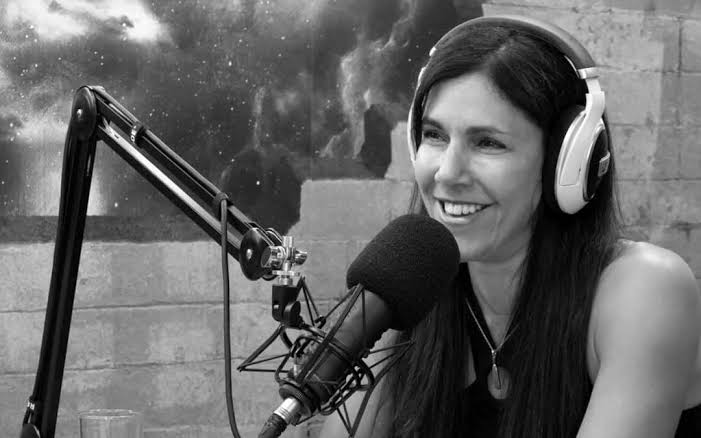
In this weeks episode of "Pushing the Limits" I get to interview my good friend and world class motivational speaker, NZ speaker of the year Cam Calkoen.
Now Cam just happens to have cerebral palsy but he has never let this apparent problem hold him back from anything. From climbing Kilimanjaro to being a world class athlete to becoming one of the most well known and loved inspirational speakers of our time (despite a speech impediment) Anything he sets his mind to he achieves and in this interviewing his infectious positivity, energy and mindset will blow you away. You can connect with Cam on https://camcalkoen.com/ or on instagram as @camcalkoen
You will come away from this interview, uplifted and empowered and those excuses you told yourself were limiting factors will fade away when you hear his awesome stories
Read the full transcript
Made from the episode's captions and tidied up automatically, so the odd word may be off.
Lisa: Well, hey everyone, and welcome back to Pushing the Limits. Today I have my good friend Cam Calkoen. How are you, mate?
Cam Calkoen: So good. What a good way to start a week, Lisa.
Lisa: You're so enthusiastic on an early week this morning, like crikey, Monday morning to boot and you're happy.
Cam Calkoen: And always hearing your voice, you're bringing some sunshine into our lives. It's great to be here sharing my story and looking forward to it.
Lisa: You are fantastic. So Cam and I are both on the motivational speaker circuit. We do a lot of speaking to all sorts of groups, don't we, Cam? And I've had the privilege of sharing the stage with Cam a number of times, and he has an incredible story. So I said, mate, you've got to come on the podcast and share your story so we get a few more people learning about this awesome guy. So Cam, tell us a little bit about yourself and your background, and how did you get here?
Cam Calkoen: Yeah, cool. Well, Lisa, it's been a great honour to share many platforms with you over the years, and I guess we'll get to how I got into my speaking. But as your listeners will maybe be becoming aware, I was born with cerebral palsy, a physical disability which affects the way in which messages travel around my body.
Cam Calkoen: But you know what, this morning when I was getting up, I was like, I often wonder what it would be like if I never knew I had cerebral palsy, if no one told me. Because in my day-to-day life, no one's telling me, you know, get up. And I live an amazing life, and I think we always have choices as to what we focus on.
Cam Calkoen: And so when I was born, I remember I had a tree house, and it was bigger and more gnarly than any other tree house. And people would come over and look up at my tree house and there were broken windows, and then a rope swing and a big slide. And I had calipers all the time on my legs and I had a walking frame, and people would say to my mum and dad, "Do you really think he can go all the way up there? What if he falls over?" And Mum and Dad would respond, "But what if he makes it to the top?"
Lisa: Wow.
Cam Calkoen: In an environment that together we inspired, and we worry sometimes about what if I did fall over, but from getting back up we built resilience. And when I got to the top, I would just dream, and I dreamed big. I dreamed of everything, of entertaining, of connecting, of making people feel good, of, yeah, just big dreams.
Lisa: And when you were born with cerebral palsy, when your parents — because I think you can owe a lot to your parents, like they instilled in you this attitude of, you can do anything. And what were the doctors like with you when you were young?
Cam Calkoen: Yeah, so when Covid happened, I asked Mum and Dad, I said, "What decisions did you make at the point where you heard I had cerebral palsy?" There was no guidebook for something like that, there were no resources about, this is how you do it. And I'm very sure that's often what happens when challenges come into our life, right? We feel alone and we're trying to navigate stuff by ourselves.
Cam Calkoen: And so Mum and Dad said, "Well, we stayed true to the dreams that inspired us to be your parents." So they wanted to be parents, they had a dream of a kid who would be active and have a good life and do all that stuff. And then we had doctors who were saying, "Cam's got cerebral palsy, and this is what cerebral palsy looks like: you will struggle to walk, you will struggle to talk."
Cam Calkoen: And then throughout my life, everything that was to do with the medical system or to do with hospital was about, how do we get Cam normal? How do we get him touching his toes? And I'm like, what the heck do I need to touch my toes for? How do we get Cam talking normal? Well, this was my normal. And I enjoyed it. It wasn't until I got older that I realised, if they had been giving me ambitious goals, like if you can touch your toes, you can run a hundred metres faster, then I would have been way more motivated.
Lisa: Yeah, you want to understand the why.
Cam Calkoen: The why, yeah.
Lisa: You always need the why.
Cam Calkoen: Yeah, and we really need someone in your life who isn't going to stop until you get that why, until you get that answer you want.
Cam Calkoen: And so when I'd be going to school, then there was a choice. Do we send Cam to the local school which focuses on not much, or do we move? And Mum and Dad, I got to primary school. It was awesome, Lisa. You know, I promise. And I did things like the egg and spoon race — Mum glued my egg on, and then I'd do the whole big adventure. And Mum would come up to us and say, "Boys, slow and steady wins the race." And that is true, if the other kid falls over because they're all going out fast. They might want to be number one straight away, and so they don't think about how are we going to do it, whereas you go to school and something's win-win.
Cam Calkoen: So my childhood was awesome. And when we went to Auckland, because there was no school that suited my needs — and in terms of my needs, I don't mean in terms of having cerebral palsy, but in terms of our dreams and my aspirations — Mum and Dad packed up their family home and they moved to Auckland, where they bought a third of a house for five times the price.
Lisa: Yeah, yeah.
Cam Calkoen: Yeah, that was kind of the thing. Because again, I'd been doing all the therapies and got to a point where I just didn't want to be going to the hospital every day. No one wants to be doing that, right?
Lisa: No.
Cam Calkoen: And Mum had discovered this thing called the Alexander Technique here in Auckland, which was all about where the mind goes, the body follows. And that was just cool, man. They are amazing.
Lisa: And what did you learn there?
Cam Calkoen: Well, where your head goes, whether physically or mentally in your thinking, your body follows, right? How you hold yourself will bring you confidence. So as the kid who's different, confidence is what I needed. Not in order to be an extrovert, which people think I am — people go, "You're so extroverted, right? You must be, you're on stages every other day." But Lisa, it's a choice we make in order to create the life that we want to live.
Cam Calkoen: And I'd see other kids who were different and they'd be getting a hard time — I wonder why they're getting a hard time — and I'd be like, because no one knows your story. No one knows why he or she looks like that, no one knows why he or she walks like that. And so if I can step outside my comfort zone and into the comfort zone of other people by saying, "Hey, this is why I walk like I do, this is why I talk like I do, and you know what, this is my dream" — I want to play cricket, I wanted to do cross country.
Lisa: Wow.
Cam Calkoen: And so when I'd do cricket and I'd walk up to the kids who had no idea who I was — this was the competing team — "Look, I can't bowl from the full length of the pitch because I'm not as strong as you are." So straight away these kids feel kind of good, like I've made them feel good. But if I can bowl from halfway, we can have a really good game.
Lisa: Oh, that's awesome. That's all people wanted to know. So instead of being shy and introverted, you went the opposite way and you went out of your comfort zone to talk to other kids and to explain to them, of course, some of the difficulties that you had. And did that sort of empower the kids? Because when you don't know whether to ask someone if they need help, or you don't know what that person often needs when they have something going on — what is the best way to interact with someone who has cerebral palsy or any sort of a problem?
Cam Calkoen: Yeah, I think the thing is just treating a person for who they are and who they want to be. And not — we're growing up in a pretty PC world that we're living in.
Lisa: Too PC for my liking.
Cam Calkoen: We were speaking at — I got a message, you know when you get a message from someone you've spoken to after your speech and about what you say — this was a big construction company here in New Zealand, and he shared, "Cam, we had a guy who had had an injury to his arm and he couldn't use his arm properly anymore," and after he heard me speak, they weren't expecting those results, but the whole way in which we engaged with that guy became so much easier. Why? Because now they could do things like call him "Ol' Man Arm", you know?
Lisa: Yeah, yeah.
Cam Calkoen: And knowing that they could do that and they could get away with that, because it wasn't just a far-away comment. It's about building a community around and building a culture. And when you create a culture around someone, or an organisation, where you can just say what you want to say for the ambition of making everyone stronger, it's the intent behind the comment, which is to make a laugh and to just have fun.
Lisa: Yeah, and inclusive. And that way, to the outside that might look like, well, that was a bit rude, you know?
Cam Calkoen: But do you know what, Lisa, it is a lot better than no one saying anything to you, right?
Lisa: Yeah, yeah.
Cam Calkoen: Well, you see those moments in the supermarket where Mum or Dad's like, "Don't look at that person." But that's the world we live in, right? And yeah, my challenges might be more obvious than some other people's challenges, but ultimately everyone's got challenges going on.
Lisa: Yeah, yeah.
Cam Calkoen: I've seen some of the most able-bodied people living the most disabled lives, and I've seen people with no arms and no legs climbing mountains, playing drums. And myself, you know, those doctors who said my biggest challenges would be the way I walk and the way I talk — well, reframing that, my walking got me competing all over the world as an athlete, climbing Mount Kilimanjaro, and then my talking, becoming a speaker, speaking all over the world.
Lisa: All over the world, winning awards, and exactly, you have been Speaker of the Year. And climbing Kilimanjaro is no mean feat, no mean feat. You've done awesome things with your athletic career, won gold medals, you've done all of this.
Lisa: And so instead of — and this is what I love, and this is where I see a little parallel to my story with my mum, right — everything that was meant to stop you in your tracks and make you think you're never going to do anything. Because we were told that with Mum, when she had the brain injury initially with the aneurysm and stroke, that she's never going to do anything again. And okay, she was 74, not a child, not a baby, and they were like, "Well, at her age..." And there are these limitations that people put on you all the time because you're a certain age, you're a certain colour, you're a certain size, you're a certain whatever the heck they decide is your limitation. And then when you go, "Hang on, I'm not accepting that limitation. You could be right or you could be wrong, but I'm going to go and find out for myself, and I'm going to work hard and I'm going to push hard and I'm going to find somebody who can tell me..."
Lisa: ...the next step forward. And with Mum it was like, instead of — she is a role model, and she gets up on stage with me on occasion, when we're doing something local or whatever, and she tells her story. And she's nervous and she's shy and all of the things that you would be, but she overcomes herself now. And she would never speak before the aneurysm. She'll get up — I've had her up in front of 500 doctors at medical conferences telling her story — and you can just see it on their faces, because I tell the story first and they don't know she's sitting in the audience, and then she gets up and she walks up on stage and talks. That just blows people's minds.
Lisa: And this is the thing. We were told over and over again, when Mum had the cancer diagnosis, we were told that within weeks she'd be gone, it's an aggressive CNS lymphoma. They put that limitation on them, one doctor after the other doctor, and there was nothing we can do, and blah blah blah. And she didn't accept that limitation. She'd come out of those appointments and just go, "Huh, they don't know."
Cam Calkoen: They don't know you, people. They don't know what you know. What are we going to do? At least, you know, no pressure.
Lisa: And I just threw everything at it. I literally threw everything at it, and we do every single day. We fight every day, just as you do, because when you have something like cerebral palsy or brain injuries or cancer or whatever, you're fighting every day against something. You're pushing uphill, but you just keep on going and keep on fighting.
Cam Calkoen: Yeah, it's important, because only you can see the dream, right? And then that becomes your focus. So when I was a teenager — and becoming a teenager is gnarly, right? It's not for everyone. And because of whatever, it becomes even more gnarly, because of a prescription and because of a world we live in where we're told that challenge is a negative and all of that stuff. Everyone's getting faster and stronger and team sports is getting a bit harder, and I started dropping out of sport. I was like, man, why does my life feel not so good? And I realised that I wasn't pushing myself physically. But before realising that, I got myself into a really dark hole.
Cam Calkoen: And I got quite a bit of encouragement from people that I didn't actually know, who visually were behind me. It was from Jeremy Wells and his TV show Havoc at the time. He said difference is a good thing, but people who count them as well look for those who are different. And when you've got a dream and a goal and you've got support, you're able to combine the two. But if you're just getting support and you don't know where you want to go, it's pretty hard to embrace that.
Lisa: Absolutely.
Cam Calkoen: So I started to realise difference is a good thing, and I started thinking, well, how can I make it a good thing? And then I came across the Paralympics. No one had told me about the Paralympics as a kid. Here's an assumption: I assume people must know about what happens. And so if you've got any kind of information, resources, experiences, you've got to pass it on to people. Don't assume that everyone knows. And I got into my sport and loved it and competed all over the world, and I was living the New Zealand dream.
Lisa: Yeah, you're eating your Weet-Bix in the morning and you think if you make it in life, you've got to be an athlete.
Cam Calkoen: But I never wanted my competition in life to be determined by my cerebral palsy. That's when I started looking at speaking, because speaking wasn't about living with cerebral palsy and overcoming it. It was about recognising, as I said before, everyone has challenges, but who do you want to be in this world, and what do you want to focus on, and how do you just make your life as awesome as it could be?
Lisa: Wow. Yeah. And you've had these massive dreams. I think one of the key things about you is that you pick the hardest, toughest, craziest thing for anyone who hasn't got cerebral palsy, and then you go and throw cerebral palsy's issues on top, and then you go and do it anyway. Tell us about Kilimanjaro, for example.
Cam Calkoen: "Have you ever thought about climbing Kilimanjaro?" And I was like, no, no way, man. Come on. I wasn't into doing anything that was over 200 metres. I was an athlete, right, a sprinter, 100 and 200 metres. My good friend Benji Prisoni had picked me up when we were at school and took me for a run, and he was running and I was just focusing on my survival. He could talk, and I was like, okay man, you do the long stuff, I'll do the short stuff. But anyway, I'd seen these amazing legends singing Africa by Toto on the top, and so that became the goal. It wasn't about climbing a mountain, it was about, man, I've heard about this song.
Cam Calkoen: And then I was like, how do I keep motivated? Because this is a goal, but it's not a sprint, there's no speaking, this is something that's just come up in a Tuesday morning conversation and I've said yes to it. And I know what happens: you say yes to a lot of stuff and then life happens, right? So as quickly as I said yes, I needed to make this real by contacting people and saying, "Hey, I'm going up Kilimanjaro, do you want to come with me?" So I contacted 20 people and 19 of them said yes.
Lisa: Dreams inspire people, right? They do. When you're on a mission and you're enthusiastic about something, I've experienced this with the ultramarathons too, people get on board. This is cool, we're on a mission, and they do. So I totally understand that.
Cam Calkoen: But I didn't know much about it. I was just like, okay, it's pretty cool.
Lisa: It is the altitude, and that's a long trek, that's days and days, and two days down. You can't really... you're at altitude.
Cam Calkoen: It's not that long. I think it's something like you're doing about 60 kilometres in total. It's just on 5,000 metres, but because of that, as you've experienced, the altitude stuff... Our guide told everyone to go slow. Slow, like Mum did with the egg and spoon race. Slow and steady. And you see all these really fit people coming past you, and they were the ones who were coming back, a day later, not having made it. Because every single day we'd see two or three helicopters taking people off the mountain.
Cam Calkoen: I wouldn't have made it without the people with me.
Lisa: People don't know what they're in for. Altitude is brutal. It is brutal, and you have to go really slow. That was one of the problems I had in the altitude races that I did, like Manaslu. We went around Manaslu and we were going twice as fast as what's recommended, and that's twice as fast a problem when you're going to altitude. We ended up with nine rescues out of — I think we had 20, 25 people — and we had nine people rescued. It was brutal.
Cam Calkoen: How were you not one of the nine?
Lisa: Oh, I was close, to be honest, because I'm an asthmatic. And like you, I've had limitations on things like cold and mountains. That's why I ran deserts, because I was hopeless in the mountains. And I was like, I'm not letting that limitation stop me. I'm going to go, and I always wanted to be in the Himalayas and do stuff, so I was like, having a go. I've done a couple of things up in the Himalayas, but this one, the temperature was like minus 20 degrees, and you're up at 5,800 metres — I think we got up to that at the highest point, over the pass — and it was brutal. I was at the edge of my abilities.
Lisa: And then I threw in a back injury as well, and I was on something called Tramadol to try and deal with the pain, and that made me psychotic up at 5,000-plus metres. I've never told that story, actually. I was a bit of a crazy looney tune there for a while. I was trying to jump off cliffs and stuff, because the Tramadol at altitude wasn't a good combo. And when you go up that fast — you're not recommended to go up that fast. And that other one that I did in the Himalayas, in Nepal, and in the Indian Himalayas, that was again, we were going up from 3,600 to 5,800, to 3,600, to 5,800 within a 60-hour time period. So the brutality of those ones was that we weren't taking the ten days to go up. We were just running up them, down them, back up them, in this short time.
Lisa: But Kilimanjaro's got other naughty things. You're in the middle of Africa for starters. How did you feel? It's not a pretty mountain. I mean, it's a bit like climbing Ruapehu, hey? It's pretty to look at, but no, you haven't got nice stuff around you. You're down in the shale and the scree, whereas some places you've got beautiful mountains.
Cam Calkoen: Yeah. So we were a very united group, we hiked quite quickly. And I got to day three when my altitude sickness started to kick in. I should have known it was coming, because I noticed that I'd stopped drinking. I noticed my headache coming on and that I should have been drinking, and then all of a sudden I couldn't even speak to people without [inaudible]. I remember thinking to myself, I don't want to come back to this mountain ever again. One journey, one opportunity. I'll never have these people with me again, and you've got to do it.
Cam Calkoen: And thankfully, maybe 20 minutes later, the whole group had turned around to go down a couple of hundred metres to just reacclimatise. And then we get to camp again, we get to the camp for the final ascent, and the guys come into my room and they say, "Okay, everyone's leaving at 12, midnight." And I said, "Why are we doing this at midnight? Why not in the daytime?" And somebody said, "If you saw where you had to go, you wouldn't want to do it." That's a good reason to do it. But also, you get to see the sunrise, right?
Cam Calkoen: So everyone's leaving at 12, but they said, "Can you leave at 11:30, because we know this is going to be really tough on you and we want to get you out there." And so I just said okay, I might be real happy, I'll do it, I'll enjoy it. And I take to the mountain like a steam train. I'm going out there — oh my God. "Hey, hey, hey, slow down, slow down, slow down." He says, "You want to beat all your mates up here, don't you?" And I think, hell yeah. But they'd gone through my tough day, they're all here because of
Cam Calkoen: Some of them are going to experience the altitude sickness tonight. I need them to know. And Kili was beautiful, the moon was beautiful. He said, "Turn off your headlight, you don't need it, and they won't be able to see where you are — but you can see where they are." And it was like a game. I could just see this big line of people coming up behind me, and I ended up getting up there 45 minutes before everybody else.
Lisa: You're kidding me.
Cam Calkoen: I got up there and I was like, "Guys, I'm freezing! Why did you take so long?" And it was just the most amazing experience. And then coming back down — and not being prepared to come down. Everyone was focused on, you get to the top.
Lisa: Yeah, don't forget you've got to get home again. You forget you've got to get home again. You've just had your biggest release of adrenaline, all your food's gone, your water's gone, because, yeah — remember, we've still got another whole day to get down.
Cam Calkoen: Two days.
Lisa: Two days. And they were challenging.
Cam Calkoen: That was the more challenging bit, because you're more fatigued, you've just had a big — you've got no goal anymore.
Lisa: You've got no goal, yeah. You've done your goal. And it's even more heartbreaking if you haven't made the top and you've got to get back down. That's even harder, I think. But at least you've achieved that.
Lisa: How — like, I'd be interested to know, because when I was up at altitude those few times that I did it, my brain wasn't working. I was hypoxic. I didn't have enough oxygen to the brain, you're actually damaging your brain. Were you concerned about doing more damage, with the cerebral palsy, that there was a risk of more issues after that? Because I've had issues — it took me a year to get over the one I did in India, the hypoxic brain concussion.
Cam Calkoen: Because someone told me about that before I left, and then I was like, oh, you know, it's cognitive damage, you don't want to be paying for it for the rest of your life, right? And so I guess I heard that, but I trusted my guide. I trusted the team that I was doing it with. I knew that they were going to get me up there and down here safely, and I could see how quickly they'd be sending people back down if they weren't up to it.
Lisa: And I think that's just part of it, right? You trust the team you've got around you, and especially if it's something that you're not used to doing, try and build that team, and people that are willing to really help you. That's what I think I was blessed with too, with a lot of the ultramarathons that I did, that I had amazing teams. On some of them — some of them you're on your own across a bloody desert in the middle of the night somewhere, freaking the hell out — but other times you had crews, and when you had crews I was just like, well, this is easier than some of those other things I've done, so this has got to be okay. And then the lengths that some of my crew people went to in different various places was just mind-blowing, in the respect that you have for them, because you're the one that gets the medal around your neck, but they're the ones that got you there. You realise it's a team effort, it's a team effort.
Lisa: So that was Kilimanjaro. And you've been Speaker of the Year, right?
Cam Calkoen: I've been Speaker of the Year, and I've been doing it for a while now. Yeah, you've been one of my idols for as long as I've enjoyed — when I got into this business I'd be like, who do I look up to? And everyone would be like, "Lisa Tamati." And jumping on your website and learning stuff, and just being inspired by a lot of people and going, man, if you can tell your story well and you can package it up in a way that's got a good takeaway... So, presenting with my speech impediment, that was one of the big reasons where I could also — but what I did is I took all the energy that I put into my athletics. I stopped my athletics and I pivoted that focus into my speaking.
Lisa: Wow.
Cam Calkoen: And I realised that if I knew what I was going to say, I'd have one less thing to worry about, because you need to value people's time. And, how do I make sure my audience is comfortable with me? How do I make sure they're listening to me? So I'd always start off kind of taking the passion off myself a little bit and making sure people were laughing, because as soon as you do that, you break down barriers. It's just like the kid going and stepping outside the comfort zone: "How are you? How are you? What are you up to?" Making people feel good. And it was the same recipe from a school playground, but on these stages.
Cam Calkoen: And I was invited to be an ambassador for a disability resource centre, which was just a dream on a bit of paper — a four million dollar dream. And we needed four million dollars really quick. And we realised that people were getting paid to be inspired, and if we were giving that inspiration for free, maybe they'd return the favour in the way of a donation. So what we'd do is we'd go to someone's big fancy house, we'd invite 200 people along with all these auction items, but before the auction I would speak for 10 or 15 minutes. And then people would come up to me and say, "Hey Cam, can you come and do that for my school, my business, my charity?"
Lisa: Wow.
Cam Calkoen: And then someone told me about bureaus in New Zealand, and I said, "Well, you mean you can actually make this kind of part of a job?" "Yeah, yeah." And so I'd contact people, and it was taking a while to get traction, and I thought, what is the difference between a lot of the people that are speaking and where I am? And I realised that a lot of the people had achieved amazing things, pinnacles, goals in real life. And what would it be like if I made my voice my pinnacle? So I focused on being the speaker and packaging up my life in a way that would give value to people. But I needed competition, because that's what I learned in athletics — I think you can only get faster if you've got to beat people around you. So I went to New York City.
Lisa: Oh wow.
Cam Calkoen: I didn't know anyone in New York, but Frank Sinatra said, "If you can make it in New York, you can make it anywhere."
Lisa: Love it.
Cam Calkoen: And I hooked up with a good mate of mine, from Taranaki originally, and he was a vice president at NBC Universal, and Paramount Pictures, and MTV, and Nickelodeon. And I ended up speaking there. And I came back to New Zealand and I said, "Hey, I've just been over speaking with NBC Universal," and I had videos. And we went from doing like one speech a year to multiple speeches a week.
Lisa: Wow.
Cam Calkoen: On the largest stages in New Zealand, not just in America but all over the world.
Lisa: Yeah, that's amazing. And how prolific you are, how many stages you get on a year is just, wow. The places that you've been to and the things that you've done — it's pretty next level. It's pretty next level. And I know that because I've been speaking for a long time, and you're at the pinnacle, and you're very, very good at what you do.
Lisa: And you know what it comes — like, a lot of speakers that I've heard, they sound very canned. They sound as if they've said it a hundred times, they know what they're saying. And of course, to a certain degree, you have to have your speech prepared and things. But you've never lost that genuine — when you come in the room, people know you're there, and it's just this energy that goes ahead of you, the enthusiasm and the energy and the intent is louder than your words even. When you get up on stage, it's like, "And here I am and I'm happy!" You just blow it out because of that enthusiasm, that enthusiasm just comes over.
Lisa: And how do you maintain that? How do you maintain that through life in general — not just on the stages, but because we all go through and we all have horrible things happen to us. How do you get up in the morning when stuff is not going right and put on that amazing, powerful personality that you are?
Cam Calkoen: Yeah, because you're right, life is up and down, swings and roundabouts. And you remind yourself of those stories as well. So you're reminded when it's not going so well. One of the greatest privileges that we have as speakers is the opportunity to stop and reflect on our lives. You'd agree that a lot of people don't, because a lot of people are waking up focused on today, tomorrow. I've got ambition, but not many people are stopping to go, "Hey, what happened when I was five and I was learning to tie my shoelaces?" Not many people — and that's especially where our resilience comes from.
Cam Calkoen: And so I have that, and that's why I encourage everyone to take time to really reflect on what's got me to who I am. Whatever breakups that I've had in the past, don't they make me realise that I am resilient now? Whatever moments of hardship I've experienced, but prove that I can get over this hardship too.
Cam Calkoen: The other thing I do — I had a school principal once and they said, "Talk to me when you're sad, but don't forget to talk to me when you're happy." Because when we hear what people enjoy and what makes them feel good, we really know how to give them more of that, right? And we know how to ignite. So I'll often wake up and I'll send a message to people that I haven't messaged for a while, saying, "Hey, you're awesome, how are you doing? How are you feeling? What's going on? I love you." And they're gonna respond with something very similar: "I love you too, Cam. Thank you. Here you are, man."
Cam Calkoen: So I have that, and then I make sure — even before this, I didn't go for a walk, I didn't get to the gym, but I made sure I opened my window in my office and stuck my head out and just really, really breathed.
Lisa: Yeah, yeah, yeah. Just being in the moment, hey, and getting outside, or getting a moment. And this is the thing with you, I think, Cam, is that you haven't let — the resilience, that word resilience which is used a lot now — when you're hit down and you're pushed down, you have learned, because of the struggles that you had early on, that you just have to get back up again the next day and go again, and go again, and go again. And that sets you up.
Lisa: And I think a lot of our youngsters now are not learning resilience. They're not learning to fail, they're not learning to have to overcome. And when we mollycoddle our kids and we wrap them in cotton wool and we don't let anything bad happen to them, and we don't let them learn and make mistakes and run into a few brick walls — albeit we try to do it to sort of keep them physically safe — but pushing the limits of those types of things, and learning to fail early and get back up again, is
Lisa: ...something we take away from them. And then when something happens in the teenage years, or something like Covid and the lockdowns — man, that just absolutely annihilated so many people. And if we don't have that "well, I've been through worse before, I'll get through this too somehow," then we've stolen a piece of that. It's really important that kids learn the hard way.
Lisa: Even when I'm working with Mum — if you just look at me and the way I operate with her, if you followed me around for a day you would think, oh my God, she just makes her mum do all these hard things. She won't help her up out of the chair, she doesn't help her change. She sits there and watches her and barks orders. But if I don't let her struggle, if I don't let her brain work out what muscles to use, to engage, to stand up, then she will never walk. She would never have gotten out of that wheelchair. But because I had that tough love thing — and I still do it every single day — and people are like, man, why don't you give your mum a rest? And I'm like, because to rest is to die. To rest, in a situation like she is in with the stuff that she's got going on in her brain, for her to sit down all day and do nothing is the end. If I left her for two weeks she would be back in a wheelchair and it would be all downhill from there. So I don't let up ever, and it's really hard because I have to be that relentless motivator. I have to push and pull and really struggle, and I get a lot of flack from other people — why don't you just let her have that piece of cake? Why don't you help her get up, or help her do this and that? Why are you so tough? And it's like, because I love her. And I don't want her to decline. And she cooperates. If she said no, then that would be no. But she knows, underneath, she knows — she'll moan a little bit.
Cam Calkoen: Well, if it was easy, everyone would be doing it, right? And so you look at that in terms of goals and dreams and your ambitions, but you also look at it in terms of life. There's a lot of people in your mum's situation that are not where your mum is because you bet that that's way too hard to do. And no one else gets to write the story of your life, or give a speech of your life. We've got to be the people who do that, and we've got to have those dreams that are true to us.
Cam Calkoen: With young people, your goal isn't what your mum wants you to do, it's not what your dad wants you to do, it's not what your mind's doing — it's the thing that ignites you. It's the thing that you're going to believe in more than anyone else, because no one else knows what you are. No one knew that Cam was going to plan to go off to New York when everyone's telling him he can't speak. But no one could take that away from me, and that's where things happen.
Cam Calkoen: And I meet parents and they say, yeah, I've wrapped my kid up in too much cotton wool. He's got a funky arm, I didn't realise he could drive. And I was like, dude, I know your kid wasn't born how you were expecting that kid to be born, but your life can still be incredible. And you've got to teach people that falling down off one little step is okay, because — we alluded to it earlier — if you don't have those falls, what happens when you fall off a cliff? You've got to build your strength, you've got to build that resilience. And in some cases, a lot of kids of all abilities aren't given that. We're not going out of tree houses, we're not... I'm so fortunate for being a kid in the 1980s. I do think life was easier.
Lisa: Yeah, yeah, it was. And me too — I was born in the 70s and it was just a beautiful childhood. We were out all day, parents didn't even know where we were half the time. Fishing, climbing trees, getting into trouble, doing all the stuff that kids should be doing. And I wish that for this generation too. Bloody phones and everything that they have to be stuck to.
Lisa: I've got a lady here, Erica Perry. Erica was born — I've forgotten the name of the actual syndrome that she has — but she has very short arms and a lot of disabilities and facial differences and so on. And she is the most amazing woman. She's just like you — she's not having any of these limitations, and she's made herself go forward, to talk to people, to get out of her comfort zone, to do speaking. This is a few years ago now, but she trained up for a 10K and then a half marathon.
Cam Calkoen: Cool.
Lisa: And she did it. And it was tough, man, brutally tough — and not that she wants to do that every year — but she did it, and she got fitter, and she lost weight, and she felt powerful and she felt strong. And it was an incredible experience for me to witness. Her tenacity, absolutely mind-blowing. Where other people would hide in a corner — when Erica comes in the room, you know Erica's there. She's not shy, she's not like, I don't look like everybody else, or I've only got two fingers on my arms, or whatever the case is. She's just out there doing it, finding a way to get through things. And I totally admire her. I think she's just epic, absolutely amazing. And those are the people that are my role models. Those are the people that I look up to, because when you're having your moan about your day, like we all do, you're like, yeah, get over yourself.
Cam Calkoen: Perspective. Speaking of its power — all we can do to gain perspective, the better. And people will also complain about stuff like social media, but to a degree you can also choose who you're listening to, who you're watching, who you're following. And how awesome is that? I think we can be a lot more in control of the design of our life than we're taught to believe, or than we believe.
Lisa: But how do you bring the discipline every day that's required to overcome the — limitations isn't the word I want — the issues that you have? Because you have to train harder, it is harder for you to speak, it's harder for you to walk. How do you bring that discipline of an athlete? And is it because you've been an athlete for so long that that's just part of your psyche?
Cam Calkoen: Being an athlete when I was in my most developmental years, my teens and early 20s — I often joke and tell my mates, how come we go to coffee shops on a Saturday rather than having an alcoholic beverage, which is a normal thing for teenagers to do? And then I realised that teenagers weren't waking up until midday, because we would be training at 7am on a Saturday morning, which means we weren't going to the parties the night before. But I wanted my training to be something that was inspiring me, so I went out and found the best athletes of the time, people like Donald McDonald and James Mortimer and James Dolphin, and trained with them. Because I wanted to be surrounded by people that were the best of the best — I'm not talking about [inaudible], but people who were waking up and going, I want to be the best athlete. Because eventually you've got to learn from them. And so when I have my sticky situations with my speaking, or my momentum to go on and speak, I learn from other speakers and I look at what they've done, and I remind myself that there's beauty in creating your own story.
Lisa: And do you feel — like mistakes and failing — what's your attitude to that when you don't do so well?
Cam Calkoen: I'm really tough on myself. That's another thing — I don't make excuses. I'll finish a talk and I'll be reviewing my talk on the whole drive home, and envisaging where that energy comes from. As you mentioned, you're delivering your speech so often, but you're always looking at how to fine tune it. And when things don't go well: who do I have to talk to? Am I looking after myself? Oh sure, I haven't been to the gym for a week, maybe that's partly why I'm not feeling good and why I'm not performing to the best of my ability. I didn't have breakfast. All these things. But you've got to have a discipline in there. And again, that's why my whole thing is "dream big, achieve more" — because in having those big dreams, that's when you're going, okay, I need to be sleeping as well as I can, eating as well as I can, getting fitness. But not being too tough on yourself if you slip up from time to time.
Lisa: So it's a mixture of not beating yourself up, but analysing how you did.
Cam Calkoen: Yeah, real hard. I'll be way harder on myself than anyone else will be, because for me there are no excuses. You can't live life thinking I've got an excuse. My favourite days of training were those days when it was raining, hailing, cold. I love those days, because if you can get through that day you can get through anything. And who knows, it may well be like that on the day of competition.
Lisa: Yeah, exactly. That is so true. Cam, I think you're a total inspiration because of just your attitude and the way that you get up and you show up in the world. And I hope that people listening to this walk away with a "we should get our own act together" and push yourself outside your comfort zone and take on big challenges and have a vision. Because when you have a vision of where you're going — in my case with ultramarathons, I'd take on the biggest, scariest races and I'd have no idea how I was going to get there. I was also not a very good athlete, very below average, asthmatic, couldn't do it, broke my back. I had a million reasons why I shouldn't be doing what I did. And you just take on the challenge and then work it out along the way. And sometimes I fell on my face, big time. And that's part of it, isn't it?
Cam Calkoen: So I spoke with Mainfreight a few years ago and they gave me the book, and the title of the book is Ready, Fire, Aim. Now, the two words "fire" and
Cam Calkoen: What I often reflect on is that we're often trying so often to get something perfect before we do it. Why don't we just do it and then make it perfect as we go?
Lisa: I love it. Going back to the "dare to be perfect" — people go, "Oh, you can't be perfect." No, but you can be the best version of yourself, and for me that's perfect.
Cam Calkoen: And that best version is what you see yourself being, but you will not get there if you're planning. "I'm not ready to go right now." I've got it in my speech: if it is, well, yes, just go. Just go, just go, you know. All the best parts of my life — I only just realised this the other day — all the best parts of my life have come from just going. Just go.
Cam Calkoen: Athletics came because next week was the trials, and it was the next day, and you've got to put your name down. You write your name down and you go, you can't get out of that. "We're going to be raising money to build this." "Yeah, cool, we'll do it." And on the day that we went into ASB Trust to ask them for a million dollars, I had, like, a beautiful presentation and a PowerPoint ahead, and I charged the computer — I just had a good dinner. We get in, we've got no presentation, and we've got a board. It takes you a year to get in front of this board. And we got there and I just spoke, and it was a standing ovation. The only standing ovation I've ever got, and it was the standing ovation where I got a million bucks.
Lisa: That's amazing.
Cam Calkoen: And that was trusting your story, trusting that your life is your message. And again, it was just shooting and aiming. Same with Kilimanjaro, same when I decided to be a full-time speaker. I've been a full-time speaker now for eight years, and I started Cam Calkoen Unlimited 12 years ago, maybe more now — Algon will probably remember. And it was the same thing. It was about going ambitious, with focus.
Cam Calkoen: So on day one, which was the first of January, like nine years ago, I had no other job. I'd given myself six months to segue out of the job I had to be a full-time speaker. And in those six months I'd drive around Auckland and I'd look high, and I'd look and I'd read all the expensive magazines, and every name I saw I'd write them all down, because they would be my clients one day.
Lisa: Wow.
Cam Calkoen: And then I just made sure that I called 20 people a week. I sent out 40 emails a week and I did that. I had an office, I had a place where — I needed an office that wasn't home, because I needed to be there from seven until seven, 12 hours, just going, how do we make this happen? How do we make this happen?
Cam Calkoen: I'd made seventy thousand dollars — that was the best I'd ever made in my job before. Well, maybe not even, maybe more like 60. So I realised that all I had to do to realise I could make my speaking work was sixty thousand dollars or more, and I needed to let the world know that I was a speaker. And it was simple numbers: if I could do 60 speeches at a thousand dollars a speech, I would make what I'd made in my original job.
Cam Calkoen: And so that's how I started. And what am I? I'd be going up to Elvis Presley, like, "Oh, we don't get out of bed for less than seven thousand dollars." And in the years to come, I'd be like, how are you so busy, Cam? It was because I'd get out of bed and I'd do it. And when it became, man, I was like, well, if it was that person's knowledge to speak next year, I can make it two thousand dollars a speech. And so I'd do 60 speeches, I've doubled it. And then the year after, three, and we just pulled it up. And that was just it, but it came through that resilience, pushing, talking with people.
Lisa: Absolutely. This is just incredible. And you know what you've got, which I don't have so much, is focus. I ended up doing 10 businesses and running around like a blue-arsed fly, and you focused on one thing and took that to the nth degree. And not to say that that's the only way — I think there's advantages to having a bit of ADHD, I mean, controversially.
Cam Calkoen: That's what's got me to where I am now, but where I am right now is I need to be flying around like a blue-arsed fly to discover more, right? Because I've done one thing really well. Well, there's not really a future where, as long as I do what I do really, really well — which is, what's next? Well, what's next? Hundreds of thousands of people a year, and make sure that in the years to come I've got something to support me. So what does the bigger picture now look like?
Cam Calkoen: And you only get here by going. Here I'm going to drive — you know, a challenge, drive the length of New Zealand and speak at every school where you can speak. Okay, cool, so we're working on making that happen. I spoke with someone who was running self-esteem workshops. Okay, how do we start looking at making these things happen now? How do I now package out this experience?
Lisa: Wow, yeah. And there's just so many levels, Cam. You've been absolutely wonderful today. I will definitely talk off here about all that stuff, because definitely there's more to come. But you're just an inspiration. Thanks so much for sharing your story with the community today, and I hope that everybody's going to pull the britches up and be a bit more like awesome Cam Calkoen. Thank you so much.
Cam Calkoen: Awesome. Thank you. Thank you.
Follow Pushing the Limits