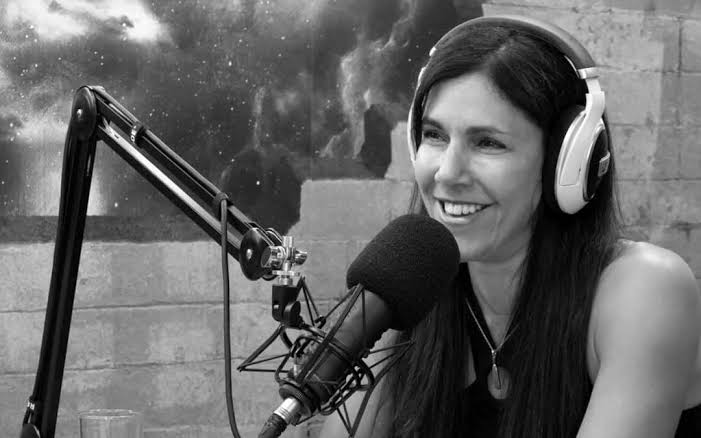
Player not loading? Listen to the audio file directly.
What happens when a Wall Street macro hedge fund veteran dives deep into Bitcoin, crypto, AI, and longevity science? You get an expansive, future-focused conversation like this one.
In this powerful episode, I sit down with Macro Financial Analyst, AI and Bitcoin expert, Jordi Visser founder of Visser Labs, to explore the massive shifts reshaping capital markets, monetary systems, and human potential. Jordi brings over three decades of experience in macro strategy and combines it with a deeply philosophical lens on where the world is going.
We unpack:
-
The evolution of capital market structure
-
Why AI and exponential technologies are disrupting old economic models
-
₿ The role of Bitcoin, Ethereum, and stablecoins in the future of finance
-
Jordi's personal interest in longevity and health optimisation
-
How data, mindset, and biology intersect for performance and resilience
-
The shift toward self-sovereignty in health and money
This is a must-watch for anyone interested in the intersection of finance, technology, and biology — whether you're a health optimiser, investor, or simply curious about the future.
Jordi's Substack: Substack/@visserlabs
Visser Labs YouTube Channel: YouYube/@visserlabs
Jordi Visser Bio:
With over 30 years of Wall Street expertise in traditional finance and macroeconomics, I guide you through the evolving landscape of investments, from conventional assets to cryptocurrencies and AI-driven technologies.
Read the full transcript
Made from the episode's captions and tidied up automatically, so the odd word may be off.
Lisa: Well, hey everyone, welcome into Pushing the Limits. Today I'm like jumping out of my skin. I've been preparing for this for a number of weeks. I'm super excited. I've got the amazing Jordi Visser with me today. Jordi, welcome to the show. It's so fantastic to have you.
Jordi Visser: Well, I'm happy to be here, and I've never heard anyone so happy to have me on their show. So that's great.
Lisa: I know. This is so exciting for me. You have no idea. Jordi, you are a macro analyst, a hedge fund manager, 30 years on Wall Street. You've got an incredible career behind you, and now you've got Visser Labs and you're helping people like me understand the macro world and the AI world and the crypto world and everything like that. And you're also into longevity, which is great because this show is all about health optimisation and longevity, so we'll probably go there. But Jordi, in your own words, just give us the short version of what you've been doing in your career.
Jordi Visser: Right. Well, I started on Wall Street in the early 90s. I grew up rather poor. My father was a construction worker and he just taught me at a very young age a lot of probability-based games, and he played games with me. He did a lot of game theory. He taught me how to handicap horse racing, a whole bunch of things that just kind of prepared me for Wall Street, even though I hated school and really didn't particularly like going and I was bored out of my head.
Jordi Visser: I started at a firm, Morgan Stanley, where I worked my way up very quickly. I realised that not having, let's say, the best schooling and not really paying attention actually came at a good time, because I started at Morgan Stanley just before the internet came out. And I always like to tell people that I got to Morgan Stanley knowing nothing and they opened up the information age, which meant I could learn, and I'm a very curious person. I spent a lot of time at that time mainly on books, but I always say that I knew at a very early age that books were a waste of time, meaning you've got to read and it takes a long time to get the information out.
Jordi Visser: So Morgan Stanley changed my life. I grew up very quickly. I moved to Brazil in 1997. I opened an office for the firm there in my 20s. So I kind of moved up the ladder very quickly, in an exponential way. And I realised that the one thing I didn't like to do, which I was good at but I didn't like to do, is I didn't like to manage people and I didn't like to fire people. And so if you don't like managing people and firing people, that gets very hard at a Fortune 500 global company where they keep giving you more and more people to manage.
Jordi Visser: So I decided to leave and go down an entrepreneurial path. I started my own hedge fund, and then eventually another hedge fund brought on my hedge fund and the entire team, and I managed money there for the next six years. And then the person wanted me to manage the firm. So again, I was back in a position of managing people. And last year the firm shut down, and I decided that rather than go back into the hedge fund world and manage money — I had luckily invested a good amount of money in Bitcoin at a good time and believed that AI was coming in a much, much more disruptive manner than 99% of people on the planet really fully grasp, the changes that are coming in the next five years.
Jordi Visser: And so rather than join another fund, which I figured would have to close down eventually as well, I decided to just spend more time with crypto. I enjoy the community tremendously. I like the people that are involved in it. I've heard some amazing stories. I met you through that connection, and there's a lot of other people I've met in there. So now I spend my time really just doing content and being able to share my views on things.
Jordi Visser: I'm a deep thinker. I think about a lot of different things. And because of my ability of brainstorming with artificial intelligence every single day, it speeds up my ability to present ideas to people. And I'll finish off this little monologue to introduce myself so you can keep asking questions, but when I write — I do a lot of writing each week, I do a video and I do a podcast with Anthony Pompliano — what it's enabled me to do is, I guess, impact people more in a way that I didn't expect, just by sharing my thoughts, because people don't seem to think about things maybe as much as I do: connecting health to happiness, Bitcoin to macro, AI to macro and Bitcoin, and just kind of where the world is going.
Jordi Visser: And I think at a time when people are consumed with what's going on with politics, what's going on with wars, what's going on with everything, they're caught in a world where they're not able to enjoy life as much as they probably should. So I'm trying to help as whatever little I can.
Lisa: Oh, you're having a massive impact right over here in New Zealand, the other end of the planet. With 30 years' experience on Wall Street and managing hedge funds and having all this incredible experience and having a pretty unusual brain — from what I've worked out over listening to you and reading everything that you do — you connect dots like other people don't see, because you know how to read patterns, obviously, you know how to read all the macro stuff, but you actually think about things on a really, really deep level as well.
Lisa: Which has been for me — I read a piece from you and it's like a massive reflection time. I'm like, "Wow." I mean, you're the cause that I started a Substack, for example, because I started reading your Substacks and then I'm like, actually, I want to talk about this too. So I started a little Substack as well. Not that it's going anywhere, not like yours.
Lisa: But it's really a powerful time in history. We're at an exponential shift in history where we've got everything from AI to robotics to all these exponential technologies coming on, multiomics and the longevity space. All of these things that are happening at the same time, colliding, and it's causing a lot of people to be fearful because we don't know what's coming at us in the future, and the change is happening more and more quickly every day.
Lisa: I think most people are being left behind. I spend a number of hours every day trying to get my head around AI and I'm still very overwhelmed, and I'm sure everyone else is. We're trying to work out how to put it into our little businesses and how do we survive this — and also excited, because it's like having a hundred PhDs in my pocket. I can access things. But most people are still not seeing it as such, right?
Lisa: So you spend a lot of time in the AI world, studying AI and what it means for us. So for us average people out in the world who have little businesses, or in their jobs, what do we need to be thinking about in regards to AI? What are we missing? We know the ChatGPTs and we ask it questions, but there's a heck of a lot more we could be doing.
Jordi Visser: I think — let me go back and make it completely mathematical, and then hopefully I can share how I've dealt with it, but I've also watched people not be able to handle the exponential change. Technology's been moving at a faster and faster pace every single year. If you just go back — I mean, we're around the same age, Lisa — and you think about the technology in the 1980s to the 1990s and then to the 2000s, that 20-year period, there wasn't a dramatic change. It was happening at a reasonable pace. You go from phones that had cords to phones that didn't have cords, but they weren't as good as the phones with cords. And then gradually they got better, and then we got these cell phones in our pocket and maybe you'd get a good reception or you wouldn't. And basically the change was happening at a pace that our brains could handle.
Jordi Visser: And then once the smartphones came out, a lot of things changed and anxiety started to go up around the globe. And the reason is because now all of a sudden all the bad stuff that was happening in the world you were hearing about real time and it was being sent around, and it changed the chemistry of everyone's brains, whether they know it or not. The more that you take in negative information and negative thoughts, the harder it is to get rid of them, and your brain just starts to — I mean, it's literally like a muscle. If you don't give it positive reinforcement and positive thoughts, it becomes an issue. It changes your breathing when you have more anxiety, and all of a sudden your breath goes down and then people start gaining weight and it becomes challenging.
Jordi Visser: So AI is moving at a pace that's a hundred times as fast as what we saw, in many ways. Most of the leading AI technologists talk about the fact that we'll have in the next 10 years what would be equivalent to a hundred years of advancements in health, in robotics, in all kinds of things. And that just means our brains are not wired for this. They were not created for us to be able to handle this kind of change.
Jordi Visser: And so people worry about their work. They worry about their kids. They worry about their parents. They worry about everything, because if you feel sick and you go online, you're going to find a hundred things that it could possibly be. And it's great to have information, but what I've tried to say to people as time has gone on — at the same time that I got more involved with recognising this, which was about 2013, the damage that was being done, that's when I really started to embark on meditation and on being able to sit for 15 minutes and take long, deep breaths.
Jordi Visser: I'm a big student of HRV. I think it's probably the most important thing for people if they really want to deal with everything in their life, meaning the anxiety and the health. You have to start with knowing that your heart and your brain are connected, along with your brain and your gut. And if you really want to get them in sync, you have to bring joy to your heart. And the only way to do that is through breathing, which will then feed back to your brain.
Jordi Visser: So I've spent a lot of time thinking about it, and I think it's only going to worsen. It's one of the reasons why a lot of the papers I write — I wrote one today on the brain and AGI, because people have heard the phrase, artificial general intelligence, but I don't think they fully understand it. And it's important for them to understand that human beings only use about 10% of their brains. And if you start with, why do scientists say we only really use 10% of our brains? Kids learn and they use a huge portion of it because they're learning.
Jordi Visser: Through exploration, trial and error. They're looking, they're paying attention. And then as we get older, we get distracted by power, greed, food. The whole Buddhist philosophy starts to break down from the time that you start to get into your teens and hormones kick off and it gets very difficult. So I've really tried to say to people with AI, it's actually just the next stage of technology. But if you've had trouble with the last stage, which was the smartphone and software, you really need to start focusing on getting your breathing and your brain back in check soon.
Lisa: That's incredible, because it's actually marrying the whole health side of it as well as the what do we actually do in our businesses side of it, and in our life and in our investment strategies. I'm very much in the preventative health space. After what I've experienced in the last 10 years, I've realised, at least here in New Zealand, that the medical system is — and this is something I wanted to discuss with you too — the medical system is so far behind, at least over here. We're 30 years behind the research.
Lisa: And so when I came up against situations with Mum, like the aneurysm or the brain cancer, and they were like, there's nothing you can do, there's nothing you can do. And then I go and find these doctors and researchers at the cutting edge, and I find there's a hell of a lot you can do. And then the struggle to get those things for someone in a country that doesn't allow a lot of these things. And we are moving — the speed of medical knowledge is doubling something like every 72 days, is a statistic that I've heard, which is just phenomenal. The whole history up until now, and then every 72 days we're doubling. It's just exponential, and it means that if you've got a disease that someone thinks is incurable, then there's probably someone out there who has already found an answer, but not all that will say.
Lisa: So regulatory hurdles — the thing that's going to slow it down is the clinical implication, and actually implementation I should say, the implementation. And that's where I see a massive disconnect between what's happening, say, with a Ray Kurzweil, who's saying that nanobots are going to make us immortal by 2030, and things that Brian Johnson's doing, and Peter Diamandis, and all the incredible multiomics and how it's collapsing the research — but on the ground, nothing has changed. We're still handling concussions, TBI, like we were 100 years ago, even though there's a hundred things that could be implemented.
Lisa: So do you see that disconnect between where the research is currently at, and — this isn't just in the medical world but in every aspect — the regulatory bodies, the clinics, the not keeping up by miles? That's going to slow the whole rate of change down, as far as the good side. We're not going to get access to the good side as fast as we want.
Jordi Visser: Yes. So my journey has been, as you said at the beginning, I try to look at patterns. And I'm sure you've done this as well, but I look at each individual and I don't judge them, I don't analyse them, but they become part of a big field for me of longevity, in terms of, that person looks like they're this age, and I look at their muscle tone and I look at their skin and I look at everything on them. And I want them to be healthy. I have tremendous empathy, and that's the part of anti-aging that I focus on.
Jordi Visser: I studied — and I think I sent you — I created an acronym to make sure that I was thinking about everything that I learned about anti-aging. And so if you can stay the same age for the next 10 years, the technology and the regulations will come down, because AI will speed it up. And that means that the medical community will catch up, because it won't be in the medical community's hands anymore, it'll be in AI's hands.
Jordi Visser: And so I say to everyone, especially in our age, or anyone who's above the age of 50: the deterioration in the body, if you just let it go on its own, it'll start to accelerate. You have to want to live. You have to tell your body that you want to live. And you also have to tell it that you don't want to age. And there are ways to do that, to slow the aging process down. You can't reverse it yet. You mentioned most of the people that are talking about this stuff. Peter Diamandis in particular, he talks about the work of David Sinclair. And we're getting closer to epigenetic reprogramming, which is a huge ability to reverse aging.
Jordi Visser: And so everyone just needs to realise this stuff is real. It's not a question. And you want to stay as healthy as you can for as long as you can. And the best thing to do is really to make sure that you're focused on everything that you eat. Make sure you're getting enough sleep. Make sure you're exercising. Make sure you're building muscle, because muscle goes down as you get older.
Lisa: Yes, exactly.
Jordi Visser: All these different things, get back into it. So we're on the same page. We bond over this. But it's more than that for me. Again, I'm looking at it from the lens of health is happiness. I don't think you can have happiness in your life if you're not healthy. It doesn't guarantee it, but I know for a fact, if you're not healthy, your happiness is going to have a really hard time of sustaining itself.
Lisa: Yeah. The man who has his health has 100 dreams, the man who doesn't has only one, as they say. And that is so true. But selling prevention is quite a hard thing. Selling prevention, it's like selling an insurance policy. How do you prove that you didn't get cancer? How do you prove that you didn't go down with whatever disease? It's really hard to get people into that way of thinking. But I'm thrust into it because I look back and I go, damn, I wish I'd known what I know now before Mum got sick. And then I could have saved us mega dollars, but the pain and the suffering and the torture and all the things that you go through when you have a loved one who's sick and you're fighting for their life.
Lisa: And my message is always like, never give up because your local doctor has told you that there is no hope, because there is. Go to the AI and start talking to it and asking it. It really is now at a point where you can actually really get nitty-gritty and get insane. I heard you talking about — going back to the macro side — you can pull out, instead of getting a McKinsey report, which you used to pay for the service to get these reports, you can go to ChatGPT or one of the Grok or whoever, and get a really in-depth report because you know the prompt to ask it. You know what you're requiring of it, and maybe pay for the premium service or whatever, but then you can get a report that you would have been paying for the last 20, 30 years a massive subscription for, and now it's available at the click of a fingers. That's pretty insane. And again, it can be on whatever specific thing you want.
Jordi Visser: I do it for almost anything. And I think it's worthwhile to just give people a sense. This is the first time I've ever said this to anyone, so I'm bringing you some fresh content.
Lisa: Brilliant. I love it.
Jordi Visser: I just thought about it when you talked about you wish you knew the things now back when your mother was going through this. Everyone, when they go to the doctor, has an experience that is unique, which is, the doctor always asks, "Well, how do you feel? Why are you here?" And the problem is, I don't think people do this enough, but if you keep a journal every day about how you feel — if all of a sudden a pain comes into your hip or your shoulder and you write it down, "I have a pain in my shoulder" — you've now documented the first day that you had that pain. And then if that pain is still there in two weeks, and now you have a pain also from your hip down into your ankle... the more data you keep and the more you talk to ChatGPT or any AI about it, the more likely you are to catch all types of things that it might be.
Jordi Visser: A medical journal of how you feel physically, particularly with things that are unique. Everyone knows their body better than everyone else, and it's not something that you can explain to a doctor. If they go, "Well, how long has it been bothering you?" "It's probably been about three weeks." That's not specific enough. You want to actually write down what's going on. And that again is only for things that pop out of the blue, things that happen. And that way you have a better idea of catching things much earlier.
Jordi Visser: We're going to get to the point where early detection is going to be the greatest gift that we get. Ray talks about nanobots. I had been to Silicon Valley in 2013 and they were talking about all of us having smart toilets and smart brushes where every day our DNA would be read and we'd know when we had anything. And that isn't here yet, and I don't — now I was thinking about it, I don't understand why — but that's all coming way before nanobots. And so you'll have real-time detection of problems. And if you have real-time detection, people can have cancer every day of their life and they can live forever, as long as it's treated that day.
Jordi Visser: And so everything is going to get down into the what do you have today thing. And in the meantime, I think it's good for people that don't have access to that to just keep track of their own unique medical situation, and then you can ask the best doctor in the world. Because the one thing people don't realise, all the information and knowledge that human beings have consumed — and for the medical community, because they have to eventually put up anything into the internet — it's all there. And ChatGPT is a phenomenal diagnostic; it might be the best doctor in the world already. And you should at least have a conversation with it on anything medical before you decide either A, to go to the doctor, or you decide not to. You should still have a conversation.
Lisa: Absolutely. I listened to Michael Saylor yesterday at the Bitcoin conference in his 21 ways to wealth, or whatever he called it, and one of them was, before he — he employs like hundreds of lawyers obviously — and he goes and talks to the AI about the problem, and he threatens it, and he asks it a hundred different ways, and he gets to a 95% solution, and then he goes to the lawyer. And I'm like, that's how you need to do it for your doctor as well. You need to go and do the research and then take that forward. And if that doctor's not helping you, go and find another one, and another one if
Lisa: ...you need to, because we have teleconsulting now, right? For a lot of things we can do that. And I'll give you an example. I was deep in doing a course in advanced lipids — Dr Dan Goodenowe, who's a plasmalogen specialist, who's got a course in understanding plasmalogens, and really, really advanced sort of biochemistry stuff. And I'm deep in the weeds and going, oh my God, I can't keep up with this stuff. And then I had a report done for one of my clients and I'm in the middle of the course, I'm not there yet, right? So I thought, well, I'll put it into ChatGPT or one of the things — anonymised, obviously — and it told me exactly what I needed to interpret from the report. And I'm like, what the hell am I doing the course for? This gave me the top scientist level of what was going on in this guy's body with these advanced lipid profiles. And I'm like, well, there's no need for me to go now and spend another 100 days studying this really down-in-the-weeds rabbit hole thing when I could be spending my time on other things.
Lisa: But I have that ability to do that now because that's an extension of my brain, right? And I know what to ask it. In one of your interviews with Raoul Pal, he said, "Yeah, but you know what to ask, because you've got 30 years worth of experience. You know how to prompt the thing." And yeah, that's true. You do need to know your material enough to know what you're asking it. And you need to be specific. Like, as Michael Saylor: tell me how I should be thinking about XYZ for my portfolio, or whatever is the case. Because then I'm talking to Michael Saylor — all of his stuff that's ever been out on the internet, I'm getting that advice from the person that I want to learn from. And that's so powerful.
Jordi Visser: Yeah. One thing people should realise with this whole prompt thing: the best prompts to help with the prompts are to basically say, "I want you to give me a prompt on solving this problem in the same way that..." and pick your favourite — pick Michael Saylor, pick whomever — but describe what you want, tell them to think like that person, and then you'll end up getting a prompt. And then have a template of a bigger prompt and you connect that to it. That's the way that I do all my prompts now. So I actually let the AI create my prompt for me and then I paste it back in and use the prompt there. So AI is great for creating prompts too. You just have to kind of guide it to what you're trying to accomplish. But you don't need to be great at figuring it out.
Jordi Visser: So some of the prompts that I do, particularly the ones that you referenced — I did one today on Brazil. So I'm writing about Brazil as an investment in kind of the crosshairs of two structural trends: the rare earth minerals, for sure. So you watched my video over the weekend. But also I go in depth as to why it really fits, not just from the rare earth side, but it also fits in from what the White House and the administration is doing here in terms of the trade side, why Brazil kind of fits in the middle, and then historically what happens to Brazil when the dollar is weakening, when there's a demand for commodities.
Jordi Visser: And so to do all these reports, I did one in Grok, I did one in Perplexity and I did one in OpenAI. I did all three of them and they gave me three different outputs, and then I uploaded them all into ChatGPT and said, "Take all these, consolidate them and give me one broad 20-page report," shrink it down. And then I use this — that's the way I kind of consolidate a bunch of ideas from different places. And what they give you is very different from each other. They're different AIs, they're different approaches. And if you ask it again, it'll come up with other reasons.
Jordi Visser: So for anyone who's out there who hasn't really used it, the free ones are more than good at this point. If you can afford $20 a month, they're kind of game-changing, because you go through it. But at a minimum, for the free one, OpenAI, you get the ability of having a chat with it. So the way that Siri doesn't work, or Alexa doesn't work, or whatever you've tried to use in the past — ChatGPT, the voice command, which is free, if you use it with your children, with people sitting around, you just have a conversation with it. It will teach you a lot about how to do different things with it, because you can just ask it the question.
Lisa: Yeah. And I mean, you were the one that first put me onto — and actually you went and analysed my book, or had a conversation with one of the LLMs about my book, and got the synopsis, a bit of a deeper insight into my story, and I'm like, hell, I've never thought about that before. So now I've been doing that, right? Getting a whole lot of books explained to me. And you get a deeper insight than when you just read it, because you're able to ask the questions, and it's talking as if it's the author almost. It's really next level.
Jordi Visser: Here's the thing. I wrote this today — so the Substack I posted today got into a bunch of things about the brain that I've learned over time. But what I learned with ChatGPT, and I've said this to people: if you have a conversation with it while you're walking in a park, your visual senses, because you're moving, as opposed to reading on the couch... When you're reading on a couch, your eyes are locked on the book. When you're having a conversation and you're walking around, that experience — you're more likely to keep the information in your head.
Jordi Visser: So the human brain is much better at remembering things like music and songs by the experiences that become connected to it. Your emotions get connected to those learning experiences and it makes it more powerful. And that's why people with Alzheimer's can remember songs. They might not remember anything else, but if a song is played they know all the words, because it gets deeply embedded into your brain.
Jordi Visser: And so I recommend to everyone, if they... what Lisa said, I do this all the time. I probably go through five to ten books within a few days now. Not reading them, but actually having a conversation. And I may not go super deep on some of them, but it's an ability now to consume a lot of information in a conversational piece. And I'm able to keep the information in my head for longer and then pull it out and connect the dots. And I think that's one of the most powerful things with AI.
Lisa: Yeah, and the movement piece. When you do exercise after learning, in any case — so if you have a session learning, usually 45 minutes is about where the sweet spot is for the human brain, and then you go out for a run or something like that, you'll consolidate, because the adrenaline comes out and the cortisol and things like that come out, and they actually help get it into the long-term memory. Which is another really good trick to do. But going for a walk in the park and moving your eyes — yeah, that's also a really good way if you're struggling emotionally, is to walk beside somebody and let your eyes just wander left and right and talk about your emotional experiences or whatever you're going through. You'll have a much better effect than just sitting in an office talking with the psychiatrist or something. These are little tricks we pick up along the way, right?
Lisa: I want to switch gears a little bit and go into the world of macroeconomics, into what's happening in the world. We have the Trump administration, we have the White House going in a completely different direction than the last administration. One of the things that I'm super excited about is that crypto now has a backwind instead of the Choke Point 2.0, which was really stifling innovation in this whole part of the world, in crypto and Bitcoin. And so this embracing of this has really legitimised this whole asset class.
Lisa: And I've been studying Bitcoin for five years, I think, I've been in the space now. Made every mistake that there was to make under the sun, like a complete newbie five years ago. And I still feel like a complete newbie even though we're five years in, right? And you'd think, how can you study Bitcoin for that long? But there's so much to it, not only Bitcoin, but the whole crypto space. With Trump coming in and these talks of strategic Bitcoin reserves, and then places like Texas taking it on, and Pakistan over the weekend now having a strategic reserve — what led you to Bitcoin? And then how does this whole new administration impact this whole innovation in this technology?
Jordi Visser: Yes. So I wish I could say I believed in Bitcoin in the way I do today back in 2012, but the reality is I'm a contrarian by nature, and I think anytime something seems too easy...
Lisa: Is it why we like each other?
Jordi Visser: Yeah, exactly. I don't believe in anything I hear, and that's both good and bad. But when it came to Bitcoin, I think my views were very similar to most people on Wall Street that I kind of poke a stick at now, who don't embrace it. Because in the markets, in investing, there was a phrase that was taught to me by an Australian who managed a portfolio when I was very young in Hong Kong, and I came out and he just said this phrase to me. He said, "It's very easy to lose money. It's very hard to make money." And so whenever I would see my son or someone making money in crypto very easily, for no reason other than they put money in, I just doubted that it was anything real.
Jordi Visser: But the other problem was it was still very small — which isn't a reason not to be involved in something, but I always figure I can get in later. So it was about 2018 that I really started to do a lot of research, less on Bitcoin and more on the blockchain. And that's what I think got me convinced that it was all real. But there wasn't that moment for me to kind of switch investments from where I was investing into it. But that all happened about the same time it did for you, and I think for most people, which was 2020 during COVID.
Jordi Visser: And it was really the fact that the government printing around the globe was so enormous. And I just at that point started talking — I mean, you didn't know me back then, but I did content for the firm that I worked for, and I was just saying to people, "I don't understand why you don't see, like, we can stop any recession, we don't have them, but we are printing so much money that we're going to have inflation. But more importantly, this is the largest debasement you've ever seen. And they're never going to admit what the inflation is. They're never going to calculate it properly." So Bitcoin was already doing well before the markets were doing well. And that's usually a signal to me that I
Jordi Visser: ...have to pay attention to something more. And then my son, as I've talked about with Pomp and Raoul, he just showed me that there was a reality there. And what I needed to do was learn more. And so I spent probably 24 total hours over the course of about a week with podcasts with Michael Saylor. He spoke a language I understood. And back then it wasn't as much about the inflation part. It was the connection of a dot which to this day I still don't think he's ever done a great job of explaining.
Jordi Visser: His business was done, and it was done because of artificial — not artificial intelligence at the time, but let's just say artificial intelligence — meaning he had a software company and he knew that even though he had a billion dollars because of prior success in his treasury, that money was going to be whittled away because of Microsoft and they couldn't compete with him. And he's like, "I could have started a new business, I could have tried to come up with new companies that were like startup businesses to compete with Microsoft, but they all would have lost." And so he said, "So the first thing I did was say, well, the government's debasing and taking my money, so I'm going to put it in this because this asset's going to outperform."
Jordi Visser: And then I started to realise that that was the merging between something I believed in, which was that all companies would eventually be in Michael Saylor's spot. And that was because of artificial intelligence, which I believe in. And so that was when the connection started to come in. That's when I started to move money into Bitcoin. That's when I started to believe not just the inflation and debasement side, which eventually other people I listened to gave me some more thoughts and connected some more dots, but it was that first thing.
Jordi Visser: Which eventually — if you've heard Jeff Booth speak, he's worth listening to just because he's another macroeconomic, a Canadian, who talks about innovation being deflationary and the government's job is to offset that deflation. And that makes it worthwhile for me to understand that when Donald Trump gets elected and most people in the country are surprised, I wasn't surprised, because there was so much anger and discomfort with the inflation side here. And there weren't annual changes of inflation — this was still leftover from COVID — that his message of crypto and his message of fighting for the median voter, who was having trouble in a world of distribution of wealth problem, that it would probably resonate enough for him to win.
Jordi Visser: And so, to your point, he comes in and he's at a time where he's got deregulation on his mind. He's got a crypto vision, and even if he doesn't know where that vision fits, people just have to understand, A, it's real, and secondly, it's very, very important in my mind to Bitcoin. And I think we're just headed down a path where people are not fully grasping the change that's happening, because it should have happened a long time ago for the reasons you mentioned.
Lisa: Yeah, absolutely. So the blatant attacks on crypto of the last few years prior to Trump coming in were just wrong and just stifled innovation, and a whole lot of stuff that went wrong there. But now that we've embraced it, and now we've got David Sacks — the AI and crypto — that they put those two things together, I think is really powerful as well. And him addressing — this is not to get political about whether you like Trump or not, it's more to the fact of what's going to happen because of these changes.
Lisa: So the tariffs coming and the tariff tantrums of the last few months, that's really shook up the stock market. But I was listening to you, right? And I was listening to Pomp and I was listening to people, and we went harder into the stock market. We went, "Well, whatever we've got, not that much, but we're going in with it," pretty much at the beginning.
Jordi Visser: Yeah.
Lisa: Well, we did. Thanks very much. Because we could see that you guys were right, that this was probably just going to be a glitch and then we'd be off to the races again, which is what's happened. And we'd been waiting for the banana zone, as Raoul Pal says, to come in February, and then that was delayed with these tariff situations and so on. And goodness knows what's going to happen in the next few months. I mean, hopefully you can enlighten us. But I'm really excited now because institutional adoption, the stablecoin bill that's going through, Cynthia Lummis and the SEC, and all of these things that are now — you can talk about it without getting shot down.
Lisa: And just to backstep a little bit, we got into this world because in 2020 when COVID hit, we were one of those people that didn't take the big V, as I like to say. And it completely broke my paradigm. Completely broke my paradigm on, whether you wanted to do it or not, you should have the choice. And I no longer — I'd been brought up in a country that was safe, democratic. You trusted the authorities to have your best interest at heart. You trusted the banks. You trusted the media stations. All of that was completely and utterly destroyed within the period of a year.
Lisa: And I saw that I needed a way out, and that was Bitcoin for me, and that was crypto for me. And then I started to study more and more and more because I no longer trusted my government. I no longer trusted the media. I no longer trusted any of those systems. And I think a lot of people at that time came to similar conclusions. And then with the war against it, that even just ratified it, that that's even more. And now I'm super excited because now the innovation has been embraced and we're going forward with this. I'm just so glad we got on the bus four or five years ago, even though we went through some very deep, dark times with it.
Lisa: You have to understand with crypto — and if you're listening to this for the first time and you don't even know what the hell Bitcoin does or why anybody would do it — can you walk us through that? Why Bitcoin? Why is this so crucial for the future financial structure?
Jordi Visser: Mhm.
Lisa: Especially with these tariffs and stuff and what's happened.
Jordi Visser: So when people make money and they try to save it, they put it in some kind of instrument that they're hoping that over time it'll provide value for them and it'll go up in value over time. Now, that's just not always the case. There's plenty of investments that don't go higher, or at least haven't gone higher for long periods of time. There's plenty of companies which go out of business. I think one of the mistakes that people have had is that they believe that stocks go higher all the time, or that bonds will give you interest over inflation all the time.
Jordi Visser: At some point, your story about not trusting either the government or just feeling like you've been lied to — it happens in almost every country. But in particular, again, as people have a smartphone, as they start to realise things, it's much easier to figure out what lies are happening, because you have access to information and you're actually getting real stories real time. And so it's much harder to hide information and kind of go through it. So I think eventually everyone runs into that point where they've lost trust in the government.
Jordi Visser: At the same point, technology has over time displaced a lot of people in jobs. We talk now about AI displacing jobs, but this has been going on for a long time. It's been going on since the beginning of time, but it really is accelerating and it's made it more challenging. So you displace a certain amount of people, they need to go find another job. And if they've only been trained to do one job and that job no longer exists, then you're forcing them to learn another job. Well, that creates anger, creates what I like to say is a loss of enjoyment of hope. Hope is the word I use all the time.
Jordi Visser: I've seen it at the crypto events. It's one of the things about the community that I love, is that when I went to Raoul's event in January and spoke in Miami, I met lawyers, I met doctors — young ones too, people in their 30s. And I said, "Why is a doctor here? You make plenty of money, I assume?" "Oh yeah, I've got money, but here's the problem. Being a doctor is not the same as what it was. Between the insurance, between everything that's going on, I know exactly how much money I'm going to make every year. There's almost no way to do it. And if I want to make more money, I have to do things I don't believe in. I have to write more prescriptions." And they start going through the things that challenge their beliefs.
Jordi Visser: And so the people that go to crypto, they're going there for hope. They're going there for entertainment. They're going there for enjoyment. I would never invest in anything that I didn't believe in. I would never speak about anything the way I do with Bitcoin if I didn't believe in it. And the reason I believe in it is because every investment at the end of the day is built on some kind of trust in the system that you're working in.
Jordi Visser: And I will just tell people that when I meet people on Wall Street now and they tell me what Microsoft will be worth in five years, I say, "But how do you know where artificial intelligence will be in five years?"
Lisa: Yeah, yeah.
Jordi Visser: There's no way you can know that. That company might be out of business. Jeff Bezos famously said in 2018, which I wrote in the paper today — he said it to his employees — "Amazon may not be in business in 30 years." And the reason he said that is just the facts, that the average lifespan of a company in the S&P 500 in the US is 30 years. And so he just said, "We may not be around in 30 years. We might go out of business." Now, when you add AI into it, which is not specifically what he was talking about, you end up with everything is up for being disrupted.
Jordi Visser: And the one thing about Bitcoin, it was created to have a finite amount. So I believe we're entering a world into abundance. Abundance means that capitalism to some degree is changing dramatically. And humans will still want to save money. And in the time being, I think seven billion people on the planet live in countries where they don't trust their government, they don't trust their banks, they don't trust the currency that they have. And so Bitcoin becomes an alternative. And the wealthy people will be the last ones who embrace it, because as Michael says, you don't find Bitcoin, Bitcoin finds you. But it's only when you're at a place of pain that you end up buying it. And so everyone's story is always the same. Mine wasn't at a place of pain. Mine was a dot connection between the printing that was going on and the AI disruption that was coming, and how this would be the only thing left standing in 15 years, in my mind.
Lisa: Yeah. Because it's outside of the system, right? And there will only ever be 21 million — we can discuss, there's probably only 15 million, because
Lisa: A lot of them are lost as well. So that's a complete finite structure that cannot be broken. And people go, "Well, it's just digital though. How do I know that it's real?" And I'm like, how do you know that your dollar is real? That's just paper. And it's being debased. I don't know, they say 3%, but I'm like, more like 12% a year from what I've seen.
Lisa: So that's the hurdle rate. You talk about the hurdle rate for innovation being Bitcoin. And this is also a marriage made in heaven, Bitcoin and AI, because the agents are going to — it's programmable, as Michael Saylor says, it's programmable money. The AI is going to need to transact in some way, shape or form. Is it going to be in Bitcoin? Is it going to be the underlying structure, like gold was? We call it digital gold, and a better form of gold, because gold can't be transported in time and space that easily and things like that. And has the tariff situation and the breaking of the capital structure — we're seeing bond markets all around the world going higher, as you pointed out yesterday, it's not that bad, but it's going higher — is this going to be a part of the restructuring of the capital? So are we going to be denominated in Bitcoin eventually, or is it going to be a part of the structure? You say it's not a currency.
Jordi Visser: Yeah, it's not a currency. Since the US has served in the world for the financial system as the global reserve currency — so people hear the history — this was a decision made by the world, it wasn't the US, but this came out of World War II. The British pound had been the global reserve currency, and it had been since the late 1700s through the 1800s all the way into World War II, and it was backed by gold. So gold was kind of the ability of making sure that countries trusted it as the global reserve. So when the US took over as a global reserve currency after World War II, that lasted until 1971. It was backed by gold from 1944 to 1971, and the US decided at that point, we're not going to have it backed by gold, this is creating too many issues.
Jordi Visser: So just so people understand, I don't view what is going on as Donald Trump's decision. I view this as the American people voted in someone who openly said he wanted to restructure the global trade system, that he was going to use tariffs and it was necessary. The American people voted it in. And I think if people around the world look at that and say, "Well, why would they do that?" It's because the majority of Americans feel — and I'm not saying they are, because as far as I'm concerned, I've been all over the world, it's still the wealthiest country in terms of this many people, and even people that are poor have money and they can eat, and there's no starvation, and there's government, there's money. So why do they feel like they're poor? Why do they feel angry? And that's the only word I ever care about. It's a personal thing, but they voted based on their feelings.
Jordi Visser: And the problem is, that means that the average American doesn't have as much money as they would like relative to the wealthy people in the country. And since we won't tax the wealthy people, and since we'll do everything else, the only alternative that they came up with was a restructuring of the global trade. And they're doing it in a way that — I don't care how you try to do that, it only can be disruptive. I don't care what in life you want to change.
Lisa: Yeah.
Jordi Visser: If you change jobs, it's stressful. If you're going to try and change a global system which has been built now over the last 50 years with computers and everything interconnected — we saw what happened with Lehman Brothers. I just think that Bitcoin is becoming very quickly a realisation for a lot of people that it's the capital structure of the future. It's involved in the capital structure. And what I mean by that for people is, someone had sent something to me over the weekend after they saw my video, and I talked about bit bonds, and they said, "I would never buy New York State, New York City bit bonds." And I sent them about junk bonds and the fact that 50 years ago there were no junk bonds. Junk bonds was a new creation. The markets create new capital structures, and stablecoins is something that is now accepted by everyone.
Jordi Visser: It is the other half of the internet, which people don't realise. When the internet was created, it was great at half of the things, which is exchanging information and interconnecting data and everything like that, but there's still no transactions over it, and that's what stablecoins allow for. And so Bitcoin ends up being the destination for the transactions within the internet, and it just becomes a store of value. It becomes a place that, once people have wallets around the globe, and it's easier to have a wallet and they have a stablecoin, and they're paying for coffee in New York with a stablecoin, and they're paying for coffee in Europe with a stablecoin, and they're paying for dinner in Brazil with a stablecoin, and they realise, "Oh my gosh, this is global money. I never had this before. I always had to convert my Kiwi into dollars and convert everything around the world into different currencies." Now you don't have to do that anymore. You have a global exchange, which really should have happened.
Jordi Visser: So we're entering a world where it's becoming less about countries and more borderless, and it's been going on because that's what the digital economy is. That's what the metaverse is. That's what all these things are. And it's scary to people, but there's just no way to turn it back. It's happening, and the global trade system is archaic. It served its purpose, but now we're getting into a world where a gold-backed world is not an option, because no country in the world can be the next global reserve currency. So it won't be Bitcoin, but gradually what will happen is the fiat system will merge into this digital economy. Bitcoin will grow in value. That'll be a representation that more and more people are participating in that world, and the sizes will start to equal. And then over time, more and more people will just look at Bitcoin as the innovation hurdle rate, as I mentioned from the Bitcoin conference. So yeah, I mean, that's gold.
Lisa: And so people were angry here when Trump put on the tariffs, like, "Oh, they're going to destroy our stock market, our portfolios all took a haircut, 20%," sort of thing. And I was like, yeah, this is going to come back. We're going to be happy by the end of the year, I'd say. But it is a restructure, and there is a lot still going on, and it is like you've got to break some eggs to make an omelette. And where we actually head to — you put me onto a book, a guy, Mel Mattison, and I'm reading his book Quoz at the moment, and it's quite scary partway through it. But where I'm going with this is, China has been buying a lot of gold, and I think Russia and other places have been buying a lot of gold. Gold's been going up in price. Are they going to try to not have a BRICS currency, but back their whole system with gold and weaken the US dollar that way? Or how am I meant to understand the gold situation that's going on in those sorts of countries? Why are they buying so much gold?
Jordi Visser: They're buying gold because they're not convinced that the US isn't. So what gold does for countries is it gives them the sovereignty that we see as individuals with Bitcoin. So what people have to understand is gold is the central bank and the country version of Bitcoin. They can't really go out and buy Bitcoin the way they would gold. So for the Chinese — and I think they don't want Bitcoin to go higher, because then it destabilises their government. The US is different in this framework. I think they probably will at some point buy Bitcoin. That would be my guess. I think they have to get through the stablecoin bills, but I do think at some point Trump will figure a way. He figures a way to do everything.
Jordi Visser: But gold has been — you can't fail with gold, because people will exchange money for gold. The problem China has is less about the dollar, it's more about other countries trusting the yuan. There's a reason why China's yuan's not going to be the reserve currency: countries don't trust them. So the easiest way to bring trust is to say, "Okay, well, we'll convert Brazilian real with yuan." And when you start getting into bigger sizes with Brazil, then Brazil's like, "Well, we want gold instead of that, we want to have some gold." So I think it has more to do with that fact than it does with anything else.
Jordi Visser: But the dollar should weaken based on my view of what they're trying to accomplish. If they're restructuring the global trade order, then every investor around the world should be repatriating money, but in particular out of Asia, which has been funding this whole thing in the US. And so Trump has broken trust with those other countries. He doesn't care. He doesn't want the stock market to go down. That's why Anthony and I talked about the fact — and I was emphatic — that you cannot have the stock market go down in the US, because then you're going to hurt Main Street worse than what you're doing with the restructuring plans that he has. And I think Bitcoin is the way that he's going to try to help people and help himself get re-elected.
Jordi Visser: So gold is going to be a part of the system, Lisa, but it's not a restructuring of the global order the way that people thought. It's just that the US doesn't want to hold the reserve currency, doesn't want to be the police force of the world anymore, mainly because it can't afford to. It doesn't have the money to do that, and it's getting harder and harder to do that.
Jordi Visser: So the only thing I'll just make sure people understand, especially as you're reading Mel's book — the way that I judge, and Mel included, he's not an AI person. I don't think, as a macroeconomic person, I can listen to anyone talk about the future who doesn't fully grasp AI. And that's why whenever I do my videos — I love Russell Napier, but Russell Napier is a historian and he knows nothing about Bitcoin and he knows nothing about AI. Mel very seldom brings up Bitcoin other than as a trading vehicle, and he doesn't talk about AI in the way that he should.
Jordi Visser: Profit margins around the globe are going to improve for public companies. So the stock markets are benefiting not from what Trump is doing. They're benefiting from the acceleration of artificial intelligence, which allows companies to use less people in their business, and it means they produce more profits. And as I showed in this week's video, it sounds really bad, but at the end, we're going to have a global labour shortage because we don't have enough people. I didn't include one slide because I didn't think the timing was right, but Elon Musk will publicly say the biggest problem we have in the world is fertility rates.
Lisa: Absolutely. Yeah.
Jordi Visser: We don't have anybody being born. And so you run into problems as
Jordi Visser: as a society and as a country if you don't have people being born. And that's why we have a labour shortage that's going to get worse. And so we actually need artificial intelligence and humanoids to fill in the gap on the labour shortage that's increasing every single day in the developed world.
Lisa: Yeah. And you said there's something like 300,000 people dropping out of the workforce just naturally from death or from retirement in the US. In the US, everything's about the US because that's the benchmark of everything. But we have a shortage also of people willing to do the menial labour jobs. I've got a situation with Mum, I need caregivers, I can't get them. So it's me. And in future it will be an Optimus robot probably. That's what I'm counting on, because I've got no kids, so hopefully Optimus will look after me when I'm old.
Lisa: But we are losing huge amounts. I mean, Korea I think has got a 0.7 or something replacement rate, which means Korea is dying. All these Western countries except India have got massively ageing populations and we've got a massive problem. This is one of the other things for longevity, the longevity boom that's coming and the technology that's coming that I'm excited for, because we're going to need to work longer because we're going to be living longer. We need to be functional, we need to have three or four careers in our lifetime. I mean, you and I probably had more than that already.
Lisa: But we really haven't got enough workers. We're going to lose people in the white collar jobs. I mean, like Facebook laying off a couple of months ago 5% or something of their workforce, and all the other companies are, and their profits are going up. So they're not doing it because they need to save money, because they haven't got enough money. They're needing it because AI is replacing these people.
Lisa: My husband is in the fire brigade and we've been discussing what we do in the future and whether he stays there or not. And it's like, well, that's one job you're probably not going to lose for a while in New Zealand because we're slow to adopt anything anyway, and we've got 40-year-old fire trucks, let alone we're not going to have Optimus anytime soon doing their job, right? So you're probably in a safer job. But many other jobs are going to go, in all the white collar sort of jobs and the admin jobs.
Lisa: And then there are people like you and me that have gone, I don't want to work for a corporate ever. I just want to run my own ship, and I can do that now from home looking after a sick loved one and still function professionally, if you like, albeit with a few caveats at times. But you can do that now, right? You've got the gig economy, you've got Uber, you can drive for Uber, or you can do something. You don't necessarily need to be in that corporate ladder. And I don't think young people necessarily need to go to university anymore. Most of those courses are completely outdated. You need to get on YouTube and Twitter and X or whatever you call it nowadays and be learning and doing and making and embracing AI. I've got friends who've got teenage kids and they're going, what do we do? What do we do? And I'm like, don't send them to university.
Jordi Visser: World's changing quickly, and people have to realise it's never going backwards. It's only going to accelerate. And as I said at the very beginning, this is where the breathing, the taking everything one day at a time. When you can't predict the future because it's so uncertain, if you think about it you're going to get worried and anxiety-filled about it. And if you take it day by day, just like whenever you started focusing on anything in life, whether it was with your mother or even if it was just the way that you embraced health and workouts. If people ask, well, how do I do that? It has to be one day at a time. It can't be, I want to lose all this weight in 10 days. It has to be lifestyle change. It has to be something that's day by day. And I think the same thing goes with people viewing life right now, whether it's university or whether it's jobs in general. Just take it day by day and make every day better than the previous day. And if you keep doing that, it all ends up in a good spot, particularly when you focus on something as powerful as artificial intelligence.
Lisa: So yeah, that's a good place to wrap up, Jordi. I just wanted to say there was one mantra that sort of sums that up, and that's one that you said, something to the effect of, you need to be able to learn, unlearn and relearn. And that's the most powerful skill that you can have. And if you're stuck in one particular paradigm, if you're stuck in one particular way of thinking or one model of thinking, you're going to go under. It's sort of an adapt or die situation. So you have to embrace it, whether you're scared of AI, whether you're scared of crypto. If you do not embrace these changes, you will get left behind. And I think that's probably the most important thing that people can do is stay adaptable.
Lisa: In evolution, this was the case. It wasn't the survival of the fittest, it was survival of the ones who could adapt the most. I've done courses with people like Dr Bill Andrews, telomere scientist, and he's an evolutionary biologist, and it's the ones who adapt that keep up with the changes that are happening as best they possibly can. And we're in our late 50s and having to embrace a new thing. And I wasn't born with a chip in my head like some of these 20-year-olds, and so the learning process is a bit tougher and a bit harder. But I intend to live way beyond what we thought we were going to live. And I know that that's coming and people just can't get their head around that. But the exponential technologies that are coming in regards to health, we have the opportunity to maybe live 120, 130, 140, 150 years, we don't quite know. Which means we're only a third of the way through. And if you think about it from that perspective, and this whole area that we're in, the crypto world, the AI, all the stuff that we've been talking about, it's exciting. This is exciting like you've never seen before. So if you can let go of the fear and embrace the excitement of it.
Lisa: And in the situations that I've faced with Mum, it's always been about, okay, this is the horrific situation we're in. We're told that she's dying. There's no way forward. She's got cancer, brain cancer. I wrote a Substack on it. There's seven things we've been told in the last few years she's dying from and she's not coming back from this. And seven times we're not dead. And at some point we'll all die. And I know what that is too, I've lost my father. You lost your father and you know what that means. But also, life is binary. If you're alive, you fight and you go hard and you give it everything you've got, and you don't just leave it up to anybody. Don't dish out your control to anybody, because the answer could be in your next LLM meeting with your AI, and having that mindset.
Jordi Visser: Yeah. Having that mindset, to use a famous person's line, you need to be relentless.
Lisa: Love it. Jordi, thank you so much for your time today. I would absolutely love to have you back on at some point when you've got time in your crazy schedule, to go deeper into things, because there was a whole lot of stuff I didn't even get to on the financial side. But Jordi, where can people find you? I really want people to go and follow you and what you do, because it's absolutely going to change your life if you do. So Jordi, take it away.
Jordi Visser: If they go follow me on YouTube, if they just type in Jordi Visser, by now I've got enough subscribers, it just shows up. They find me the same thing on Substack. I also have everything under Visser Labs. And then I do my weekly with Anthony Pompliano, where we try to cover and help people not be so worried, but also connect AI with macro and crypto.
Lisa: I love Pompliano. Can you tell him from me, he's just absolute gold, and I just love his sessions with his wife Polina. She's just gorgeous, and what she has to put up with, I don't know. So they are fabulous people and I really, really enjoy the show. We don't miss a single episode of anything that comes out of Pompliano's desk. So thank you so much again, Jordi. It's been an absolute pleasure.
Jordi Visser: Thanks, Lisa.
Follow Pushing the Limits