Player not loading? Listen to the audio file directly.
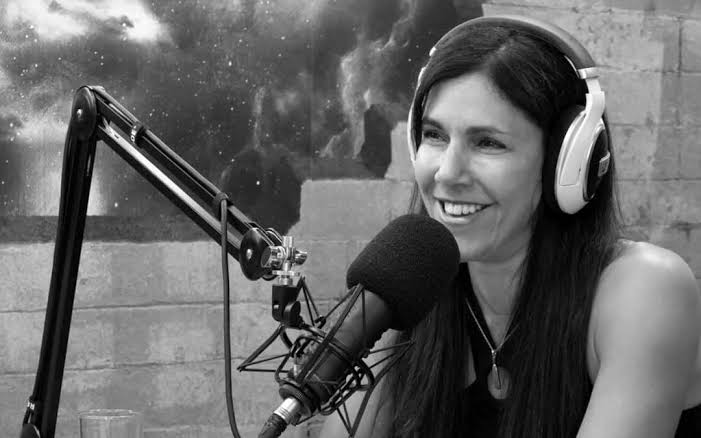
In this episode, we dive deep into the science of longevity with Courtney Van Bussum, COO of Longevity Launch Labs. Courtney shares her insights on the NAD (Nicotinamide Adenine Dinucleotide) pathway, a critical component in the aging process and how we can leverage it for longevity optimization. We explore the fascinating molecule 1-MNA (1-Methylnicotinamide), its unique role in the body, and how it helps lower levels of the NNMT (Nicotinamide N-methyltransferase) enzyme, which is associated with various age-related diseases and metabolic disorders.
Key Topics Discussed:
-
Introduction to the NAD Pathway:
- Overview of the NAD pathway and its significance in cellular metabolism and aging.
- The role of NAD+ in DNA repair, energy production, and maintaining cellular health.
-
Understanding 1-MNA (1-Methylnicotinamide):
- What is 1-MNA, and what is it's role in the NAD story.
- The unique properties of 1-MNA and its potential as a longevity molecule.
-
The NNMT Enzyme and Its Implications for Health:
- Explanation of NNMT (Nicotinamide N-methyltransferase) and its impact on metabolic health and aging.
- How elevated NNMT levels are linked to obesity, cancer, diabetes, and other age-related diseases.
-
How 1-MNA Lowers NNMT Levels:
- The mechanism by which 1-MNA reduces NNMT activity, promoting healthier aging.
- Potential benefits of 1-MNA in reducing inflammation, improving metabolism, and supporting overall health.
- How the immune system and NAD pathways are both key to longevity and health optimisation and how we can leverage and optimise both as we age.
-
Longevity Optimization Strategies:
- How targeting the NAD pathway and modulating NNMT activity can be part of a comprehensive longevity strategy.
- Practical tips for integrating 1-MNA and other NAD-boosting supplements into your daily routine.
-
Courtney's Vision for the Future of Longevity Research:
- Insights into the latest developments at Longevity Launch Labs.
- The future of NAD research and its potential to revolutionize aging and healthcare.
Bio
Courtney Van Bussum is a dynamic entrepreneur and business leader who currently serves as the COO of Longevity Launch Labs, a pioneering incubator focused on advancing the Cellular and Longevity Medicine sectors. With a Bachelor of Science in Biomedical Engineering from Arizona State University, Barrett Honors College, Courtney has overseen several startups in the healthcare and medical arenas ranging from fitness applications to wearable medical devices. Her early career began as a strategy consultant in Scottsdale, Arizona where she honed her skills by working with Fortune 500 companies and startups, streamlining processes and driving innovation.
In 2020, Courtney joined the Boulder Longevity Institute, where she played a crucial role in enhancing the institute's core technology and operational systems. Two years later, she co-founded Longevity Launch Labs, where she has been instrumental in building the operational frameworks that have propelled the incubator to become a key connector in the industry. Under her leadership, Longevity Launch Labs offers a range of services including product co-formulation and development, distribution, product rollout strategy, and mentorship, all aimed at supporting companies and healthcare practitioners in the rapidly evolving field of longevity medicine. Through Launch's Longevity Impact Fund, Courtney also helps early-stage startups access key capital to further development of their healthcare innovations. Having grown up around the world of medicine, Courtney understands that changing healthcare can only be achieved through creating innovative parallel systems that improve outcomes and experience. Her visionary leadership and deep expertise make her an invaluable voice in the conversation around healthcare innovation and longevity.
- Subscribe to our podcast for more expert insights on longevity, health optimization, and cutting-edge research.
- Visit Longevity Launch Labs' website for more information on 1-MNA and other groundbreaking research initiatives.
- Connect with us on social media and share your thoughts on this episode using the hashtag #1-MNA
Personalised Health Optimisation Consulting with Lisa Tamati
Lisa offers solution focused coaching sessions to help you find the right answers to your challenges.
Topics Lisa can help with:
Lisa is a Genetics Practitioner, Health Optimisation Coach, High Performance and Mindset Coach.
She is a qualified Ph360 Epigenetics coach and a clinician with The DNA Company and has done years of research into brain rehabilitation, neurodegenerative diseases and biohacking.
She has extensive knowledge on such therapies as hyperbaric oxygen, intravenous vitamin C, sports performance, functional genomics, Thyroid, Hormones, Cancer and much more. She can assist with all functional medicine testing.
Testing Options
-
Comprehensive Thyroid testing
-
DUTCH Hormone testing
-
Adrenal Testing
-
Organic Acid Testing
-
Microbiome Testing
-
Cell Blueprint Testing
-
Epigenetics Testing
-
DNA testing
-
Basic Blood Test analysis
-
Heavy Metals
-
Nutristat
-
Omega 3 to 6 status
and more
Lisa and her functional medicine colleagues in the practice can help you navigate the confusing world of health and medicine .
She can also advise on the latest research and where to get help if mainstream medicine hasn't got the answers you are searching for whatever the challenge you are facing from cancer to gut issues, from depression and anxiety, weight loss issues, from head injuries to burn out to hormone optimisation to the latest in longevity science. Book your consultation with Lisa
Join our Patron program and support the show
Pushing the Limits' has been free to air for over 8 years. Providing leading edge information to anyone who needs it. But we need help on our mission.
Please join our patron community and get exclusive member benefits (more to roll out later this year) and support this educational platform for the price of a coffee or two
You can join by going to Lisa's Patron Community
Or if you just want to support Lisa with a "coffee" go to
https://www.buymeacoffee.com/LisaT to donate $3
Lisa's Anti-Aging and Longevity Supplements
Lisa has spent years curating a very specialized range of exclusive longevity, health optimizing supplements from leading scientists, researchers and companies all around the world.
This is an unprecedented collection. The stuff Lisa wanted for her family but couldn't get in NZ that's what it's in her range. Lisa is constantly researching and interviewing the top scientists and researchers in the world to get you the best cutting edge supplements to optimize your life.
Subscribe to our popular Youtube channel
with over 600 videos, millions of views, a number of full length documentaries, and much more. You don't want to miss out on all the great content on our Lisa's youtube channel.
Order Lisa's Books
Lisa has published 5 books: Running Hot, Running to Extremes, Relentless, What your oncologist isn't telling you and her latest "Thriving on the Edge"
Check them all out at
https://shop.lisatamati.com/collections/books
Perfect Amino Supplement by Dr David Minkoff
Introducing PerfectAmino
-
PerfectAmino is an amino acid supplement that is 99% utilized by the body to make protein.
-
PerfectAmino is 3-6x the protein of other sources with almost no calories.
-
100% vegan and non-GMO.
-
The coated PerfectAmino tablets are a slightly different shape and have a natural, non-GMO, certified organic vegan coating on them so they will glide down your throat easily.
-
Fully absorbed within 20-30 minutes!
-
No other form of protein comes close to PerfectAminos
Listen to the episode with Dr Minkoff here:
Use code "tamati" at checkout to get a 10% discount on any of their devices.
Red Light Therapy:
Lisa is a huge fan of Red Light Therapy and runs a Hyperbaric and Red Light Therapy clinic. If you are wanting to get the best products try
Flexbeam: A wearable Red Light Device
https://recharge.health/product/flexbeam-aff/?ref=A9svb6YLz79r38
Or Try Vielights' advanced Photobiomodulation Devices
Vielight brain photobiomodulation devices combine electrical engineering and neuroscience.
To find out more about photobiomodulation, current studies underway and already completed and for the devices mentioned in this video go to
www.vielight.com and use code "tamati" to get 10% off
Enjoyed This Podcast?
If you did, subscribe and share it with your friends!
If you enjoyed tuning in, then leave us a review and share this with your family and friends.
Have any questions? You can contact my team through email (support@lisatamati.com) or find me on Facebook, Twitter, Instagram and YouTube.
For more episode updates, visit my website. You may also tune in on Apple Podcasts.
To pushing the limits,
Lisa and team
Read the full transcript
Made from the episode's captions and tidied up automatically, so the odd word may be off.
Lisa: Hi everyone, and welcome into Pushing the Limits. Lisa Tamati here, and I have a wonderful guest, my dear friend. I've got Courtney Van Bussum with me. Welcome to the show, Courtney, fabulous to have you.
Courtney Van Bussum: Hi Lisa, it's so good to be here. I feel like this is such fun. Lisa and I have known each other for a while now and work together in a lot of different ways, and this is a cool opportunity to collaborate, so thank you.
Lisa: No, it's fabulous to have you on. And yeah, we've known each other for a few years and we're working on a few projects together, and it's always exciting to learn from you. You're incredible, and your knowledge is just next level.
Lisa: So today we're going to be talking about the NAD pathway, which people would have heard a number of podcasts that I've done, deep dives with luminaries in the space like Professor Joseph Baur and Elena Seranova, and with Dr David Sinclair's book, which originally came out with all the information on NAD precursors and why the NAD pathway is so important for longevity and why we want to know about it. And the science has sort of come a long way in the last few years since that book was released, and we know a lot more nuance now. So I wanted to get you on to share something about the NAD pathway. There is an enzyme called NNMT — help me out, Courtney, it's a very difficult one.
Courtney Van Bussum: Nicotinamide N-methyltransferase.
Lisa: Thank you. And this is one that has turned out to be a little bit problematic in this pathway, hasn't it? So let's start with that. We know that NAD — let's talk about firstly, why is NAD so important? What does NAD do in the body, to recap sort of thing, and then what's NNMT?
Courtney Van Bussum: Yeah, I think kind of setting the foundation, because I think people hear NAD talked about a lot, right? And everywhere you go nowadays it's like, NAD infusions, or I need to take these NAD precursors. But what is actually happening when you have NAD in the body?
Courtney Van Bussum: The reason NAD is so important is because it's literally found in every single living cell. So obviously it must have some important purpose, and that purpose is the production of energy for the cell and for the system. NAD is cool, right? Because you hear NAD plus and you're like, why is there that plus sign always when people talk about NAD? Well, it's because NAD has this ability to give and take electrons. And so you hear that NAD to NADH, right? That redox is called reduction and oxidation. And so NAD is constantly giving and taking electrons, and those electrons are really important for creating ATP.
Courtney Van Bussum: We can kind of skip the biochemistry details, but the electron transport chain, which people probably remember from biochem or biology class, is the way that those electrons are moving around the cell to create ATP. And remember, mitochondria, powerhouse of the cell, require ATP. So ATP is really the life force that gives us energy, and to get there we need NAD. And so NAD, like I said, is reduced and oxidised to NAD+ and NADH to do that.
Courtney Van Bussum: And I want to call attention to that briefly, because I think something that gets lost in the NAD conversation is this discussion of balance, right? At least here in America, and I think probably in New Zealand too, there's a little bit of like, more is always better.
Lisa: Like, if it works, take a whole lot.
Courtney Van Bussum: Yeah, like, oh, there's one study that says that's good, give me all of it. But we forget that the cell is really intelligent and tries to do everything in a way that checks and balances. And so redox is reducing and oxidising. People are probably familiar with ROS, right, reactive oxygen species, and we kind of know that those are bad because they're creating too much oxidation in the cell. So what do we start doing? We start taking antioxidants. Well, that's great, but I can overdo my antioxidants and I can actually put my cell into an overly reduced state.
Courtney Van Bussum: And so just imagine your homeostatic cell here in the middle, everything is great. My over-oxidised cell, the outcome is cell death or cancer or all the bad things that come with a cell that's out of whack. And over on my over-reduced side, the cell doesn't have any ability to signal, it can't continue its process, so it also dies. So you really can't have too much. So also, as just a quick plug, I think people should be aware of overdoing antioxidants.
Lisa: Totally.
Courtney Van Bussum: So your vitamin Cs, your resveratrols, right? Like, yes, they're good, but if you're just consuming all of them and you don't actually have enough oxidation to keep up with that, you could be doing yourself a little bit of damage.
Lisa: Yeah, it's homeostasis, isn't it? It's keeping that balance. And if you're an athlete who's doing a hell of a lot of training, you might need a whole lot more antioxidants, or if you're sick you might need more, or as you're older you tend to need a bit more. But it's this middle road that we're going for, this Goldilocks zone, where it's not too little, not too much.
Courtney Van Bussum: Yeah, not too much. And I think that's a great point, of like, there are going to be times in life, whether you're sick or you ran a marathon and you did something that put your body under massive stress, where you're going to have to re-up, right? You have to kind of refill and rebalance. But in your day-to-day life, there's a certain amount of stress that you're already having to take from the outside, so you have to undo that. But what if I don't have as much stress as I'm trying to undo with my things? Then I'm actually just stressing the cell because I've given it more than it needs.
Courtney Van Bussum: So before we go too deep, I want people to resonate with that. NAD is important because it's like the ultimate redox molecule and it knows how to keep the cell in balance and in homeostasis, and then it's used to create energy. So that's kind of the down and dirty of NAD. And people should go listen to your other podcast with Dr Baur if they want to dive in.
Lisa: Yeah. And it also does other things. It does sirtuins, which are the sirtuin genes, the longevity genes we call them, and they sort of upregulate a lot of longevity processes in the body. So it's food also for the sirtuin genes, which is also really crucial. And the PARPs, the poly ADP ribose — so the PARPs are also dependent on NAD. So it has a number of, besides the energy production, a number of roles. So absolutely crucial.
Lisa: And Courtney, NAD levels decline as we age, but we haven't asked the question of why they're declining, have we, in the general conversation?
Courtney Van Bussum: Yeah, I think that's where, as you said, the research is evolving in NAD, and I think that's one of the places that we're starting to learn more. Generally, as longevity medicine has gotten a little more well known, I guess a little more token in a way, where it's like, oh okay, as we age everything gets worse, okay, fix that. But the question why? Exactly.
Courtney Van Bussum: So I think people are like, oh, NAD must decrease because I produce less of it. Well, what the research is starting to show is that maybe it's not as much an issue of production of NAD, but an issue of using that NAD up in the wrong places and the wrong ways. I'll speak, like you said, sirtuins and PARPs, right? So those are both — they take NAD for good purposes, they take it to do DNA methylation and DNA healing. Another thing that takes NAD is CD38, right, and that's going to take it and feed your inflammation of your immune system.
Lisa: Yeah, we can talk about that later.
Courtney Van Bussum: Yeah, so there's more to the story than just, we have less levels of it. Why? Because if I don't know why, and I just keep putting more NAD into the system, but it's going out into these different places that I don't understand, could I be, again like we said at the beginning, doing more harm than good?
Lisa: Yeah. And so we've got all these good purposes that NAD is doing. It's doing the energy, it's doing the PARPs, it's doing the sirtuins. And then we've got — well, there's actually two degrading enzymes: the CD38, which you've mentioned, which we'll go into a little bit later in its connection to the immune system, so that's taking away some of the NAD for not-so-great purposes, because when you have senescent cells, when you're older, you make more CD38 — you don't make so much when you're young — so this becomes a problem for older people taking NAD precursors.
Lisa: And then the other side of that, the other enzyme that is taking it away, is this N-methyltransferase, so the NNMT. And this is the one that we're going to focus on a little bit today, because this is the one that has some really dire outcomes if this one gets too high. So yeah, take it away, Courtney, as to what is it, why is it upregulated when we take NAD precursors, and what's the story there?
Courtney Van Bussum: Yeah, definitely. Well, before I dive into that, I also just want to say it's NNMT for all of our listeners, and we're going to be talking about lots of letters with M and N, and Lisa, her beautiful Kiwi accent does make it a little challenging sometimes.
Lisa: I sure do. And then I get it backwards sometimes. I'm dyslexic, right, and I put the M and the N and the whatever backwards, so then people are like...
Courtney Van Bussum: It's hard, I know, it's hard. Thank you. So yes, we're talking NNMT to start.
Courtney Van Bussum: So you segued into it beautifully. So NNMT is an enzyme that influences that NAD pathway. I'm going to actually kind of go into this sort of involved analogy. You and I have talked about this bucket and filling the bucket analogy in the past, and I've taken it and turned it into a little bit of a short story, so bear with me, but I think this will help just as our listeners are working through the NAD complexities.
Courtney Van Bussum: So imagine that inside of your cell you have a bucket of water, right? And you have this bucket, and then outside of the bucket you have a garden, and that's your NAD garden. That's where I'm growing all my good vegetables and produce, because I need that energy. So the bucket has a little spigot on it, and I can turn that spigot on or off as needed to allow water into the garden. And the cell is really smart, like we said, so the cell says, oh, it rained a lot, I should reduce the amount of water, or, it's dry out there, I need a lot more water.
Courtney Van Bussum: But what happens is, that bucket is filled with that precursor to NAD. So we're going to talk about the salvage pathway primarily here, and I call that out because the salvage pathway is going to be where 80% of your NAD comes from. And so, just for our listeners, there's a couple of other pathways out there, and when you eat niacin-based foods, you get vitamin B from foods, it's going to go through this other pathway, but then it ends up turning into nicotinamide, which is the byproduct, and then that nicotinamide gets recycled and reused. And so it's more efficient, right? Like, nicotinamide is going to be one of your more efficient precursors, because it allows that recycling and that salvage of
Courtney Van Bussum: ...the NAD to keep. So that's the Preiss-Handler pathway, and we're going to be talking mostly about the salvage pathway because that's more important. But there is this Preiss-Handler, and there is a third pathway, the tryptophan kynurenine pathway, but that's a very small percentage that comes through there, and that's through tryptophan turning into NAD. But we're not going to focus on that, so we'll go back to the salvage pathway.
Lisa: So back to the bucket analogy.
Courtney Van Bussum: Yeah, so just for the sake of our analogy, we're going to be inside of the salvage pathway primarily. So inside of that bucket is my nutrient-enriched nicotinamide water, because I need that nicotinamide as the best way to get NAD.
Courtney Van Bussum: I will call out, because I get this question a lot and I think it's worth just calling attention to briefly, if people look at a picture of the pathway, they say, "Okay, I have nicotinamide converting into NMN, which converts into NAD. Why can't I just take NMN?" What the research is showing more and more is that the uptake of those precursors orally — so NMN and NR — you don't get great absorption into the cell. And really the only place we see absorption directly into the cell is in the liver. So you're taking those and the liver is using them up quickly, right?
Lisa: They're not even really getting a chance to be utilised by other parts of the system.
Courtney Van Bussum: So you can take NMN, you can take NR, you can take NIN, but it's just not the most efficient, right? Like, it's all getting repurposed and reconverted and then turning into nicotinamide and then nicotinamide to NMN, but that NMN's different than the one you just took orally, because it didn't actually get into the cell.
Lisa: Yeah, and Dr Prof sort of goes into the absolute nitty-gritty on that and how that works in the microbiome and blah, blah, blah.
Courtney Van Bussum: Yeah, no, it's definitely a rabbit hole you can go down, but I think just so people know, like, well, why can't I take NMN? It's just the way that it actually gets into the cell is not as effective.
Lisa: So good, but it's not... yeah.
Courtney Van Bussum: There's a couple of steps that it takes to get in there, right? It's got to go through more processing to become nutrient-enriched, if you will, for our analogy. So nicotinamide is going to be the most readily available across the system.
Courtney Van Bussum: So I have a nicotinamide water, I have my NAD garden, all is well. My farmer comes out, he's managing it, he makes sure that enough water is getting there, things are going the way they should. Well, what happens when I don't have a healthy cell? So in an unhealthy cell — which let's define that, that's your cells like cancer cells, adipose cells, senescent zombie cells, anything where my natural homeostasis, my cell's natural ability to stay regulated, is totally jacked up — basically that cell has no check and balance. It's like, go, go, go. I need to get as strong as possible, as big as possible, I need to stay methylated, stay turned on, and just wreak havoc, if you will.
Courtney Van Bussum: So that's my bad cancer cell over here. So that cell says, "Okay, I have two goals. I have to stay turned on and I need energy. How do I do that?" The cell itself doesn't produce enough of its own energy, right? It wants to get bigger, it wants to grow. So it says, "All right, I'm going to send out some bad guys to go get those things for me." So first — and I promise this will all come back to NNMT — that it's working for me.
Lisa: I'm picturing bad guys coming.
Courtney Van Bussum: Yeah, exactly. So you've got your bad guys. So bad guy number one, his name is NNMT, and he's the robber, and he's going to go to my garden and he's going to take nicotinamide from me because he wants that water. Because the one other key piece of the system — so that robber, the cancer cell, first it needs to stay turned on. So actually before he goes and gets water, he goes to the chicken coop and he steals a methyl donor egg, right? He steals a methyl group from SAM. So SAM is... I always screw this one up. So he goes to the SAM chicken coop and he steals a methyl group, he takes an egg. That's number one. Then he goes over to the water and he gets some nicotinamide, because those two things together are the most important for staying methylated.
Courtney Van Bussum: And what do a lot of these dysregulated cells want to do? They're hypermethylated, they're constantly staying turned on, and they're stealing all of these methyl groups.
Lisa: All the resources.
Courtney Van Bussum: All the resources, right. And SAM is like a really incredible chicken because he is constantly giving methyl groups out to the good guys, right? SAM is a universal methyl donor, and so that's why he's such a good player in this. Well, if the cancer cells are stealing all the methyl groups, all the other things that need methylation to do DNA transcription, protein synthesis, they can't work.
Lisa: Detox and all that. Everything, right? Methylation is kind of at the core of everything.
Courtney Van Bussum: So that's where my robber number one, he goes, he gets the methyl group from SAM and then he gets the nicotinamide, and then he keeps hypermethylating the cancer group. So that's NNMT, he does that.
Courtney Van Bussum: So let's go back to our healthy cell garden for a second. The NNMT guy, he shows up, because NNMT is coded in our genes, it's a natural thing the body produces. Everything in the body has a purpose. So why is there NNMT in the first place? So think of it as NNMT is the neighbour down the street, and he shows up at the house and he's like, "Hey, I noticed that your garden is looking really good, really strong. Can I have some nicotinamide water for my garden because it's not doing as well?" So NNMT is one of those regulating systems, because the cell will say, "Hey, I'm okay, right? I'm doing fine, I don't need as much NAD, because over here in another part of the system there's an insult occurring, so I need to put my resources over there." So you need something to show up and say, "Hey, pause the spigot for a second, we don't need all that NAD because it's going to go elsewhere, I need those resources in another way."
Courtney Van Bussum: So in the healthy cell, that NNMT shows up to regulate. A byproduct of NNMT is called 1-methylnicotinamide, and we'll talk about this a little bit more. But so that's the difference, right? NNMT shows up, he's the neighbour, maybe he shows up a couple times to get some resources. My cancer cells, they're just literally shooting out saying, "Go get as much methyl groups as you can."
Courtney Van Bussum: So what do you do? Well, first I'll tell you what not to do, and then we'll circle back to 1-methylnicotinamide as to what to do. But what not to do: so my farmer, he comes out to his bucket and he sees that it's depleted. He's like, "Where did all my water go? My garden still looks pretty dry." He refills the bucket. Well, the NNMT guys are like, "Great, that's more for me," and they bring their buddies this time and they take more and they take more.
Courtney Van Bussum: And my farmer comes out again and he's like, "Oh my gosh, I just keep filling this bucket up, what the heck? Let me just put a ton of water in the bucket." Well, remember, you only have one spigot going to the garden, the rate at which nicotinamide can convert to NAD. It can only happen so fast — it's the electron transport chain, it's oxidative phosphorylation, these are chemical processes, right? So I can pour water into the top all day long. Some of it's going to get into NAD, but a lot of it's just going to start to spill out. And that's like a heyday for my robbers, right? My NNMT robbers are like, "Yeah, woo, there's all this extra nicotinamide water for me, this is great."
Courtney Van Bussum: And so what you have to be careful of — this goes all the way back to homeostasis — I think the conversation around NAD has been, "Oh, my NAD levels deplete, well, I need to put more NAD in the system. Let me get my NAD infusion, let me get my NMN, let me get my NR." Those things are fine within reason. Like you said, if I'm a healthy cell, totally, in a healthy cell, and I just need to re-up and I need to kind of get back to homeostasis, that's great. If I have all these bad guys trying to steal all of my precursor energy, then I'm literally just feeding them, right, more and more.
Lisa: So we're feeding cancer cells, we're feeding obesity, we're feeding... yeah, there's a lot of bad players, the senescent cells. These guys are also getting their fill.
Courtney Van Bussum: Exactly. And I think, just to draw it out a little more, so NNMT comes into play the most with the hypermethylation piece, keeping these cells going. So CD38, he's going to the garden and he's actually just taking vegetables out, right? He's just yanking NAD and feeding it to those cells. So you have these two enzymes that are like, "Oh, let me take all the stuff you need to make NAD, let me take your NAD, let me give it to this energy-hungry cancer cell, zombie cell, fat cell," right, any of these bad guys. So I think that's, the NAD picture is, like you said, way more complicated than people realise.
Lisa: Yeah, and this is why we're doing this, because I've been taking NMN for years and I still take low doses, and I take nicotinamide and I take quercetin and resveratrol in smaller doses, and I balance it, I take my methyl groups, and I look at it holistically knowing this now. But I used to just take NMN, right? And that was probably not the greatest, especially for older people or people who have cancer history or anything that's upregulated in the senescent cell line. So probably wasn't so bad for me, but there are people that this can be a problem for. And we still want the NAD levels to be good, we want our bucket full, we don't want to overflow it. That's the whole point, I think — it's this overflowing bucket that's going to the bad side, that's just going to the dark side, if we go to allegory now.
Lisa: So yeah, let's look at that. NNMT — what can we do to block that? I mean, cancer researchers are looking for drugs that inhibit NNMT, so we've got to be really careful if we're putting in something that's going to increase NNMT because of all these dire things that we've been discussing. So what can we do then that's going to inhibit NNMT? Have we got any blockers?
Courtney Van Bussum: Yeah, so that's where I kind of teased it, but 1-methylnicotinamide — more and more research has been coming out about how this is actually a really key player in this whole NNMT cycle. It actually used to be that we just looked at 1-MNA in urine as a marker of NNMT, right? It was just an easy way to measure it. But now we're understanding, wait, there's actually maybe some benefits to 1-MNA. So I'm going to finish my analogy, and you can... I know this is getting a little extreme, but...
Lisa: Go for it. Basically, I've got my tea, so we're all good. Beautiful, beautiful.
Courtney Van Bussum: So 1-MNA is actually a byproduct of NNMT, and you're like, "Okay, wait, I thought NNMT was bad." Well, remember the friendly neighbour, right, who's just coming and showing up? And eventually his wife, whose name is 1-MNA, says, "Hey, that's enough. Stop going over there. We have..."
Courtney Van Bussum: ...enough." So 1-MNA can actually work to moderate the amount of NNMT, because it's a byproduct. That's the beautiful part of the cell. NNMT says, "Hey, I know that I, in too much, become bad, so then let me have this byproduct of 1-MNA that tells me when I've done my job."
Lisa: The feedback loop.
Courtney Van Bussum: Exactly. So 1-MNA not only then helps say, "Okay, I can refill my nicotinamide bucket, I can make sure my pool is filled so that it turns into my NAD," and it helps with all the things that you need NAD for, but interestingly, we've learned that 1-MNA also has some NAD-like properties. So in its own regard, it actually has some health benefits.
Courtney Van Bussum: So not only can you take 1-MNA as a supplement — so like your example of people who have a lot of bad cells out there and they're spitting off more of this NNMT, my body is not going to be able to make enough 1-MNA on its own to keep up with all the damage that's happening over here — so supplementing with 1-MNA to have enough to go turn off your NNMT and modulate how much NNMT you have is something that you can actually do and just take as an oral supplement. So that's pretty cool. I think we didn't realise the importance of 1-MNA for a long, long time, and now that we are seeing how it works in the system as actually a way to inhibit NNMT from doing the damage — the hypermethylation, all the bad things we just talked about — there's a lot more potential than we realised.
Courtney Van Bussum: In addition, some of the other benefits, like I was saying, beyond just the good things that come with having more NAD, right, because that's number one: we have at least now enough NAD to give to our sirtuin genes, to give to our PARPs, all the things that want it. But 1-MNA itself has a lot of anti-inflammatory properties, so it can work by working on your NL— I screwed it up. NLRP3 inflammasome, right, which is excitatory.
Lisa: NLRP3, NLRP3 inflammasome, which is an inflammatory set of proteins.
Courtney Van Bussum: Yeah, so it downregulates that inflammasome.
Lisa: It downregulates that inflammatory response.
Courtney Van Bussum: And so it has kind of this innate anti-inflammatory benefit. So that's one of the big places that you'll see the research, and then there's also a lot of research on the endothelial function side.
Lisa: The vascular side. It's huge.
Courtney Van Bussum: Yeah, it's kind of exciting. To take it high level, there's a study that is relatively recent that just came out about 1-MNA supplementation for post-COVID fatigue syndrome, right, where after COVID your mitochondria are shot, so something that then helps to reboot your mitochondria — and they found that there was a decrease in fatigue with 1-MNA. So there's not only that happening because of the NAD, but they also think it's the cardiovascular and endothelial function, right? You're inducing more angiogenesis, you're creating stronger endothelial cell function.
Lisa: Nitric oxide, right? Exactly, the nitric oxide link, because the nitric oxide relaxes the vessels and makes them dilate and helps more blood flow and so on. So this has many knock-on effects, from the brain to the cardiovascular system to everything. So anything that's going to improve endothelial function is absolutely crucial for staying alive longer, basically. So this is a really great finding with the 1-MNA.
Courtney Van Bussum: No, it is. It's exciting. And then the other pieces too, where you have the decrease — let's see, I always screw it up — it's the decreased NF-kappa B and the increase in...
Lisa: Interleukin-10, which is the anti-inflammatory cytokine. So NF-kappa B is at the top of the cytokine tree, and we want to downregulate that, and 1-MNA does that. And it also downregulates interleukin-6 and tumour necrosis factor alpha, I believe. In other words, all these inflammatory cytokines that go up as we age, it's downregulating those, and it's upregulating the ones that go down, the good ones like IL-10. So yeah, it's helping on that.
Lisa: So it's anti-inflammatory, antioxidant, supports cardiovascular health, supports nitric oxide function, as well as helping in this whole NAD pathway, self-regulating that NNMT, which has all of these deleterious effects if it gets to the bad guys. And this is metabolic health, this is skin health, this is neuroprotection, this is cancer prevention, this is obesity — the obesity story.
Courtney Van Bussum: Yeah, I mean, it's why, like you said, there's all this research looking at NNMT blockers and similarly CD38 blockers, because people have recognised that the NAD system is attached to everything, right? And so if there's dysfunction in the overall NAD system, it's going to do bad things. And so how do you fix this core system? By blocking the things that are making it dysregulated. So that's where the NNMT blockers they're looking at as drugs, and then the CD38 blockers in the same [vein].
Courtney Van Bussum: I will speak just so people have some clarity, like, so why do these bad cells kick off more of these things? It's truly, like I said, something that doesn't have a check and balance. It's just going to want to do its system, or it's just going to want to grow and proliferate and just keep kicking out bad things, spewing bad enzymes, because it has nothing saying "you've done your job." And so that's the reason: it wants to stay alive. Cancer wants to stay alive. It's why not feeding cancer cells with glucose and things like that can help mitigate the cancer cells. Well, in the same way, if you can say, "Hey, don't give the cancer what it needs to survive," inhibit NNMT, block CD38, those are going to be really important for stopping the spew of chaos that's happening over there.
Lisa: Yep, that's putting it beautifully. It really is. So let's just back up. Let's also talk a little bit about the CD38. There is a blocker that we can use now that's more commonly known, that's apigenin, which is an extract of things like chamomile and parsley, and it's in a few other things. So we can help ourselves with CD38, to block the CD38. And on the other side, we've got this deleterious NNMT, which can be upregulated if we're just putting in precursors without having a holistic look at this.
Lisa: So by taking 1-MNA as a supplement — coming back to what we're actually talking about here — then you are going to downregulate, you're going to help regulate that homeostatic status of the cell, so that your NAD bucket is full but not overfull and not feeding the obesity, the cancer, all the other cells that could be otherwise taking it and using it for their own purposes. You're not going to run out of methyl donors. Because methyl donors — as lots of people will know about the MTHFR gene, and there's actually a whole lot of genes in your methylation that can go awry, and anybody who's got struggles with their methylation will know how important methylation is — this is happening billions of times every second in your body. So if you start to deplete your methyl donors, that's not a good thing. And so maybe even taking methyl donors is a good thing to be thinking about, again, homeostatically: not too much and not too little.
Lisa: And this comes up over and over again in biology and biochemistry. As an athlete, I've always been a little bit like, "this is good, therefore training more must be better," you know? Go more, go more, go more. That was my attitude as an athlete, right? Marathon athlete. So you end up running... Last night I was watching the Olympic men's marathon and they were talking about some guys who had overtrained, that had just been smashing themselves seven days a week and then blowing up at the actual race because they'd overtrained. And we are about this balance. Overtraining will cause you to age quicker, will cause inflammation, will cause all these things. Same token, over-nutrient: too many of what would be a good nutrient, but too much of it, is also bad. Too much of the wrong vitamins is bad, too many antioxidants are bad. It's about homeostasis, it's about hormetic stresses and homeostasis. Those are the key principles to this whole thing.
Lisa: So 1-MNA is a supplement that we can now take that's going to regulate all of this. It's going to support the whole NAD pathway, support the sirtuin genes, help actually with the NAD-like effects as well. And then we can still do some of the NMN, the nicotinamide, but do it with forethought, do it in a balanced approach, do it with — as the practitioner listening to this, the doctor listening to this — look at the person that you're dealing with and what is their whole situation. And this is one thing that's fully safe.
Lisa: So for example, with my mum, I do not put NMN or NR or NAD infusions into my mum. Absolutely not. What I do do is 1-MNA, and what I do do is TMG, which is a methyl donor supporter, and what I do do is quercetin and resveratrol, and cycle those things in and out. But I do 1-MNA every day, and I do it at a higher dose in her case, because she's had a history of cancer, right? She's had all these comorbidities. So I want her to get the NAD levels — and her energy levels are much better on the 1-MNA — but I'm not feeding the dragon. I'm not feeding the bad guys, right?
Courtney Van Bussum: Yeah. And I think you brought up a great point of, okay, so when is the right place for these other tools, like NAD IVs or NMN and NR? One question I get a lot is, "Well, when I do my NAD IV, I feel great afterwards, and when I take 1-MNA, I don't feel anything." Well, actually, a lot of the feeling great after an NAD IV is your body being like, "Oh my gosh, I'm in a stress state."
Lisa: Yep, it's kind of, in essence...
Courtney Van Bussum: It's a stress response. You're saying, "Wow, I just flooded my system," and your brain takes that as, "I've got to get more awake, I've got to get ready for battle, because I just dumped all this into my system." And so you are going to feel good for a little while, because adrenaline's pumping, your focus is going to be better, your energy is going to be up. But that NAD is actually not even close to being available yet to be put into the cell, right? It's got to turn into...
Lisa: Yeah, that NAD molecule. Like we hear a lot, right? "Oh well, my serum NAD levels increased." Yeah, means nothing. Serum is nothing. What about in the cell? What about in the mitochondria?
Courtney Van Bussum: Yeah. But I do think, for those practitioners out there that are doing NADs — do them, if you're going to do them, make sure to do 1-MNA in with it, because at least you're protecting from the potential downsides. So that's number one. Number two, if you're going to offer it, be intentional about, okay, like you said, did they just run a marathon? Did they get really sick? Do they need a bolus to refill that bucket because it just got depleted so fast? So I'm not saying don't do NAD infusions or
Courtney Van Bussum: — don't do NMN, or don't do NR. All we're saying is understand the mechanisms so that you can be intentional and include protective measures like 1-MNA and your methyl group protection.
Lisa: Exactly, yeah.
Courtney Van Bussum: Match all of those, right? You match all of those to those different pathways. There's still a time and a place. And the other thing I would encourage too is people to just understand, from a cost perspective, okay, what is the cost to get this versus this, the bang for my buck? I think that's something I try to talk to our customers about sometimes too: get your NAD infusion, do 1-MNA with it, every once a quarter, every once six months, right? You don't need to be doing this weekly. One, it's expensive, and two, you're not really getting the bang for your buck.
Lisa: Yep. But do the 1-MNA straight through, that's definitely... if you can. If I was going to prioritise, it would be 1-MNA at the top, and then it would probably be nicotinamide even, or NR, small amounts — don't need the big boluses, don't need the huge amounts — and then TMG, and then quercetin, because they also help the NNMT, which we haven't gone into today, but they also help that whole pathway, right? But it's looking at it in a holistic manner, as we should be doing with everything, so we're not just pushing in one thing.
Lisa: And the science has evolved. We now know this. We did not know this five years ago when the original book came out that exploded to space, and we now know the nuance of it. And isn't that wonderful, because we have all these scientists constantly, every day, in the labs doing the hard yards and actually getting this information out to us. And there is a huge microbiome piece too, which Professor Brenner talks about, and so maybe it's dependent, when you take it orally, on your microbiome — what are you doing with it? But with the 1-MNA we know that it's getting through, we know that it's having this benefit, and there's a substantial amount of research out there now and there's more coming. There are, I think, 50 institutes around the world sort of looking at this. And it's still pretty unknown though — you won't probably hear this information in the general public yet. It's not really hit the longevity channels on YouTube yet, except mine. And that's because of the hard work that you've been doing in making me aware of this, right? This is your hard work that you've been putting into it.
Courtney Van Bussum: Well, we appreciate that. Yeah, I think this is definitely a newer conversation. You are seeing it start to trickle out. Probably a lot of our listeners maybe got wind of that big niacin study from a little while ago, and that one kind of blew up because it was like, wait, niacin may be bad for you? And everyone's like, whoa, what? We put vitamin B and folic acid in everything because I thought that was a good thing. That's a classic example of we overdid it, right? Like we had to subsidise all our food by adding vitamin Bs to it, and now we're like, wait a second, maybe we put too much niacin in the system.
Lisa: Yeah, and folic acid — don't get me started on that one. That's a complete and utter disaster and responsible for a lot of problems. Anything fortified, guys, you probably shouldn't be eating it. If it has to be fortified, is it food in the first place? And then they fortify it with the cheapest, shittiest type of that thing, and folic acid is, I don't know, five steps away from what it should be — the methylfolate that we actually need. So yeah, don't get me started on folic acid. Go and watch Dr Ben Lynch if you want to know about that as a deep dive.
Lisa: But I just wanted to sort of round out the conversation by talking about CD38 a little bit, because you and I have been working on a project for the last couple of years at Longevity Launch Labs and with my biotech company Avaam, and we've been going after immunosenescence, haven't we? We've been looking for things that would help with immunosenescence. Can you explain immunosenescence and why we're excited about immunosenescence, and the connection to the NAD story through CD38 and through the whole NAD pathway?
Courtney Van Bussum: Yeah. Well, first I do want to, because I think it's related to this — you said something earlier that I think is super important, which is that the research evolved. I work with a lot of doctors and a lot of practitioners, and they go to school and they learn a lot and they spend a lot of money on their education, and even now in our functional medicine space, and then they say, well, I learned this and this is how it is because I learned it this way. That humility, both as a practitioner and a consumer, is super important, because it's like, okay, I have to understand the science is constantly evolving, and maybe something I did, like you said, a couple of years ago is not really the best thing. I'm not going to dig my heels in and say, well, screw them, I'm going to keep going.
Lisa: Yeah, I'm going to evolve.
Courtney Van Bussum: And so I segue that because, as you and I have worked together, one, I commend you for constantly — you always are open to relearning, which I love. But I think as we've kind of embarked on this next project of Avaam, it also has come forward, right, where as we dug in and we started to understand, okay, there's these hallmarks of ageing — well, what's at the root of those hallmarks of ageing? Oh, well, okay, the system's always trying to respond to immune insults, because the immune system is what says, oh, you have these things happening outside the system, toxins and all the bad things we eat and the things in our air. And so the immune system is the first line of defence, but then everything else is built off of —
Lisa: Exactly.
Courtney Van Bussum: So to answer your question, immunosenescence basically is saying — this is not new news for listeners — but a little bit of things is good. A little bit of stress, a little bit of insults, your system is going to say, hey, get stronger. That hormetic effect, right? That little bit of stress is a good thing. But when it's happening constantly, day in and day out, now I'm constantly getting little insults, getting little insults, my immune system's constantly being upregulated in a negative — it's just on all the time, right? It's saying, I've got to keep working.
Lisa: It's over-activated. Yeah, it's boosted. We don't want a boosted immune system. Everyone wants to boost your immune system, and I'm like, no, we don't want to boost the immune system, we want to modulate it.
Courtney Van Bussum: You want to modulate it. I love the word modulate. It's perfect. We're not boosting, we're not turning off, we're just modulating. It turns on when it needs to, it turns off when it doesn't. So immunosenescence, to answer that question, is basically when your immune system goes haywire. Senescent cells are zombie cells, they don't have a brain and they just kind of spew out bad secretory proteins that turn other things into zombies. Well, immunosenescence is that within your immune system. And if your immune system's constantly turned on and it's constantly saying, oh, we need to be working hard, then you are in that constant inflammation state.
Courtney Van Bussum: So to circle back to the NAD system, we mentioned CD38 a number of times because that's the guy who's eating up NAD, and CD38 is tied closely to your immune cells. So it's produced in the immune cells to get energy to fight off immune things, right, to keep your immune health alive. But if it's constantly doing that and it's taking all your NAD from the garden this time, right, not from the water bucket — it's just picking vegetables out of the patch and chucking them over — well, nothing else has any NAD left. So if you can modulate the immune system and get your immune cells functioning healthfully, giving them so that they're back in homeostasis, right, our favourite word, then the CD38 only takes a vegetable when it needs it, and everything's kind of turning. You've got lower levels of CD38 and lower levels of senescent cells and lower burden on the system, and not an overactive —
Lisa: So yeah, immunosenescence happens to all of us as we age, because it's part of the ageing of the immune system. Our thymus gland involutes as we get older — that's one of the major players. We have a thymus gland in our... for those who don't know, that is like the university, it's like boot camp for your T cells. Your T cells are part of your immune system that are there to recognise pathogens, and to mature in the thymus, and then they can go out and they know how to recognise a pathogen and they can help the B cells become antibodies, and so on and so forth. So if we are losing our thymus function as we get older, then we start to have problems with our immune system, and we have more memory cells and less naive cells, and we have a change in the tissue number and structure and the combinations that are out there. And all this is to say that the immune system is ageing.
Lisa: So what we were going after at Avaam Labs — this is a foundational piece, this affects all the hallmarks of ageing. So we need to improve the immune system as we get older. We need to see that our lymphocytes are at good levels, we want to support the function of what the thymus used to do. We're not giving you a new thymus — we'd like to do that, but we can't — but we can give you back what the thymus function was. So we can give you back, through the formulation that we've developed, a younger immune system. And that's the connection. I won't go into the details of our formulation because that's coming out shortly and we'll go into a deep dive on that, but the immune system is tied very closely to the NAD system in that regard, and CD38 is one of these major sort of players in there.
Lisa: So you want to modulate your immune system, get your immune system working well, then go to the energy side of the system, the NAD, and improve your energy production, your ATP production, without spilling over the NNMT into the bad guys, right? And we do that with the 1-MNA and the other stuff that we mentioned. And we get that NAD pool working properly, we get our immune system working properly, and then we're going to be slowing the ageing process down massively.
Lisa: One of the cool things — I did a TruDiagnostic age test a while back. I've got to go and do another one shortly, but I'm trying to get registered on the leaderboard, the Rejuvenation Olympics leaderboard, so I'm waiting for that to appear any day now. Hopefully I'll be able to grab it. But the DunedinPACE study, I came back at 0.69, right, which is number six in the world.
Courtney Van Bussum: Number six in the world. Look at you.
Lisa: Yeah. And I need to do another one because that's like eight months old or nine months old now, to see that I'm still doing that.
Courtney Van Bussum: Did you have 1-MNA at that?
Lisa: Yeah, I've been on it for a while, but not that long. But yeah — am I doing more? Am I —
Lisa: ...even better now, or is Mum breaking her hip six months ago probably stressed me the heck out? Maybe I'm ageing faster. But at least as of eight months ago, and according to the leaderboard, I'm actually in front of Bryan Johnson, the Blueprint dude.
Courtney Van Bussum: Wow, yeah.
Lisa: So he's got a 0.73 and I've got a 0.69, and I'm not spending billions. So something I'm doing is right. And I'm a biohacker, I'm an experimenter. I experiment with everything and I get some stuff wrong on myself. I try not to experiment on my mum, I try to get good advice there. But so we can influence the speed at which we're ageing. I truly see that on myself. I'm doing some things right. I want to get to number one on the Rejuvenation Olympics, so we've got to get down to 0.63 of a year. So what that's saying is that for every one year that you're on the planet, I'm ageing 0.69 of a year. The best dude in the world is 0.62 of a year. Bryan Johnson's, I think, 0.73, just behind me.
Courtney Van Bussum: I think that's really cool.
Lisa: That is cool.
Courtney Van Bussum: That's a...
Lisa: I don't have billions. Yeah, I don't have billions. And I am taking the stuff that we're doing for AVAM, I am working on my immune system and I am doing these other things. So not to say that I've got it all right yet, because I definitely haven't, and in two years' time I'll probably be horrified at some of the things I did now that I probably will be learning more about. But we can influence it, and I do believe that we have the power. And as Dr Bill Lawrence, who's a friend, who does the bioregulators and stuff, he sort of talks about this longevity bridge — if we can keep our stuff together now, the stuff that's coming down the pipeline, if we can just not fall apart now and die now, because in the next five to ten years science is just racing ahead and we'll be able to live decades longer, healthier, with what's coming at us. And for that I'm so grateful. So I don't want to fall apart now. And you're only a youngling, so you've got time on your side, but I'm 56, like I've got to hurry the heck up and slow down.
Courtney Van Bussum: It goes both ways, right? Like if I could start now, then it helps avoid all these things down the road.
Lisa: Yeah, you wouldn't have a single wrinkle by the time you get to my age. You won't have a single grey hair. I've got quite a few, because all this came to being a little bit later in my life. But coming back...
Courtney Van Bussum: I was just going to say, the one other thing is, I 100% agree we can do things to help ourselves. And for all of our listeners that are like, "Well, I don't have the money, and I don't have the time" — well then just don't do the things that don't help yourself, right? And invest in the things that are the biggest bang for your buck. And remember, more isn't always better. So it kind of all goes together: let me do the good things, let me not do too much of the bad things, and let me find the middle ground, and it'll save me money, time, and makes me healthier.
Lisa: Yeah, yeah. So doing some exercise and fasting, those things don't cost money, in fact they save you a little bit of money. And don't drink alcohol too much and don't eat ultra-processed food too much. I mean, we're all human, we're all going to do it to some degree, but just not all the time. And just because you're 20 now — not you, but generally, if you're a 20-year-old listening to this, you've got the opportunity to not have all of this decline. And we really need to start thinking about that at the age of 20. That's when we should be starting to think about longevity and how do I live a healthy life. Because when you're starting in your 50s, like I have, then you've already got a lot of damage done, right? A lot of the stuff that you did in your 30s that you regret, your 20s that you regret, is going to bite you in the ass to some degree and you're undoing a lot of the damage. Whereas if I could go back to my 20-year-old self with the knowledge that I have now, with the science that we have now, which we didn't have — gee, what a difference that would make.
Courtney Van Bussum: Yeah. Well, and not to mention the challenges of our environment now are more severe at a younger — I mean, you're seeing more of this health stuff at younger and younger ages. We're seeing immune decline from 15-year-olds, we're seeing chronic low-grade inflammation, we're seeing diabetes, non-alcoholic fatty liver disease in 10-year-olds. That stuff's really crazy.
Lisa: Yeah, it is. And I think for those of you that are just starting out on your health journey, hopefully what you took away from this conversation is that immune system and energy systems are kind of at the core of a lot of this. And so making sure to address those, by not hurting your immune system too much and undoing the bad that you do, and then keeping your energy system regulated.
Courtney Van Bussum: Because I think that story is really powerful for people.
Lisa: It's a beautiful place to end it. Thank you so much, Courtney, you summed that up lovely. Excellent, well done.
Courtney Van Bussum: I do want to just, so that people aren't as confused, I kind of want to just give a quick Longevity Launch Labs overview, just so people can understand kind of how we're working together.
Lisa: Yeah, please.
Courtney Van Bussum: So for those of you, Lisa mentioned that we're working together and I came on here to first talk about 1-MNA and the NAD system and NNMT. Longevity Launch Labs is actually a business development incubator for novel products. And so we work with 1-MNA because it's this kind of new product to the game and trying to get that information and that research out there. And then working with AVAM as well on this novel immune product. And our whole philosophy is, can you look at the cellular side of the medicine and really attack things from the cellular systems? And so Lisa and I have known each other for a long time and we finally found a project we can work together on, through AVAM and Longevity Launch Labs, to just help bring novel new science for health — right, for making your system better — to the masses. Because you and I sit in these little echo chambers with all our really smart friends who are way smarter than me.
Lisa: You're probably up there with a lot of them.
Courtney Van Bussum: No, definitely not.
Lisa: But you've done so many podcasts at this point.
Courtney Van Bussum: Yeah, 10 years deep in the weeds learning from amazing people. Something rubs off, right? But I think we often forget that this information doesn't get out there. And so I love this platform that you have that kind of shares that out with the masses a little bit more, trying to introduce the concept of cellular science, cellular medicine. And I think that from there, that's how you really treat ageing and disease. So I just wanted to clarify that a little bit for everybody.
Lisa: Yeah, because Longevity Launch Labs is just so exciting, because for us to work with you guys — we know what we want to achieve. I want products that are going to help people, I want products that I want to give to my mum and my husband and my own family, and I can't find them. And so we've gone out into the world and we've developed one, and then I've found 1-MNA through you guys, and you're doing the same. It's just finding the best stuff, the obscure stuff that nobody knows about. All these exciting things are happening in their little silos in the world, and we're going out there and bringing a few of these to the people so that they can understand it, so they can be healthier and live longer and do better. Because it's not available on your street corner and it's not in your local chemist. This is stuff that's really going to be game-changing. And we sometimes are ahead of the curve, like we're a couple of years ahead, and I've always been a little bit like that. I remember I had — off topic — but I had a TV show, The Fit Club, which I had a decade ago, and it was all about low carb and high fat and keto and high-intensity workouts and things like this. And we had one season and we got canned because the producer said this was all wrong, because we should be eating high carb, low fat. And then a couple of years later she came and she said, "Oh, you guys were just ahead of the curve and I didn't know. Now I get that." And I'm like, thanks very much for canning my TV show. This was my show. Brilliant, thanks very much. So sometimes you can be far ahead of the curve.
Courtney Van Bussum: I know, that's part of the challenge, right?
Lisa: That is part of the challenge, and that's why it's education, education, education. There's easier ways to make a living, but this is having an impact in the world, I hope.
Courtney Van Bussum: Yeah, and you get to meet cool people. I think the other piece too, at least for me personally, is the international community, right? Where 1-MNA, we actually connected with a group out of Europe, and obviously you guys are in New Zealand, and everyone brings their own little specialty and has kind of a different philosophy of medicine and research. And I think that's part of it — we get stuck in "this is how our world works" and forget. I know when we first started talking, we're like, New Zealand products, because of the purity of New Zealand ingredients. That's so cool, that's a great thing to lean into. And you guys are like, "Well, it's just New Zealand."
Lisa: Yeah, exactly. For us it's just ho-hum, it's just typical, isn't it? But for you, that's exciting. So yeah, we do learn from each other, and that whole cellular medicine piece. I'm putting together a group of longevity doctors and health professionals at the moment, and we're just getting started, we're a small group. And I've been looking at the big institutes in America and going, I want that here, and why isn't it here? And I'm like, well, if it's not here, I better do it. So okay, we're only starting off with a couple of dozen people, but you've got to start somewhere, because it's no use being one of those people that complain about the system if you're not going to be in there working to change it. So we're doing that, and we're trying to bring the science that is more available overseas, the products that are more available, the technologies that are available, the therapies that are out there, the research, and get that
Lisa: ...down here so that it actually gets translated into the clinics down here, one by one, one practitioner at a time. And I have no idea whether it's going to work or not. And I'll be calling on you to present at some point. I'll be calling on my mates: can you come and present to our group? Because we have to change the landscape for the practitioners here. I've been educating in the consumer space for the last few years, but we still need the actual practitioners to catch up with what's actually happening. And these are busy people that are overwhelmed, and too much bureaucracy, and it's like shifting a cruise ship. So if we can speed that process up for them, help them in an entertaining way to understand some of the new cellular health science, the functional medicine, the going to the root causes, the looking at the cell right down at the cellular and mitochondrial level of disease, then I think we can change the paradigm.
Lisa: Learn pathways, learn how — it's not just, oh, here's a protocol, this is the protocol that we use, we don't look at what you are and who you are and your background, we just, this is a protocol for this disease and therefore we do it. Wouldn't it be better to look at the pathways that are disturbed in this individual, and the genetics, and the environment, and then make personalised medicine? And that's what we're trying to do and translate over into the clinic here, one by one. So we'll see how we go.
Courtney Van Bussum: It is, it's tough. I mean, even through Longevity Launch Labs, our primary focus is working with practitioners, like we're selling products to the practitioner, because then they have a bigger audience. But you have to teach the practitioners, and that's hard. So it's kind of like — but it comes from both ways. You see consumers driving practitioners, right? Because they hear us talk about something and they're like, hey Doc, how do I get this?
Lisa: Yeah, it sort of forces them.
Courtney Van Bussum: Yeah, it forces the practitioner to go learn about it. So I'm always an advocate for, if you're a patient or a customer or a client of somewhere and you have questions, ask your doctor, because it'll force them to learn.
Lisa: Yeah, amen. Right, that's absolutely wonderful place to wrap it up. Courtney, thank you so much for your wisdom and your insights and your knowledge on 1-MNA. If you're wanting to get 1-MNA, we've got it available now in my shop, so I will put the links down below. Just go to my website and hit the shop button and you'll find out all about it. And thanks for listening. I know this is a complicated topic.
Courtney Van Bussum: It is very complicated.
Lisa: Don't worry, Courtney and I have been studying for a long time and we're still confused, but it's becoming clearer and clearer, the picture.
Courtney Van Bussum: You mean like my garden hose water rubber analogy didn't just, like, nail it for you?
Lisa: Oh yeah, it did, it did actually. The rubbers are stuck in my head, so I get it. The baddies are coming for the NMN and we don't want that. So we want to regulate our levels and we want 1-MNA to do it.
Courtney Van Bussum: Exactly. Well, thank you so much, Lisa. This was super fun, and I'm glad we could chat about this, and I look forward to sharing more with your listeners about the future things we get to, coming down the road.
Lisa: Any links that you want to share, Courtney, with anybody to visit you, follow you, or anything like that?
Courtney Van Bussum: Yeah, so longevitylaunchlabs.com is actually being revamped at this moment, but it will be live in about a week or two, so you can learn more about us there. And then if you go down the 1-MNA rabbit hole, you can always reach us at support@1mna.com if you have questions about the science, a little bit more, want to go deep into it, and we're happy to help. So check us out at either of those places. And my name is Courtney Van Bussum, and you can always message me too, courtney@longevitylaunchlabs.com.
Lisa: Perfect. Thank you so much, Courtney. Wonderful to work with you today.
Courtney Van Bussum: Awesome. Thank you, Lisa. Have a wonderful rest of your day.
Follow Pushing the Limits