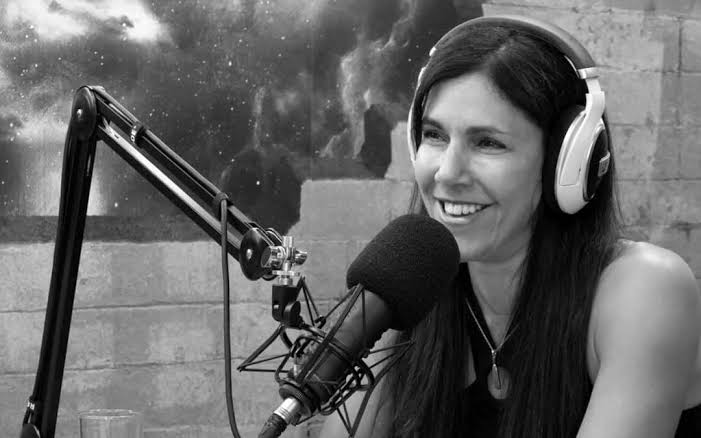
Player not loading? Listen to the audio file directly.
In this weeks episode, world renown Vitamin E researcher and also GG researcher, author and founder of American River Nutrition is today's illustrious guest, Dr Barrie Tan.
The information you will learn from todays episode - if you take it onboard, will indeed change your life, longevity and health for the better so this is a must listen to podcast with actionable insights and incredible clinical research behind it.
What you will learn:
- Who is Dr. Barrie Tan?.
- What is Vitamin E - Tocotrienol?
- What is GG?
- What is the difference between tocotrienol and GG?
- What is the difference between tocotrienol and tocopherol?
- Which annatto should you take?
- What is the link between CoQ10 and statins and GG.
- What is the link between GG and testosterone?
- Why should you take MK-4 and GG?...
Tocotrienols roles in bone density
Tocotrienols roles in Non alcoholic fatty liver disease, pre diabetes, diabetes, cardiovascular disease
Tocotrienols role in fighting various cancer types
GG's role in bone density, muscle synthesis, coenzyme Q10 absorption and much much more.
website https://barrietan.com/ Riverside Nutrition his manufacturing company - The research mentioned in this show is available at https://americanrivernutrition.com/
If you want to get GG, Tocotrienols or Coqnol (Coenzyme Q10 with GG), you can reach us out directly through our email support@lisatamati.com and we can organize that.
BIO
A scientist first and foremost, Dr. Tan earned his Ph.D. in chemistry/biochemistry from the University of Otago, New Zealand, and spent several years as a professor at UMass. Dr. Tan has committed himself to the research and development of phytonutrients — natural compounds found in plants that reduce and slow chronic disorders.
Dr. Barrie Tan is hailed as a trailblazer and the world's foremost expert on vitamin E, credited with discovering tocotrienol in three major natural sources and geranylgeraniol, an essential nutrient with implications for sports and active nutrition. A scientist first and foremost, Dr. Tan earned his Ph.D. in Chemistry/Biochemistry from the University of Otago, New Zealand and spent several years as a professor at UMass. Today, his research focuses on lipid-soluble nutrients that reduce and slow chronic conditions.
Dr. Tan is credited with discovering a form of vitamin E called tocotrienol from three major sources: palm, rice, and annatto — a natural dye and food coloring derived from the seeds of the achiote tree, known for its potential health benefits, including antioxidant and antimicrobial properties. Editor of two prestigious books on tocotrienol and founder of the International Tocotrienol Conference, Dr. Tan was dubbed the "Tocotrienol King" by Dr. Stephen Sinatra, a highly respected and sought-after cardiologist.
Dr. Tan has held roles of Chief Scientific Officer and Scientific Board Member for multinational organizations. His career includes periods working in association with the US Armed Forces and a Prince of Thailand. He has successfully launched multiple businesses in the nutrition industry and owns an array of patents and intellectual property, keeping him at the forefront of scientific innovation.
He is an internationally celebrated and sought-after speaker, having presented at multiple respected conferences in the field including; IFT, ADA, ASN, IHS, A4M, NPA, AACR, ICIM, IAOMT, and the Academy of Nutrition and Dietetics.
Dr. Tan is currently the President of American River Nutrition, a natural health R&D company he started with his wife, Elizabeth, in 1998. Described as a scientific pioneer, his mission is simple: improve the everyday health of people's lives through the rigorous application of DeltaGold® – the first-ever tocopherol-free tocotrienol product extracted from annatto, and the most potent form of vitamin E in existence today.
As for links, we'd love to give people a free copy of his eBook The Truth About Vitamin E which can be found at https://barrietan.com/book/ using code: Pushing The Limits
Personalised Health Optimisation Consulting with Lisa Tamati
Lisa offers solution focused coaching sessions to help you find the right answers to your challenges.
Topics Lisa can help with:
Lisa is a Genetics Practitioner, Health Optimisation Coach, High Performance and Mindset Coach.
She is a qualified Ph360 Epigenetics coach and a clinician with The DNA Company and has done years of research into brain rehabilitation, neurodegenerative diseases and biohacking.
She has extensive knowledge on such therapies as hyperbaric oxygen, intravenous vitamin C, sports performance, functional genomics, Thyroid, Hormones, Cancer and much more. She can assist with all functional medicine testing.
Testing Options
-
Comprehensive Thyroid testing
-
DUTCH Hormone testing
-
Adrenal Testing
-
Organic Acid Testing
-
Microbiome Testing
-
Cell Blueprint Testing
-
Epigenetics Testing
-
DNA testing
-
Basic Blood Test analysis
-
Heavy Metals
-
Nutristat
-
Omega 3 to 6 status
and more
Lisa and her functional medicine colleagues in the practice can help you navigate the confusing world of health and medicine .
She can also advise on the latest research and where to get help if mainstream medicine hasn't got the answers you are searching for whatever the challenge you are facing from cancer to gut issues, from depression and anxiety, weight loss issues, from head injuries to burn out to hormone optimisation to the latest in longevity science. Book your consultation with Lisa
Join our Patron program and support the show
Pushing the Limits' has been free to air for over 8 years. Providing leading edge information to anyone who needs it. But we need help on our mission.
Please join our patron community and get exclusive member benefits (more to roll out later this year) and support this educational platform for the price of a coffee or two
You can join by going to Lisa's Patron Community
Or if you just want to support Lisa with a "coffee" go to
https://www.buymeacoffee.com/LisaT to donate $3
Lisa's Anti-Aging and Longevity Supplements
Lisa has spent years curating a very specialized range of exclusive longevity, health optimizing supplements from leading scientists, researchers and companies all around the world.
This is an unprecedented collection. The stuff Lisa wanted for her family but couldn't get in NZ that's what it's in her range. Lisa is constantly researching and interviewing the top scientists and researchers in the world to get you the best cutting edge supplements to optimize your life.
Subscribe to our popular Youtube channel
with over 600 videos, millions of views, a number of full length documentaries, and much more. You don't want to miss out on all the great content on our Lisa's youtube channel.
Order Lisa's Books
Lisa has published 5 books: Running Hot, Running to Extremes, Relentless, What your oncologist isn't telling you and her latest "Thriving on the Edge"
Check them all out at
https://shop.lisatamati.com/collections/books
Perfect Amino Supplement by Dr David Minkoff
Introducing PerfectAmino
-
PerfectAmino is an amino acid supplement that is 99% utilized by the body to make protein.
-
PerfectAmino is 3-6x the protein of other sources with almost no calories.
-
100% vegan and non-GMO.
-
The coated PerfectAmino tablets are a slightly different shape and have a natural, non-GMO, certified organic vegan coating on them so they will glide down your throat easily.
-
Fully absorbed within 20-30 minutes!
-
No other form of protein comes close to PerfectAminos
Listen to the episode with Dr Minkoff here:
Use code "tamati" at checkout to get a 10% discount on any of their devices.
Red Light Therapy:
Lisa is a huge fan of Red Light Therapy and runs a Hyperbaric and Red Light Therapy clinic. If you are wanting to get the best products try
Flexbeam: A wearable Red Light Device
https://recharge.health/product/flexbeam-aff/?ref=A9svb6YLz79r38
Or Try Vielights' advanced Photobiomodulation Devices
Vielight brain photobiomodulation devices combine electrical engineering and neuroscience.
To find out more about photobiomodulation, current studies underway and already completed and for the devices mentioned in this video go to
www.vielight.com and use code "tamati" to get 10% off
Enjoyed This Podcast?
If you did, subscribe and share it with your friends!
If you enjoyed tuning in, then leave us a review and share this with your family and friends.
Have any questions? You can contact my team through email (support@lisatamati.com) or find me on Facebook, Twitter, Instagram and YouTube.
For more episode updates, visit my website. You may also tune in on Apple Podcasts.
To pushing the limits,
Lisa and team
Read the full transcript
Made from the episode's captions and tidied up automatically, so the odd word may be off.
Lisa: Well, hi everyone, Lisa Tamati here at Pushing the Limits. Today I have a superstar in the world of science for you — the world's foremost leader in vitamin E research, and specifically in tocotrienol and something called GG, which we're going to get into. I have the lovely Dr Barrie Tan with me. Dr Tan, thank you so much for joining us today. It's so cool to have you.
Dr Barrie Tan: Thank you for inviting me.
Lisa: You spent 25 years studying vitamin E from the annatto plant, and then one day you were seeing what was left over when you got your DeltaGold out, you got your tocotrienol out of the annatto plant, and there was this little bit of yellow-brownish stuff at the bottom. Curiosity got the better of you and you said, "What's that?" Tell us the second thing from this amazing annatto plant.
Dr Barrie Tan: I know what one would say. I'm not a medicine hunter. I happened to go to South America looking for something — I actually happened to look for lutein. I was working on macular degeneration, looking for lutein, and then fate has it, I was distracted by this lovely annatto plant, and then I stumbled on the tocotrienol, which I explained earlier.
Dr Barrie Tan: So when I extracted, I always have this in the bottom of the pots and pans, this yellowish, light yellowish and sometimes brownish colour. When I had enough time to address the tocotrienol, I decided to analyse and see what that was. As it turned out — I'll tell you the compound first. This is the compound, so it's a real molecule, this compound molecule, for those listening. This compound is called geranylgeraniol. Geranylgeraniol is a mouthful of a word; GG would be fine. And you can Google geranylgeraniol — you have so much to read about and you're going to love it. This is a darling compound.
Dr Barrie Tan: This is an endogenous compound. Endogenous meaning that this is a compound your human body makes. If your human body makes it, it immediately begs the question, why does a human body make this? This is also a compound that the plant makes. So the plant makes this. Why? I can tell you this: the plant and the human make this compound; if the plant and human do not make this compound, then the life in the plant and the human is not going to survive.
Dr Barrie Tan: Give me one example. When you think of a plant, what do you think of? Green colour. If you think of human, what do you think of? Red colour. Green colour first — chlorophyll. Chlorophyll is green. Every chlorophyll has a GG. No chlorophyll, no GG, no life, and the plant dies.
Lisa: Wow.
Dr Barrie Tan: Red — every human, every mammal, if you prick your blood, it flows red colour. Haemoglobin, erythrocyte. Without this, there are no red blood cells. Well, you know what it means if you don't have red blood cells. So they are essential to life. They're not even longevity — they are essential to life.
Dr Barrie Tan: So I said, wow, am I this serious, at the bottom of my pot after 10 years or so? What was I thinking? Why did I not analyse it before? But still, I've only got so many hours in the day. I'm actually telling you this passionately — I'm not pitching yourself, I'm telling you my discovery. So this is it.
Dr Barrie Tan: Now, let me show you this. This is the tocotrienol structure. If I block this out, where my hand is here — if you block this thing out, whatever is blocked out with my hand — oh, better yet, if I go off screen — that one, that's GG. That is GG. So therefore the plant uses GG to make the tocotrienol.
Lisa: Wow.
Dr Barrie Tan: Unfortunately, human cannot use GG. Remember, we make GG, we are unable to make tocotrienol; plants use it to make tocotrienol.
Dr Barrie Tan: I don't think lucky is even the word. I don't even like the word lucky. I went to South America to look for lutein in the giant marigold plant, and something spurred me to stay at this annatto plant. I'm not a medicine hunter. I don't like to be bitten by mosquitoes. I'd probably freak out if I see a snake. I don't like — I know New Zealand has no snakes. I don't even like that people tell stories like that. I just asked the right question.
Dr Barrie Tan: And there are thousands and thousands of species of plants. I stumbled on this. And the American Chemical Society said that there are 50 million chemicals, synthetic and natural, and I stumbled on tocotrienol and GG — two of the major players of the 50 million. So this is a real crapshoot. I just happened to ask the right question. So I think that somebody above intends to let me know this, and I'm bound by faith to make sure what it does and pass it on to other people. If I can do that before I retire, I will be really happy.
Lisa: You can't retire, Dr Tan.
Dr Barrie Tan: In the back of me, that is a molecule of CoQ10, and that CoQ10 is two and a half — two and a half. If I leave a GG molecule here, I purposely do this so you see that. It's two and a half lengths of a GG is CoQ10. So for the audience, just think, this GG is a building block of CoQ10. I'm sure nobody ever told you that. You only know this if you take statin drugs, or when you go older, your CoQ10 drops. You take statin drugs, CoQ10 drops, therefore you should take CoQ10 to boost your CoQ10, because you don't want it to be decimated by statins; or when you're ageing, you should take that so that you have energy. But I bet nobody ever told you that the building block of CoQ10 is GG. So if you take GG, GG will be needed in your body to make CoQ10.
Dr Barrie Tan: You said, "Oh, but our body already makes CoQ10." Correct, because I told you at the beginning that GG is endogenous. But as we age, we begin to make less and less, and if you take medication, you make it even worse. So if you do that, then it is good to supplement GG to do that.
Dr Barrie Tan: So the second one — this one you'll like, because I have a cartoon version like that.
Lisa: I'm going to have to watch the video, everybody.
Dr Barrie Tan: Okay, yeah, you should look at the video. If you eat vegetables, and many people do — if you eat dark green vegetables, you get this thing. I choose green for a purposeful reason. This is phylloquinone, vitamin K. So if we have this, you go into our blood, it will seal the tear in our blood because it's a good clotting factor, factor K1. So that's vitamin K1.
Dr Barrie Tan: And then for the longest time I thought, hey, I've got a healthy vegan friend — if they eat kale and spinach like a rabbit does, they would literally clot to death, wouldn't they, with K1? So therefore we have a thing in our body, a fixed amount. It doesn't matter how much we eat, a fixed amount does go into our body to do what it does, and that's why it's called a vitamin K, like that.
Dr Barrie Tan: However, most of the extra one, they cut off. We have a hydrolase enzyme in the gut, cut off. So you imagine, cut off — so it's showing a pen — this one here, which is saturated, is flushed away. We just do that. So this goes into the body, and then of course, intentionally, this is a GG molecule. By the way, the GG molecule is exactly the same length as the plant one that is being cut off — exactly the same. I'll tell you the difference later.
Dr Barrie Tan: Then it will look for this that has gone in from the vegetable, and then, if you use biochemistry, it's a transferase enzyme. I'll just use it simply — you click together — showing a pen that was pulled apart, the green one that was cut off, and now the red one has been put on, and that's the GG being put onto the K1, and that is MK-4.
Dr Barrie Tan: So ladies and gentlemen, you read a lot about MK-7 out there. MK-7 is fermented, it's a much longer tail. Four, seven — there's nothing wrong with MK-7, except our body does not make MK-7. Our body uses GG to make MK-4. So even if you don't think about other things, it desperately begs the question, why is a body making MK-4? You have to ask that question.
Dr Barrie Tan: This is an evolutionary track to make it. Our gut makes MK-7, so therefore, not surprisingly, if you take it from food — if you want MK-7, it would be, if you're eating ethnic food, kimchi; if you're eating Western food, sauerkraut, cheese. If you need vitamin K1, vegetables, green leafy vegetables. If you want to eat and take MK-4 — not surprisingly, meat. Meat, because the animal makes MK-4, and if you eat meat you get MK-4. So it's very simple.
Dr Barrie Tan: But as we age, so long as we take enough vegetables, you've got this, and your body needs this guy to stitch that on to an MK. So now I have convinced you that GG is a building block, not only for CoQ10, but also for MK-4. GG has many other functions that this time here does not permit, and when you interview me, if I tell you — oh my God, this is the other thing — I only mention these two because the audience knows about CoQ10, you know about MK-4, but GG does many other things in your body. Without it we simply just die. We have to have GG.
Dr Barrie Tan: So now I want to answer the question, why does the body preserve and harbour MK-4 in so many tissues?
Lisa: Yeah, in 30 different organs.
Dr Barrie Tan: Thank you — in at least 30 different organs. If you think of a seesaw balance, if you have a fulcrum here, seesaw balance, normal thinking is 50 pounds, 50 pounds, and then you balance. That is in the ideal case. Now think of calcium. Balancing calcium is five pounds — pound is a relative term — 95%. So this 95% is in bone, not surprisingly. 95%, and 5% is in all the soft tissue. We need calcium in soft tissue. So a balance is five in soft tissue, 95 in bone. Shouldn't be a surprise.
Dr Barrie Tan: So what will be out of kilter? Out of kilter is six and 94. Yes, just 1% difference. That's a very precarious situation. So if you have six and 94, you know what happens — it begins to look like this. It's awkward, isn't it? This is only six and 94. It begins to do like this. This is ectopic calcification in the arteries. What does that mean? Why is 1% more a problem? It's highly regulated.
Dr Barrie Tan: Think of these words: kidney stone, gallstone, calcification of the artery. Major one — this is a major one. And then if you ask me, I can dish out many other ones. Just Google, for your own sake, just Google extra calcification in soft tissue. What are the problems? Pineal gland — a gland, right? And many things. But I just gave you — calcification of the artery is cardiovascular health. That's good enough for me. So if you actually read the book—
Lisa: Sorry to interrupt, but I had Dr Thomas Levy on, and he's coming on again, and he is an MD and a JD, a lawyer as well, cardiologist. He's written a book called — well, he's written 13 books, amazing gentleman — but he has a book called Death by Calcium, and it's talking about how we're all focused on calcium for osteoporosis: calcium, calcium, calcium. And that's not a good thing. When we get too much calcium in the wrong place, it can be very—
Dr Barrie Tan: I 100% agree with you. When we take — the US FDA said that we should take about two gram or two point something gram of calcium — I think it's naive.
Dr Barrie Tan: If you take so much calcium, what makes you think that the calcium you take all goes to the bone? What makes you think that? And calcium going to the bone is actually a hormonal balance, there's a shuttle in. First we found out calcium, and then we found vitamin D do that, and now we found out the vitamin K — actually, between vitamin D and K, K have the strongest evidence to shuttle. Basically this vitamin K makes a protein, and the protein is called osteocalcin, and it happens to be also a hormone. And this osteocalcin will collapse on to the calcium and shuttle it to the bone.
Dr Barrie Tan: So therefore, a simplistic way to say it would be, if you take vitamin K — vitamin K as in MK-4 — will sweep the calcium to the bone to maintain your [inaudible]. So for that reason, if you take enough vitamin K1 — I explained to you earlier on, the missing piece is GG. So as we age, we don't get enough GG, and if you don't have enough GG, the MK-4, it cannot be made. The plant doesn't make it, the plant makes vitamin K1. So you get into the body, and in 25, 30 organs — that itself should get our attention. You know, wait a minute, this is an evolutionary conservation. You and I, Lisa, did not do it. The wisdom of our body has already decided that yes, it has vitamin K1, but yes, the body went the extra step to make MK-4 into all these 25 to 30 organs to do things I am still unravelling. I have not answered all the things MK-4 does, believe me, I'm trying to figure out one at a time.
Dr Barrie Tan: You should, ladies and gentlemen, you should Google — just Google, and you are not going to go to sleep. Nobody wants to grow old and have lost memory, dementia, and worse, Alzheimer's disease. And now Tufts University, the professor, Sarah Booth — B-O-O-T-H — Professor Booth. You Google her name, Tufts University, Boston, you can find all her study. Not all of these things I did. She found this connection: centenarians in the blood and in the brain have this much MK-4. She studied all kinds of vitamin K, but the only vitamin K that has the connection is MK-4. Only MK-4, not MK-7, not phylloquinone — MK-4. This amount in centenarians that have normal memory, and then centenarians that have dementia, this amount, and centenarians that have Alzheimer's disease, this amount. So she found the connection: memory is inversely proportional to MK-4.
Lisa: Wow.
Dr Barrie Tan: So that is a very powerful connection. And then somebody else also found out that as we grow older, there's something that's the matter with our blood, so we take blood thinner. So when we take blood thinner, blood thinner decimates the making of MK-4 in our brain, and with that, the making of MK-4 — you can also Google blood thinner and loss of memory. So that is a connection. But I'm not telling people to not take blood thinner. When you have blood problem, you have to talk to your doctor. But right now there is a nutritional way to mitigate the MK-4 loss, which is GG.
Lisa: We were talking about blood thinners and their effect on memory, and this is because the MK-4 is going down in the body, correct?
Dr Barrie Tan: That is correct. And that discovery was made, and then somebody — in the US we have something called the NHANES study, it's an acronym, a big acronym, that the US government have 30, 40,000 people in the Boston area like that. And so they have huge amounts of data, so over time different professors also mined that data. And there was a group in China — it's kind of interesting, it was a Chinese group — they mined the US data, and they also found, over a long period of time, an epidemiological study over a long period of time, they found that as people grow older, those that have dementia have lower amounts of MK-4, and those that have normal memory have higher levels of MK-4. And that was a study done separate to the one at Tufts University. So right now I think that the evidence of MK-4 and memory or brain health is a sustained one. It is not yet as strong as the building of strong bone, like I mentioned, because osteocalcin is very strong on that piece.
Dr Barrie Tan: And then I found other things that is required again for brain, for people who are on different degrees on the spectrum, autism spectrum, again ADHD thing. So I also saw that as well, but those are early stages, so I won't run to the main gain on that. But I personally take GG, because I personally take statin drug. I have hypercholesterolaemia, very high, and when I take statin — that's a genetic thing — it inhibits the cholesterol here, and then below here, GG, and GG lowers CoQ10. So if you inhibit GG, then CoQ10 drops. So I take some CoQ10 and I take GG, but mostly on GG. I'm concerned with GG not only on the CoQ10 drop, but the GG, as you know, on the MK-4, like that. But GG is required for the synthesis of skeletal muscle. That is the reason, and that is the reason why when people take statin drugs they have myopathy. Myopathy, something wrong with the muscle.
Dr Barrie Tan: And for the longest time we thought — and it's a little erroneous, but still partially correct — if you take statin drug and if you take CoQ10, then your myopathy goes away. It doesn't go away. I documented this and I published it. If you email me, glad to send you the paper. However, that doesn't mean that if you take statin drug you shouldn't take CoQ10, but the expectation that if you take statin drug, if you take CoQ10 the myopathy goes away, that is not supported. So the supported thing to prevent the myopathy is GG, because GG makes CoQ10, as well as muscle, as well as MK-4.
Lisa: So GG is like a grandfather of so many different things. GG for everything: for bone density, for muscle synthesis, which is all of these things that go around. If you're taking a statin and your CoQ10 is dropped — these are all massive energy production, these are major things. And CoQ10 is such a difficult, big molecule to get into the cell. So tell us this connection there between GG and CoQ10 and how it helps get it in.
Dr Barrie Tan: Yeah, like from here to here, that's about one third, two thirds and the last third. So roughly speaking, CoQ10 is about three times the size of GG. So CoQ10 is like an albatross. So if a person didn't know about that, and then you take CoQ10, they'll hear people say, "Oh, ours is 100%, 200% more bioavailable, blah blah blah." The reason they did that is because it is so non-absorbable. So when they say one or 200%, yes, it's true, but take it with a grain of salt. I'll tell you, the audience may or may not know, if you take 100 milligram, if you don't take any help aid, you're going to absorb one miserable milligram. So 99 milligram, pooped, like that. If you say that if you make it more bioavailable, blah blah blah, that means that you absorb, let's say, two or three milligram. That's what they mean by 100 and 200%.
Lisa: And that's one of the one milligram.
Dr Barrie Tan: Yeah, even if you got something that you take 100 milligram and then you have 200% more bioavailable, you're only absorbing three milligram. So I typically take CoQ10 two times a day, separate times, and if I take it 200 milligram, I may get three milligram absorption one time, three milligram. So the six milligram is good enough for me. But still it is out there. If you take a total of 100 milligram, even if you take a good CoQ10, 95 milligram pooped up. If you take 200 milligram, essentially most of them get pooped up.
Dr Barrie Tan: If you take GG, GG is a much smaller molecule, it goes straight in. And when it goes straight in, you don't have to do anything else. The body will use the GG to make CoQ10. It's a building block. You'll make a CoQ10, you use a building block and make MK-4. I have done many nutritional studies before — nothing come close to this. This is not just nutrition, GG is a building block.
Lisa: Is that phrase — GG is a building block for MK-4, and it's a building block for CoQ10 — and it's just amazing, GG.
Dr Barrie Tan: Yeah. So in one sense, GG is longevity because it's anti-ageing. It is always there and we need it for our health and our survival and our sustenance for the longest time. There was a study — I guess it's a hypothetical study, but it was done in Japan — so they purposely engineered a rat or a mouse that the animal cannot make GG. And they wanted to know, when they do that, how long, what will happen when the pups give birth. So when the pups gave birth, all of the pups lived until 30 days. They all died after 30 days. So they dissect all the organs, and they want to find out what make them die like that. So if they figure out the answer, then they understand GG is required to do blah blah, and that is why it had to do with survival. It's not longevity, it's just survival. And then they found out that all the organs work fine. The only organ that didn't work fine was the pancreas. So they found that the pancreas simply died at 30 days. So with the pancreatic death, the animal's total system collapse and die. So the closest they come up to do it would be, GG is absolutely required for something in the pancreas. They make a certain protein, they identified the protein, but what the protein does, they didn't know. So therefore there is so much, Lisa, we don't know about GG, but what we do know is what I disclose to you.
Dr Barrie Tan: Oh, by the way, we did another clinical study. The myopathy study is done in Texas, it's still ongoing, not finished. So we have people who take statin drugs, placebo group, 150 milligram, 300 milligram, and they have confirmed myopathy. They run on this treadmill to see if it will help them to reduce the myopathy. That study is ongoing, so I'm putting my money to see how, if it does or not. We probably need another year before we know that study. The study we did do, and we confirm it, we gave people GG to see if it would increase the testosterone in middle age.
Lisa: Oh yes, yes, this is important.
Dr Barrie Tan: And then we found out that the GG increased it in hypogonadal men, which means men in the middle age, about 30 to 40 years old, their testosterone drops. And so in the West we're always fixated to see if the libido drops, it's always like that. And then we look at more the thrive of the person. The original finding came from the Japanese population. They have the elderly population, and then when they get to 80, 90, 100 years old, they have longevity, but they do not have the quality of life that goes with the longevity. So they're trying to figure out what would help, and they found out that GG is one piece of the answer. So therefore GG's longevity, because it helped them to sustain a fixed amount of testosterone so they would have thrive in their life. So that's that piece. But we confirmed that it would increase testosterone, particularly in hypogonadal men. So we're going to do more study in time to come.
Lisa: Currently, does it work in the woman? It doesn't help with women's testosterone levels that also drop at menopause?
Dr Barrie Tan: We did not find it in the women. We also looked at the progesterone. We did not find the progesterone. So in the women we can only say that it did—
Dr Barrie Tan: —not do it, it did not have negative effect on the women.
Lisa: Mhm.
Dr Barrie Tan: So we have that. And right now we are doing a study in youngsters, something like 20-something-year-old college students. So now they're not taking statins, they don't have messed up testosterone, progesterone, nothing. They are 20-something years old, in the fountain of life. So here we wanted to give them GG to see if they built physical muscle, to increase their force of production, like that.
Dr Barrie Tan: And that finding was discovered by an Australian university, so we're following. And if you want to read about her work, her name is Erin Jordan, J-O-R-D-A-N. If you Google her, she published a paper in 2020 and a paper in 2022. She clearly showed that in animal studies it increased the hind leg force. So now we're going to do the same in young athletes to see if they will increase the force production. So that one is just simply addressing that.
Dr Barrie Tan: So there's lots of good work to be done. But for simplicity for us, as we age it is likely that our GG would drop, and if our GG drops, 150 milligrams would be a good maintenance dose. If somebody is taking a statin drug or medication, then possibly double the dose would help.
Dr Barrie Tan: We know, for example, many postmenopausal women take a drug to prevent osteoporosis.
Lisa: Yes.
Dr Barrie Tan: That's the bisphosphonates. So this is not to be confused with MK-4 doing it, that in Japan MK-4 is a medication, would you believe it? 45 milligrams — they take 15 milligrams three times a day. You can Google, you can find the Japanese like that. They do not take the bisphosphonates.
Lisa: So I've had a bad experience with Mum, yes.
Dr Barrie Tan: And in the US, bisphosphonate is a medication to trap the calcium in the bone so that you prevent bone loss. However, an unusual side effect of this is somehow the bisphosphonate will get to the jawbone. And it was first discovered by dentists, when the dentist took the tooth off or fixed the tooth of Mrs Joan, and then they found out that, wait a minute, you have not just bone decay, but your jawbone is compromised, and I can see death in your jaw. That's very unusual. That's very unusual.
Dr Barrie Tan: And then now, many studies — that was only discovered in 2009, and since then, the 10 years that follow, oh, there are so many studies. Well, first I tell you, that condition is BRONJ, B-R-O-N-J, stands for bisphosphonate-related osteonecrosis of the jaw. Death of the jaw. B-R-O-N-J. So if you Google BRONJ and geranylgeraniol, you will get it all. You don't have to talk to me, you get it all.
Lisa: And there's a study ongoing, isn't there?
Dr Barrie Tan: Yeah. So basically the bisphosphonate inhibits the jawbone cell to make GG, and with the inability of the jawbone cell to make GG, the jawbone simply dies. So therefore, if you flip it, if you flip it quietly and unassumingly, to make jawbone strong, jawbone to survive, you need GG. See, GG is needed in everything in our life. But that one is elucidated and come to our understanding out of a drug that decimates GG there, and we have death of the jawbone. Then we know, oh, the death of the jawbone is because the bisphosphonate messed up the GG and they cannot make the jawbone. So in time, jawbone may have many, many other properties we don't know at the present time.
Dr Barrie Tan: So I am really — and you know, American River is a small company, we are the only company in the world making GG, and I make GG because of my discovery in the annatto. So we go back to square one where we did. So we're doing many animal studies, continue to do clinical studies. So if you stay tuned — we have a website, I have people follow me on the link, not thousands and thousands — whenever we have published studies, we put on the link, and so you can actually see.
Lisa: Yeah, definitely do that. We'll put the links everywhere, yeah, to the book.
Dr Barrie Tan: Thank you.
Lisa: Yeah, thank you so much.
Dr Barrie Tan: I hope I answer some questions on the GG, MK-4, CoQ10 for sure. And then you took a fair amount of questions asking about the tocotrienol. We clearly have a lot to say about tocotrienol because I was on it for 30-over years. I have been only on GG for the last five, ten years, much shorter time. But right now, for the years that I have left to do research, I'll probably say mostly on GG. I'm good with the tocotrienol, you know, because chronic condition is huge, so I haven't just said everything I want to. So when you do other interviews, you just pick and choose from your audience what they want to know, and then you can send Jen an email and just talk that specific series.
Lisa: Dr Tan, every time — I mean, I've been listening to your lectures for weeks and read your book, and every time I get something new out of every interview, because you've just got — oh, it does that as well, oh, he's done that as well. It's like, really? This is just absolutely...
Lisa: And now I have my whole family on GG. I have us all on vitamin E tocotrienol, I have us on Coqnol, I have us on the combination product. And I'm super excited, because Mum has broken her hip three or four months ago and this is what sent me down this path. And we had a situation, she reacted very badly to the bisphosphonate drugs. They not only cause osteonecrosis, they cause a lot of other problems too. So I was not going to go the bisphosphonate route, and when I started studying calcium, started to realise, yeah, now calcium is not the answer either.
Lisa: So I was super excited to find GG and tocotrienol, because I need to, and we're doing that, and we're doing a few other things — collagen and mineral complexes and things like that to try and strengthen her bones, and vitamin C infusions. But for osteoporosis, this is a major killer of our older people. People get hip breaks like my mum at 82, a lot of them are dead within six months to a year because of all the complications. And we've been through a lot of things with her in the last three months, which we're getting her back now to sort of baseline, slowly, slowly. But you lose function so fast because your muscles decline so fast, and all of these things is what GG does. So I'm like, thank God for Dr Tan, thank God for Dr Tan. Thank you for your work, thank you for bringing these things to the market, because we've got them now.
Dr Barrie Tan: And you also touch on something — thank you for your kind words — you also touch on something with the elderly population, whether they're taking statins or not, assuming that they're not. You notice that you go to a lot of nursing homes, you can see older people, they lost a huge amount of muscle mass.
Lisa: Yeah.
Dr Barrie Tan: And then the scientific word is just called sarcopenia, like that. We would love to do a clinical study on the elderly population and give them GG to see if it may help them to build some muscle. Not going to be like an athlete, but to build some muscle, and at most and at least able to retain muscle mass without losing any more, and then they completely are unable to even get out of their seat, you know what I mean? So there's that piece.
Dr Barrie Tan: You know, something that impressed — I have hundreds and hundreds of people interview me, I don't do podcasts, I usually have people interview me. There's something special and your audience should know about you: you read a lot. I can tell, you read a lot. And then you said minerals. I read about bone all the time, like that. You say minerals, vitamin D, and it's not all the things about calcium, because you did that because of your passion to help your mum. And so ignorance is not bliss. It is important to know what you know. It is true, we know to a certain extent and then we cannot know any more because there's nothing out there to know. Sometimes intuition can help us somewhat, like that. But when there is a chance to know, it's a great thing to do, because then we can self-educate.
Dr Barrie Tan: And then I can think of you — you're clearly what I call a citizen scientist. So it should be hailed, you know, you just read and educate yourself. I have a PhD in science, but it was a long time ago, and by the way, that was in New Zealand when I did that. It was 50 years ago. 50 years ago. But of course, I spent the last 50 years, I continue to read. The mind is too good a one to lose, so I continue reading in my field and way outside my field, and then I assimilate ideas together.
Dr Barrie Tan: And certainly I spent three to four decades doing tocotrienol. I know that field really well, in my sleep. But not so with GG. I knew the tocotrienol structure, I never thought much about the GG that is on the tocotrienol until I read about, oh, this is a molecule called GG. Well, wait a minute, this whole molecule is in my tocotrienol right now. Then I pay attention to it. Molecules are specific. And so now, everything I see, I'm beginning to see GG. GG in pancreas, GG in muscle, GG in the jaw, GG in the brain, and then GG makes MK-4, and MK-4 and all these things, and GG makes CoQ10.
Lisa: And I know, it's like, what, does not everyone know about this?
Dr Barrie Tan: I know. And then GG is all — oh, I didn't even touch it. GG is in the entire erythrocyte, the red blood cell. And then sometimes, I know we are all Homo sapiens so we are animals, right? I also sometimes think about plants. I'm eccentric, you know. I know it doesn't look like I'm eccentric.
Lisa: Just passionate.
Dr Barrie Tan: I think and I fellowship with the plant. I do. I look at the plant, I see that, wow. And I thought, why does the plant make GG? Do you notice all the polyphenols, they come from GG?
Lisa: Really? Really?
Dr Barrie Tan: Yeah, it is really scary. Not just the chlorophyll, the photosynthesis. And another time I can send you — if you look at the structure of all the polyphenols, they come from GG.
Lisa: Oh, so maybe it's GG that's at the basis of all of the reasons that polyphenols...
Dr Barrie Tan: I'll tell you one thing. This is GG, it's a 20 carbon — forget the red and green thing — and this is another GG, 20 carbon. And the two GG come together, you have 40 carbon. That's a carotene.
Lisa: Really?
Dr Barrie Tan: All carotenes, all carotenes come from GG. So I hope I bless you now. The animal cannot make this, we rely on the plant to get the carotene. But if you ever come to New England in the fall foliage, just in the fall, you can see stunning colour of a fall. It's just like blessing from God above. It is a feast of the eye during the October season, in our October. And you can see two weeks of splendour, and during the two weeks of splendour, I'm just thinking, thank you, GG. And before the two weeks, everything was green — I just say thank you, GG, because all the chlorophyll. And after two weeks, all the beautiful carotene colour — thank you, GG.
Dr Barrie Tan: But then two weeks after that, everything turned brown. That should tell you — when the tree is ready to go to sleep. Of course, plants hibernate, humans cannot hibernate when they go to sleep. But it also tells you intuitively, carotenes are unstable. That's why, when it come to this thing here, when you stain this, it is not stable. That's why in this plant, it makes the tocotrienol, the most potent antioxidant I ever know, to prevent the colour from damaging.
Lisa: Wow.
Dr Barrie Tan: That was my first lead into the tocotrienol. But that would be good enough. Who would have guessed, after I've done that, I saw the GG. So I think that this is an amazing blessing from without me, it's not from me, like that. So with that, I owe it to the public to find out what I can do with GG. So I'm going to commit the rest of my living life to figure out things of GG. But you know, the audience, you don't have to wait for me, you just type in geranylgeraniol, you can read many. But if you want to do another interview, if you just said, Barrie, just tell me all the things that GG does, I can just go on and on. So I know that this has taken a long time to do this.
Lisa: Oh, but this has been the most wonderful long interview, and we are definitely going to do more together, because every time I hear you speak, I learn something.
Dr Barrie Tan: Well, I hope this thing helps. And you know something, even when I go to New Zealand, at least we should connect.
Lisa: I'm going to hold you to that. You've got to come to New Zealand now, because you've got a friend over here. Thank you for your time today, it's been absolutely amazing.
Dr Barrie Tan: Thank you.
Lisa: And thank you so much. Have the rest of a wonderful day and have a great weekend.
Follow Pushing the Limits